
For Network Attached Storage, the strategy shifts toward protecting the entry points and the network fabric. The NAS management software is the "keys to the kingdom," and as such, it must be shielded behind firewalls and accessible only via secure, encrypted connections like a VPN. Administrators must implement the principle of least privilege, ensuring that users only have access to the specific files required for their roles. Regular auditing of access logs is also essential to detect unusual patterns that might indicate a brewing ransomware attack or an insider threat.
The Economic Reality: The Cost of Storage Security
When evaluating DAS and NAS, organizations must also consider the financial implications of maintaining a secure posture. Broadly speaking, NAS is more expensive to secure than DAS, primarily due to the scale and complexity involved.
The cost of NAS security is driven by the need for specialized personnel. Because NAS systems are enterprise-wide assets, managing them requires dedicated IT staff capable of overseeing complex management software, configuring intricate access controls, and maintaining a rigorous backup and disaster recovery schedule. While the initial investment in the hardware is significant, the ongoing operational expenditure for security—including enterprise-grade security software licenses and continuous monitoring—can be substantial.
DAS security, while generally less expensive in terms of infrastructure, still requires a meaningful investment. The costs here are often distributed across the organization in the form of endpoint protection software, employee training programs, and the implementation of access control solutions for local devices. However, the risk of neglecting DAS security can be far more costly in the long run. If a single unencrypted external drive containing sensitive customer data is lost, the resulting regulatory fines and reputational damage can far outweigh the cost of an enterprise NAS deployment.
The Bottom Line: A Balanced Defense
In the debate of DAS vs. NAS security, there is no definitive winner. Both solutions possess inherent vulnerabilities that can be exploited by motivated threat actors. DAS is plagued by physical risks and the challenges of decentralized management, while NAS is vulnerable to network-based attacks and configuration complexities.
The reality for most modern enterprises is that they cannot choose one over the other; they must utilize both to meet different operational needs. Consequently, the most secure organizations are those that do not favor one architecture, but rather apply a holistic security policy that covers both.
A storage system—whether it is a thumb drive plugged into a laptop or a multi-petabyte rack in a data center—is only as secure as the protective measures consistently practiced by the organization. By combining rigorous technical controls, such as encryption and multi-factor authentication, with comprehensive employee training and proactive patching, businesses can ensure that their most valuable data assets remains protected, regardless of where they reside. As the threat landscape continues to shift, the ability to adapt these security strategies will remain the defining factor in enterprise data protection.
 Enterprise Tech & Infrastructure
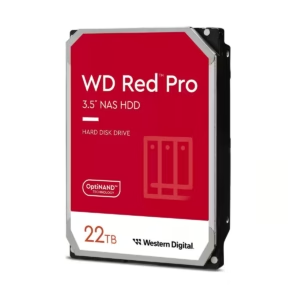
Seagate, Western Digital, and Toshiba Lead 2023 Rankings for Enterprise-Grade Storage Solutions
In the rapidly evolving landscape of corporate data infrastructure, the demand for...
 Enterprise Tech & Infrastructure
IBM Accelerates Quantum Roadmap with Nighthawk Evolution and Modular Path to Fault Tolerance
For the past several years, IBM has maintained a relentless pace in...
 Enterprise Tech & Infrastructure
Fibre Channel over Ethernet: Navigating the Intersection of Performance and Network Convergence
In the rapidly evolving landscape of enterprise data storage, the demand for...