
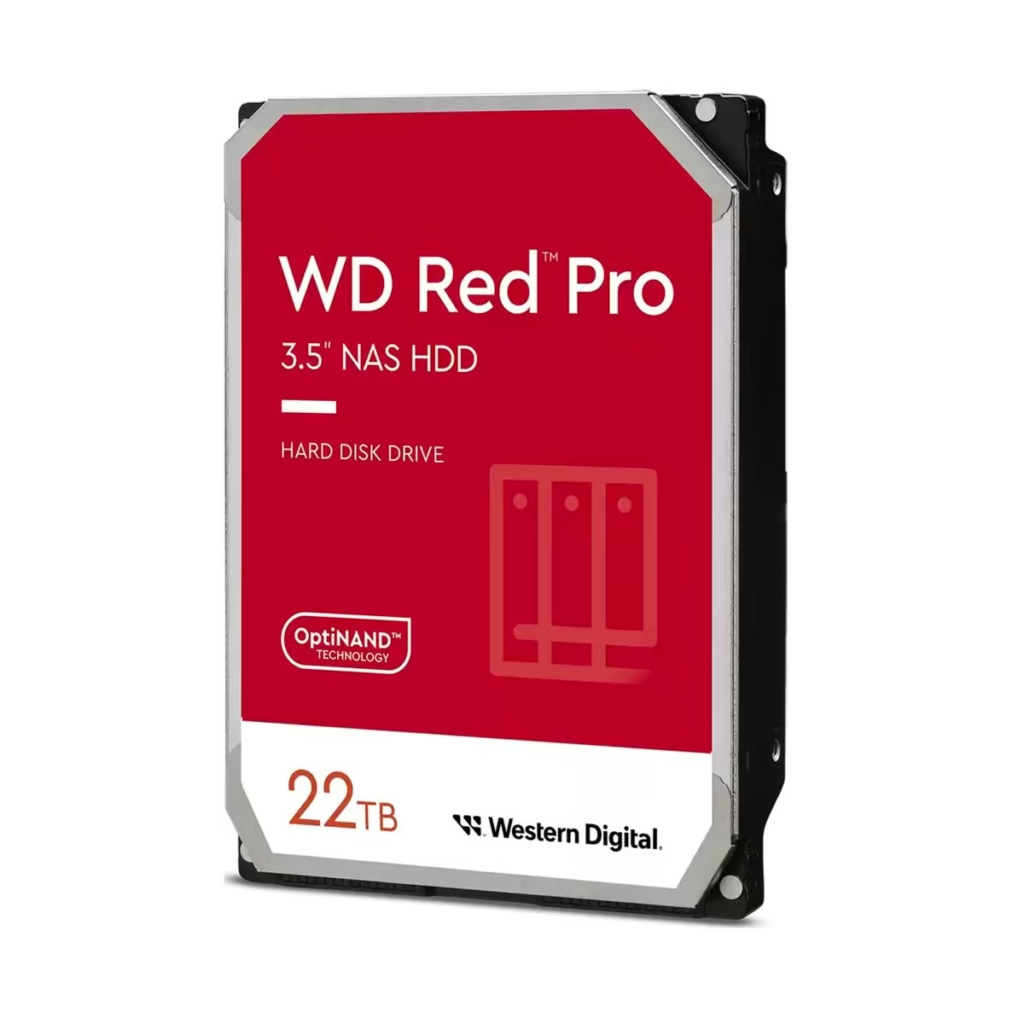
In the modern landscape of digital infrastructure, the demand for robust, high-capacity storage has never been more acute. As organizations grapple with the exponential growth of data generated by artificial intelligence, cloud computing, and high-resolution surveillance, the underlying hardware must evolve to provide not just space, but unmatched reliability and performance. Enterprise-grade hard disk drives (HDDs) remain the bedrock of this infrastructure, offering a balance of capacity and cost-efficiency that solid-state drives have yet to fully displace in mass storage scenarios.
Unlike consumer-grade drives designed for intermittent desktop use, enterprise HDDs are engineered for the grueling demands of 24/7 operation. They are built to withstand the constant vibrations of high-density server racks and the thermal stresses of data center environments. To assist IT decision-makers in navigating this critical market, a comprehensive evaluation of the ten most prominent enterprise HDDs was conducted, focusing on their suitability for data centers, network-attached storage (NAS), cloud environments, and specialized applications like AI-driven surveillance.
The assessment utilized a rigorous scoring system, weighing core technical specifications, enterprise-specific features, vendor reliability, and customer support. The results highlight a market dominated by three primary titans—Seagate, Western Digital, and Toshiba—each offering specialized solutions tailored to different facets of the enterprise ecosystem.
The Standard of Heavy-Duty Performance: Seagate Exos and IronWolf Pro
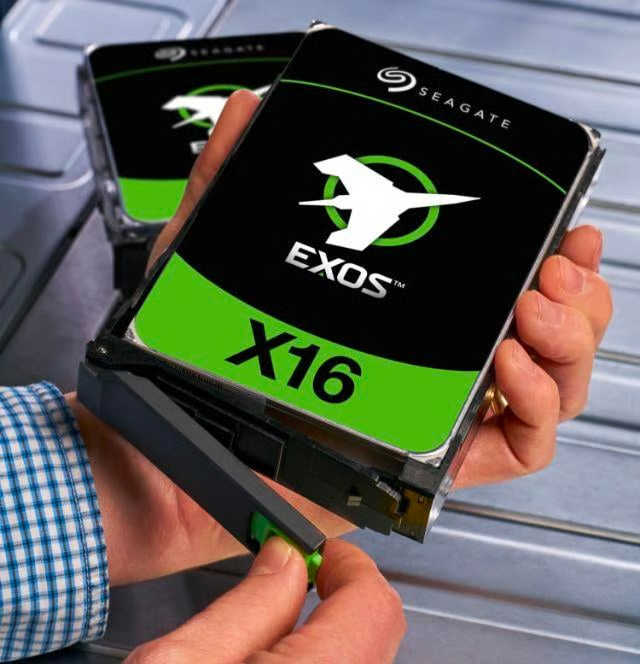
Seagate has long established itself as a leader in the high-capacity storage sector, and its Exos series continues to define the standard for heavy workloads. With an overall score of 4.43, the Exos series is specifically optimized for server environments where data throughput and durability are paramount. One of the most striking features of the Exos line is its rating for 2.5 million hours of mean time between failure (MTBF), a metric that underscores its intended use in mission-critical systems.
Available with both Serial AT Attachment (SATA) and Serial Attached SCSI (SAS) interfaces, the Exos drives provide the flexibility required for various architectural needs. In the evaluation, the series earned a perfect 5.0 for enterprise features and vendor profile. While pricing typically ranges between $200 and $400, the investment is justified by the drive’s ability to maintain performance under the most strenuous continuous-use scenarios.
Parallel to the Exos is the Seagate IronWolf Pro, which earned an overall score of 3.93. While the Exos is the "workhorse" for general server duties, the IronWolf Pro is often the preferred choice for data centers and high-capacity NAS applications. It supports SATA, SAS, and even non-volatile memory express (NVMe) applications in hybrid configurations. The IronWolf Pro is designed for environments that require high levels of multi-user collaboration and rapid data access, providing a resilient solution for organizations that cannot afford downtime.
Western Digital’s Specialized Excellence: Gold, Black, and Red Pro
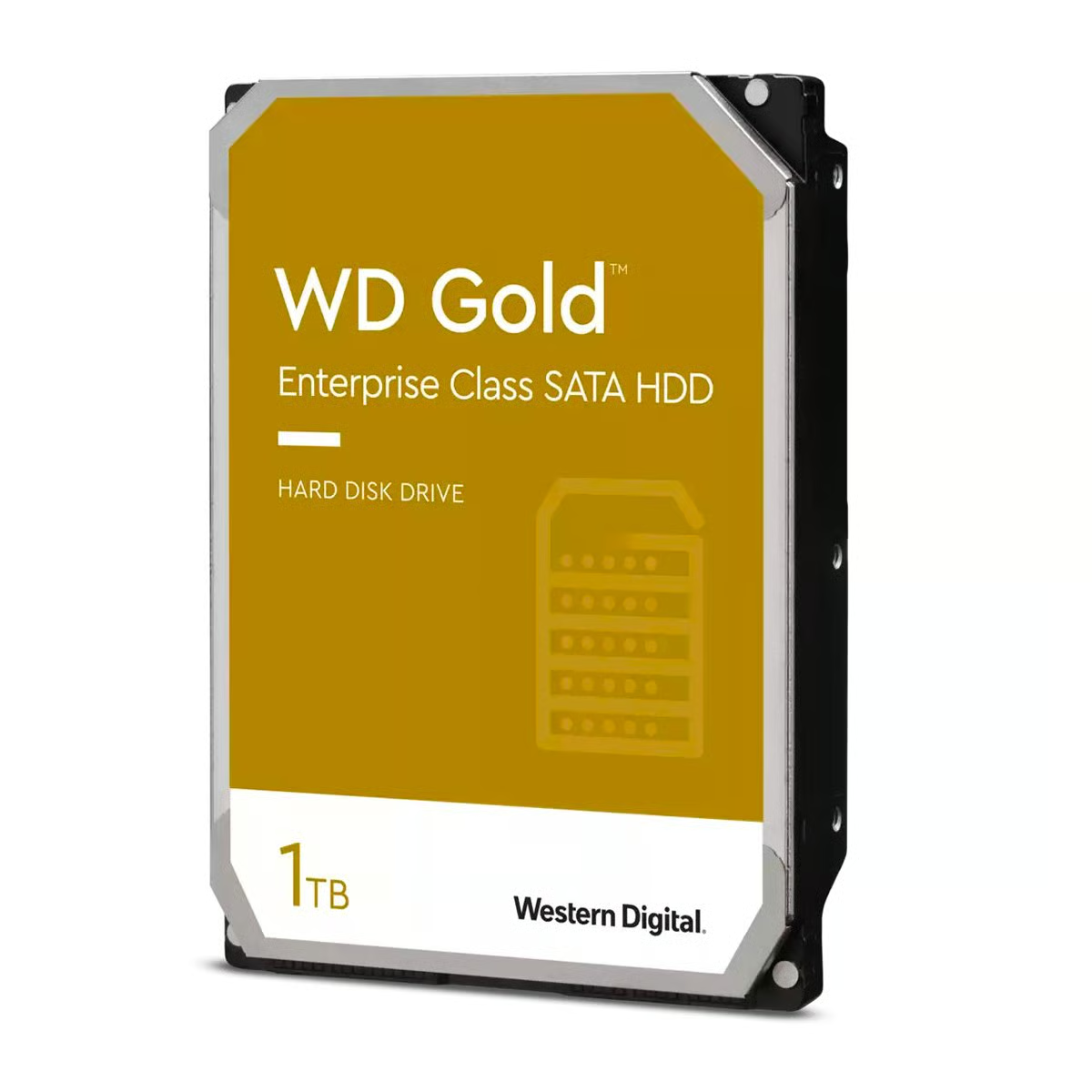
Western Digital (WD) offers a highly segmented portfolio, allowing enterprises to select drives that align precisely with their operational goals. The WD Gold Enterprise series emerged as a top performer in this evaluation with a score of 4.78. It is particularly noted for its wide range of capacity options and its integration of "ArmorCache" technology. This non-volatile cache solution is a significant advancement over traditional DRAM-based caching, as it improves write performance and significantly reduces the risk of data loss during unexpected power failures—a vital consideration for any enterprise data center.
The WD Gold series offers sustained transfer rates that lead the industry, making it the premier choice for organizations seeking the highest possible performance from mechanical storage. Its pricing reflects its premium status, ranging from approximately $85 for entry-level capacities to $550 for top-tier models.
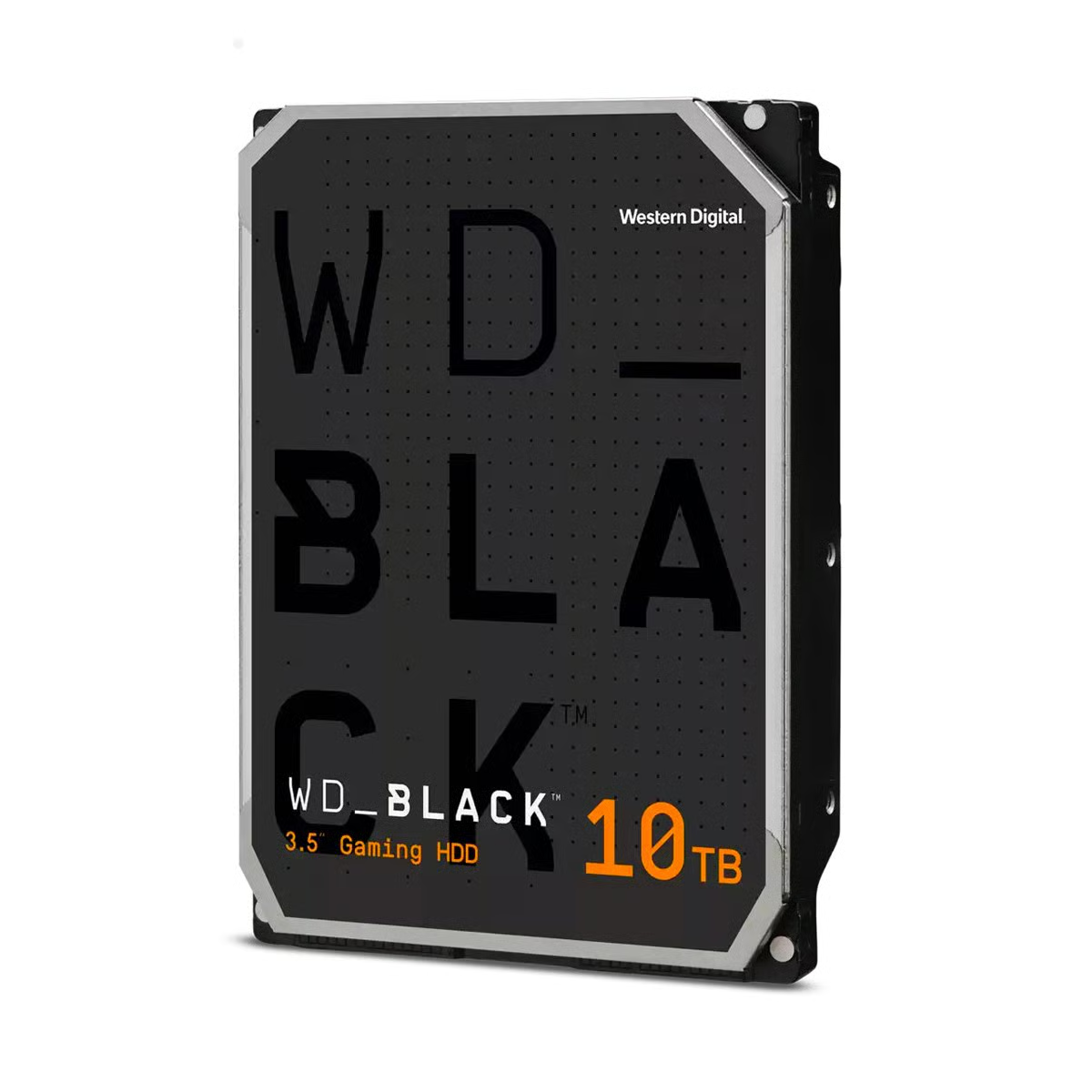
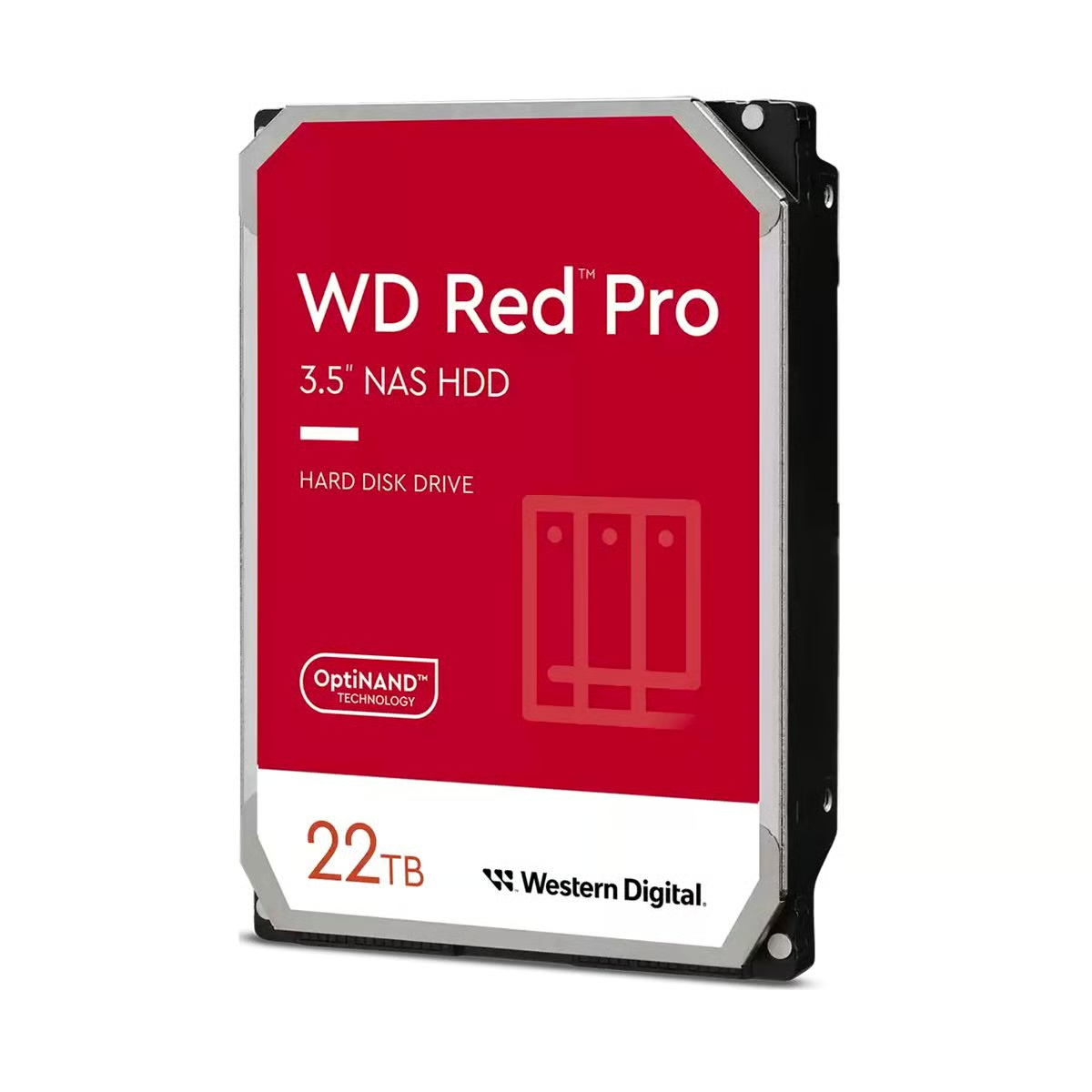
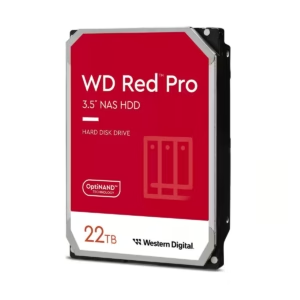
For different use cases, WD provides the Black and Red Pro series. The WD Black, scoring 4.05, remains a staple for enterprise desktops and high-end workstations. With a 7,200 RPM spindle speed for models 4TB and larger, it provides the necessary speed for intensive local tasks. Meanwhile, the WD Red Pro (score 4.50) is specifically tuned for enterprise NAS environments. It excels in random workloads and, in its 14TB and larger iterations, features 512MB of DRAM cache to smooth out data bottlenecks. The Red Pro is designed to handle the unique vibrations and heat profiles of multi-bay NAS enclosures, earning a perfect 5.0 in environmental compatibility.
Toshiba’s Versatility and Reliability: MG Series and N300
Toshiba continues to be a formidable competitor by focusing on mixed-use workloads and high-performance NAS reliability. The Toshiba MG Series, which earned a score of 4.58, is designed for the rigorous demands of enterprise data management. With capacity options ranging from 1TB to 10TB, these drives are built to support 24/7 operations in server and storage infrastructures. The MG series is particularly valued for its balance of enterprise-grade features and storage utilization, making it a versatile choice for organizations with varied data needs.
The Toshiba N300 NAS series, scoring 4.25, targets the high-performance storage market with capacities reaching up to 18TB. The N300 is renowned for its endurance and performance at a price point that remains accessible for smaller organizations and home offices, yet it possesses the "battle-tested" reliability required for enterprise-level NAS deployments. It is a drive that bridges the gap between high-end consumer needs and professional data infrastructure.
Specialized Solutions: Surveillance, AI, and Gaming-Grade Durability
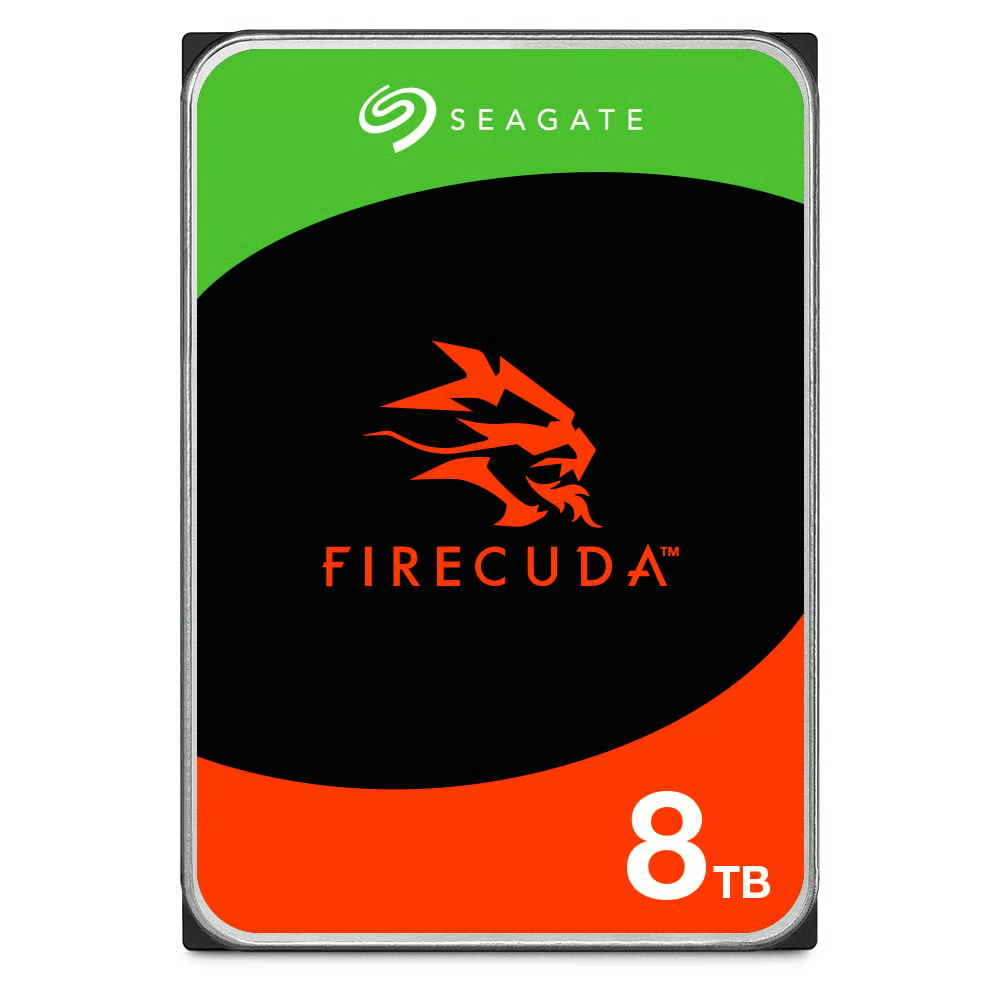
The evaluation also touched upon drives designed for specific niche applications that have become increasingly important to the modern enterprise. The Seagate FireCuda, despite its reputation in the gaming community, achieved a remarkably high score of 4.95. Its industrial-grade construction makes it an excellent choice for "vault" use cases and intensive audio-visual applications within a data center. Its ability to handle high-frequency data access makes it surprisingly competent for specialized enterprise storage scenarios.
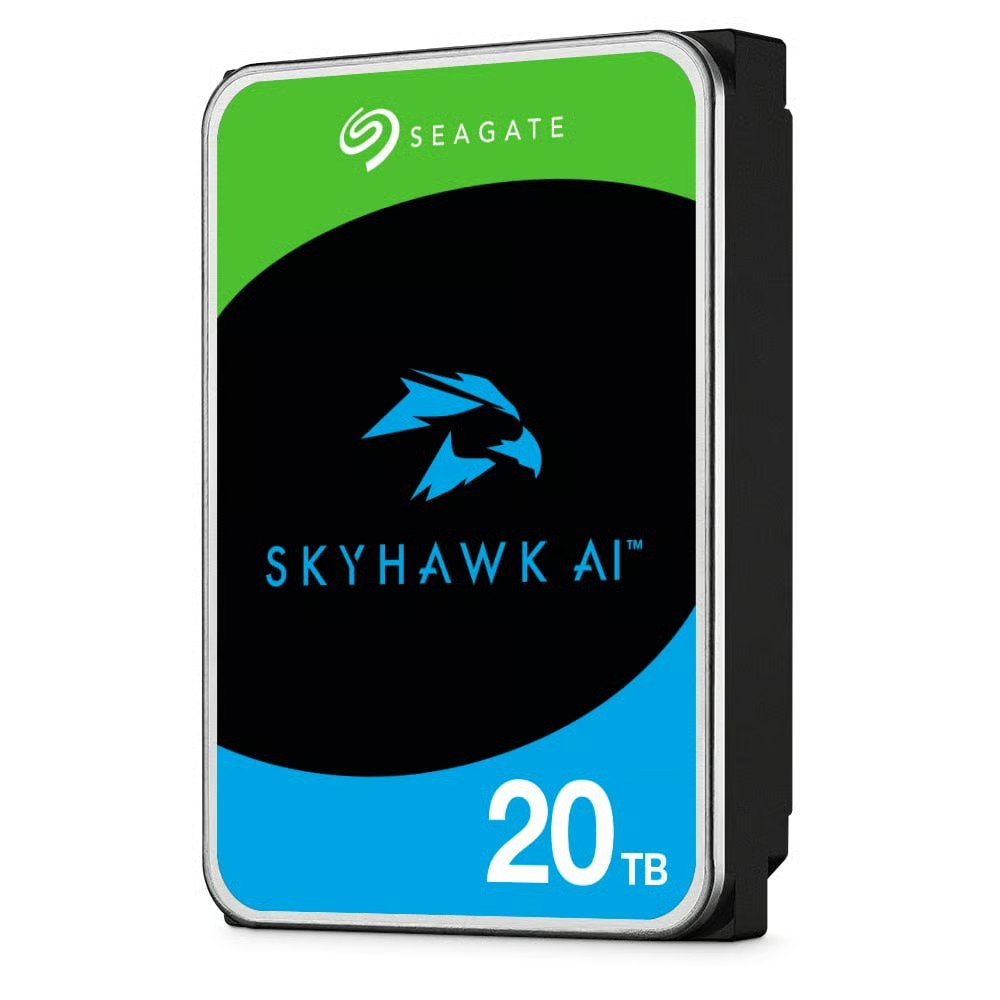
In the realm of security, the Seagate Skyhawk AI (score 3.95) and the WD Purple series (score 4.55) represent the pinnacle of surveillance storage. The Skyhawk AI is engineered for artificial intelligence network video recorders (AI NVRs), capable of supporting deep learning analytics and high-intensity video streams simultaneously. The WD Purple series focuses on 24/7 compatibility across a vast array of security systems, ensuring that video data is captured reliably without frame loss. These drives are essential for modern organizations that rely on high-definition video analytics for safety and operational intelligence.
Key Evaluation Metrics for Enterprise Storage
The methodology behind these rankings was comprehensive, reflecting the multifaceted needs of a business environment. Core features, such as capacity, rotational speed (RPM), and data transfer rates, accounted for 25% of the total score. In the enterprise world, the difference between a 5,400 RPM and a 7,200 RPM drive can be significant when multiplied across hundreds of units in a RAID array.
Enterprise-specific features accounted for 20% of the score. These include advanced error recovery mechanisms like Time-Limited Error Recovery (TLER). In a RAID configuration, TLER prevents a drive from entering a long error-recovery cycle that could lead the RAID controller to mistakenly mark the drive as failed, potentially triggering a time-consuming and risky array rebuild.
Support and vendor reputation were also heavily weighted (totaling 35%). For a business, the quality of documentation, the availability of live technical support, and the speed of the RMA (Return Merchandise Authorization) process are just as important as the hardware itself. A drive failure is a manageable event only if the vendor provides the tools and support necessary to rectify it quickly.
Choosing the Right Path
Selecting the ideal enterprise hard drive is not merely a matter of finding the highest capacity for the lowest price. It requires a nuanced understanding of the specific workload the drive will face. An organization focused on deep-learning video analytics will find the most value in a Seagate Skyhawk AI, while a firm managing a massive, multi-tenant cloud database will likely lean toward the WD Gold or Seagate Exos for their superior MTBF and caching technologies.
As data continues to be the most valuable asset of the modern corporation, the hardware that houses that data must be chosen with precision. The 2023 landscape of enterprise HDDs shows that while the players are few, the options are vast, offering a specialized tool for every conceivable storage challenge. By prioritizing reliability, error recovery, and environmental resilience, enterprises can build a storage foundation that is not only vast but enduring.
 Enterprise Tech & Infrastructure
Understanding the Architecture of Modern Storage: Decoding the Relationship Between Flash Technology and Solid-State Drives
In the rapidly evolving landscape of data storage, the terminology used to...
 Enterprise Tech & Infrastructure
From Theory to Engineering: Quantum Computing Reaches a Commercial Tipping Point as Industry Giants Prepare for a Hybrid Future
The long-anticipated transition of quantum computing from a theoretical pursuit of physics...
 Enterprise Tech & Infrastructure
Seagate, Western Digital, and Toshiba Lead 2023 Rankings for Enterprise-Grade Storage Solutions
In the rapidly evolving landscape of corporate data infrastructure, the demand for...







