

Beyond the "Big Tech" sphere, Fox has demonstrated a practical application for the dot-brand model. By launching numerous promotional and show-specific sites under the .fox extension, the media conglomerate has created a unified and easily recognizable digital footprint that bypasses the need to hunt for available .com addresses for every new television series or film.
However, these success stories remain the exception rather than the rule. For the vast majority of the 2012 applicants, the usage of dot-brands fell far short of the original, perhaps overly optimistic, expectations. The general public never fully transitioned to typing "search.google" or "insurance.nissay" into their browsers, continuing instead to rely on search engines and traditional domain structures.

The 2026 applicant pool represents a different breed of company, many of which are products of a post-2012 digital economy. The list includes names that were either in their infancy or entirely non-existent when the first round of TLD expansion occurred. Companies like OpenAI, Canva, and Vercel are now among those seeking their own extensions. For these organizations, a dot-brand is not just a defensive marketing play but a potential infrastructure tool for the next generation of the web, including AI-driven platforms and collaborative design ecosystems.
Established legacy companies are also returning to the table, but with a more surgical focus. Rather than simply applying for their primary corporate name, many are seeking TLDs for specific sub-brands or technological initiatives launched in the last decade. Google, for example, has applied for .gemini—reflecting its massive pivot toward artificial intelligence—and .alphabet, to align with its corporate holding structure. Bank of America has applied for .erica, the name of its widely used virtual assistant, suggesting that the bank sees the future of customer interaction occurring within a dedicated, secure branded domain space rather than a sub-directory of a .com.
Perhaps the most intriguing development in the 2026 round is the participation of "old-school" internet companies that intentionally sat out the 2012 round. Both eBay and Salesforce are among the new applicants. In 2012, these companies likely viewed the $185,000 application fee and the ongoing maintenance costs as an unnecessary expense for a system with unproven utility. Their decision to apply now suggests a significant shift in corporate strategy.
 Web Hosting & Domain Management
Tucows Revises Domain Guidance Downward as Expired Domain Revenue Softens in Third Quarter
Tucows (NASDAQ: TCX), a long-standing pillar of the internet infrastructure and domain...
 Web Hosting & Domain Management
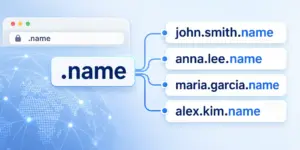
Verisign Reverses Course on Termination of Third-Level .name Domains Following Community Outcry
In a significant victory for long-time internet users and digital identity advocates,...
 Web Hosting & Domain Management
AI-Driven Development and Defensive Strategies Shape Recent Surge in End-User Domain Sales
The landscape of the domain name secondary market is undergoing a significant...







