
Sanity Integration and Workflow Logic
The project’s reliance on Sanity goes beyond simple data storage. Sanity holds the entire collection and manages the lifecycle of the editing process. Branch destinations within the stories utilize native Sanity references, creating a robust web of interconnected content. The workspace is configured to store not just the exhibits themselves, but also drafts, reviews, approvals, snapshots, and a full audit trail of events.
The logic governing the "Museum" is designed to prevent content errors. Any edit made to a document automatically invalidates its previous approval status. The publication process is similarly guarded; it rejects stale revisions, missing destinations, or any logical cycles that might break the branching narrative. These checks occur within a revision-guarded Sanity transaction, ensuring that visitors continue to see the previously published version while a new edit is under review.

It is important to note that this is a custom application workflow. While the app simulates roles like "curator" and "reviewer," these are not separately authenticated individuals within the Sanity ecosystem but rather simulated roles within the app’s logic. The project deliberately avoids using Sanity’s managed Workflows product or the App SDK, opting instead for a bespoke implementation that matches the unique requirements of the "Vibe-Code" challenge.
Verification and Final Deployment
The integrity of the Museum of Almost was verified through a series of rigorous checks in late September. On September 21, the developer conducted eight workflow checks through a local server, exercising real-time Sanity reads and writes. These tests confirmed the system’s ability to reject stale requests and handle approval invalidations correctly. A total of fourteen successful transitions were recorded, restoring the original fictional content while maintaining a complete audit log.
A final round of checks was performed on September 26, focusing on the Netlify deployment. These checks confirmed that all six Sanity-backed exhibits were functioning as intended. The "Rain Library" correctly branched to the "Listening Bench" upon the selection of the neighborhood-sharing option, and the security protocols were validated when an empty curator key was rejected by the system.
The project stands as a completed study in speculative design and structured content. By documenting every failure and implementation decision in a curated build log, the developer has provided a roadmap for how complex, choice-driven narratives can be managed with the same precision as enterprise software. The Museum of Almost remains a quiet, interactive space on the web, inviting visitors to explore the "almosts" of invention while showcasing the "how" of modern digital curation.
 Software Development & Scripting for IT
The Hidden Risks of DNS Drift: Why Engineering Teams are Prioritizing Reconciliation Safety over Speed
In the modern landscape of cloud-native logistics and software-as-a-service platforms, the reliability...
 Software Development & Scripting for IT
AI That Urges You to Unplug: Pranav Suryawanshi Unveils TouchCall Voice Assistant for the Hacktoberfest AI Challenge
In an era where digital wellness applications often paradoxically demand more of...
 Software Development & Scripting for IT
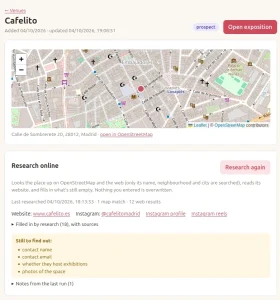
Bridging the Gap Between Canvas and Cafe: Developer Builds Local AI Suite to Help Madrid Artist Manage Exhibitions
In the bustling cultural landscape of Madrid, where neighborhood cafes and local...






