
The digital landscape is often built upon the ruins of what came before. In the world of Search Engine Optimization (SEO), the expiration of a domain name is rarely the end of its story; instead, it marks the beginning of a transformation. Sean Markey’s latest analysis of domain sales from NameJet and SnapNames for August 2026 reveals a striking and somewhat morbid trend. As legitimate businesses, non-profits, and historical archives shutter their digital doors, a new breed of internet entrepreneur is waiting to scavenge the remains.
The SEO industry often functions like the fungi of the business world, breaking down the "corpses" of established brands to nourish new, often controversial, ventures. In August, this process reached a fever pitch. Of the 44 domain names sold that carried a Domain Rating (DR) of 15 or higher, at least 13—nearly 30 percent—have already been converted into gambling-related sites or redirects. These are not just random web addresses; they are high-authority domains that once represented research centers, political advocacy groups, and local eateries, now repurposed to capture traffic for online casinos and betting platforms.
The Fall of ParentsTV.org and the Rise of the Canadian Casino
One of the most high-profile sales in August was ParentsTV.org, which fetched $16,500 at NameJet. For nearly three decades, this domain was the home of the Parents Television Council, a group that defined the media landscape of the early 2000s. Known for its relentless advocacy and frequent FCC complaints regarding broadcast decency, the organization was the preeminent voice of conservative media watchdogs. However, cultural shifts and a changing media environment eventually took their toll. In 2021, the group rebranded as the Parents Television and Media Council, but the transition was not enough to save the organization. By 2025, it had filed for Chapter 7 bankruptcy.
Despite the organization’s demise, the domain itself retained significant value. Even as it moved through the expiration process, ParentsTV.org clung to its search engine rankings and organic traffic. In the SEO world, consistent organic traffic is often considered a higher-value signal than a high Domain Rating, as it proves the site is still being actively "rewarded" by Google’s algorithms.
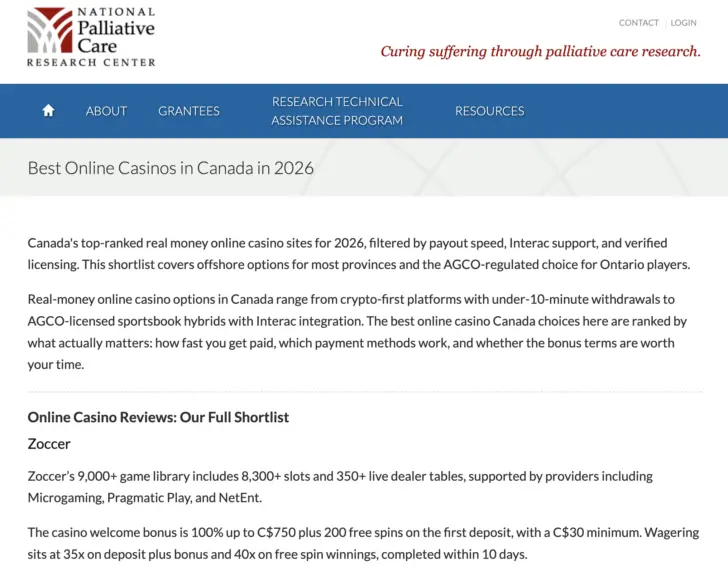
In a previous era, perhaps around 2018, an expired domain like this might have been turned into a dubious Amazon affiliate site, filled with AI-generated TV reviews designed to capture a percentage of consumer purchases. Today, the strategy is more direct. Visitors to ParentsTV.org are now redirected to a Canadian casino. The domain doesn’t even host its own content; it simply serves as a high-authority bridge, funneling unsuspecting users—or at least the "link juice" associated with its history—toward the gambling industry.
NPCRC.org: From Palliative Care to Digital Slots
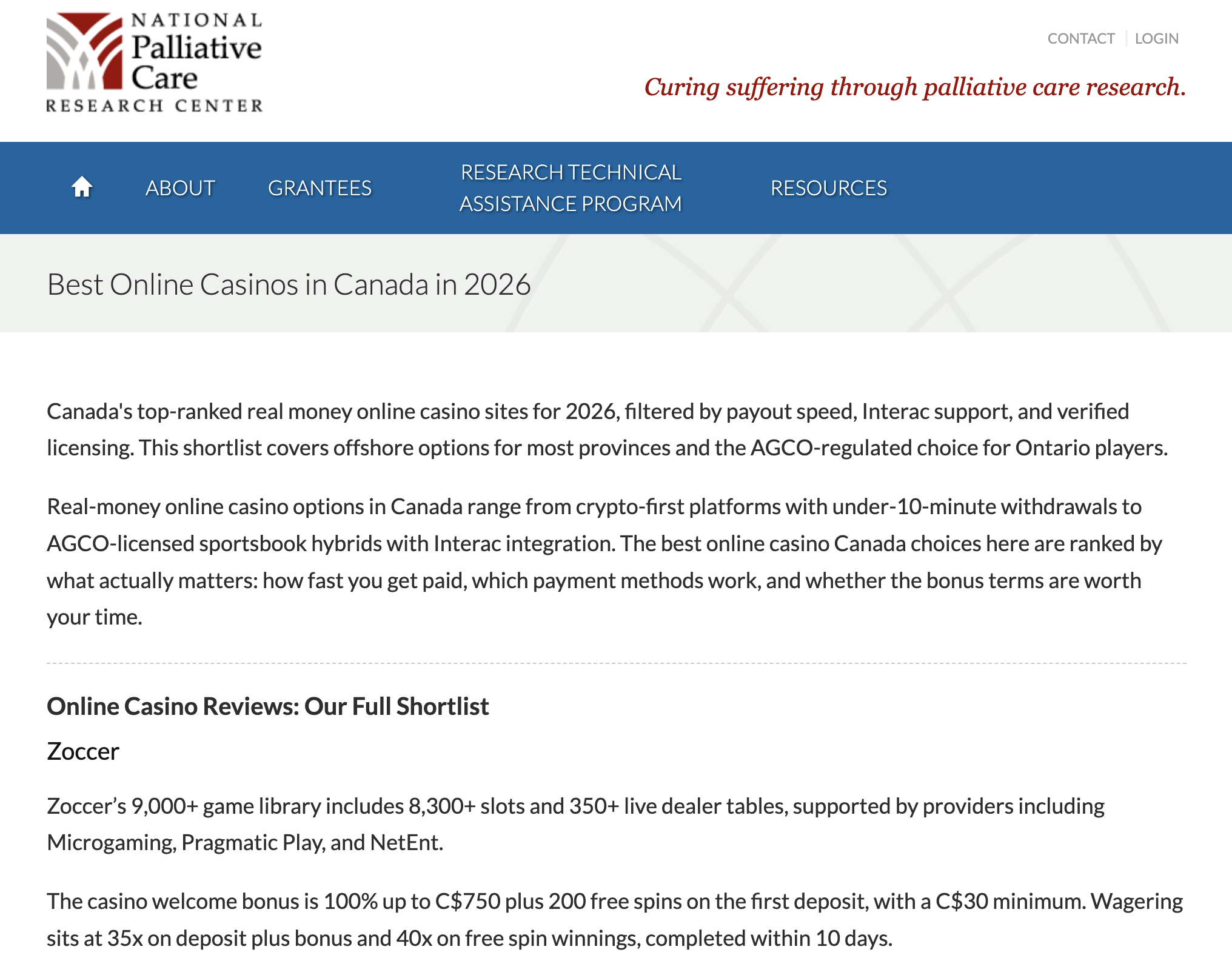
The transition of NPCRC.org is perhaps even more jarring. Formerly the digital home of the National Palliative Care Research Center, an organization closely associated with Mount Sinai, the site was a cornerstone of medical research and clinical resources. Its backlink profile was, as expected, massive, featuring links from prestigious medical journals, universities, and healthcare institutions.
The domain sold for $12,500 at NameJet, and the buyer wasted no time in capitalizing on its prestige. In a move that highlights the technical sophistication of modern SEO "churn-and-burn" tactics, the buyer rebuilt the entire original site as a static copy. With approximately 500 pages restored, the site still features the original NPCRC header, navigation menus, and even a contact page listing the former staff. Clinical PDFs remain hosted on the server, and a footer still displays a 2013 copyright notice.
However, the homepage tells a different story. Prominently displayed at the top of this reconstructed medical research site is a new headline: "Best Online Casinos in Canada in 2026." By wrapping casino promotions inside the shell of a trusted medical authority, the owners hope to bypass search engine filters that might otherwise flag a new gambling site as untrustworthy. It is a digital masquerade where the authority of palliative care research is used to sell slot machines.
MandesRestaurant.com and the Turkish Betting Surge
The economics of these domain acquisitions often rely on short-term bursts of massive traffic. This was evident in the sale of MandesRestaurant.com for $3,986 at SnapNames. Mande’s, a breakfast and lunch staple in Mandeville, Louisiana, remains a functional business, but like many local restaurants, it transitioned its digital presence to a platform like Toast, allowing its original .com domain to expire.
The domain’s registration changed hands on August 17. Within 24 hours, the new owners had deployed a network of subdomains targeting the Turkish betting market. Keywords such as "deneme bonusu veren siteler"—which translates to "sites giving trial bonuses"—began to rank almost instantly. By August 24, a site that previously saw 129 monthly visits was suddenly generating traffic at a run rate of 590,000 visits per month.

This "churn-and-burn" strategy is designed for speed. The rankings for MandesRestaurant.com collapsed by August 26, and by October, the site was a digital ghost town, returning 404 errors on every URL. Yet, the question remains: is $4,000 worth a single week of high-volume traffic? In the world of gambling affiliates, where a single new depositor can be worth hundreds of dollars in commissions, the answer is often a resounding yes. These operators treat domains as disposable assets, burning through them one by one as they move their link networks to the next fresh acquisition.
Historical Legacy vs. Indonesian Gambling Sites
The case of ThomasNast.com, which sold for $4,118, illustrates how even historical figures are not immune to the scramble for SEO authority. Thomas Nast, the 19th-century political cartoonist famous for his depictions of Boss Tweed and for popularizing the Republican elephant, had a domain that naturally ranked well for educational and historical searches.
By late August, the domain was performing a bizarre double duty. It remained the top result for "thomas nast political cartoons," but a subdomain—journal.thomasnast.com—was simultaneously ranking number one in the United States for the Indonesian term "situs slot" (slot site). The digital trail for this domain eventually leads to a redirect chain that lands on the former site of a Missouri donut shop, which has also been repurposed for casino content. This convoluted web of redirects is a common tactic used to obscure the final destination of traffic from search engine crawlers, though it often tests the limits of how many "hops" a search engine like Google is willing to follow.
NICTUSA.com: The High Price of Invisible Authority
Not every high-priced domain sale results in immediate traffic. NICTUSA.com sold for $15,501 at NameJet, a significant sum for a domain that, at the time of purchase, had virtually no organic rankings. Its value lay entirely in its history as a government contractor. For years, the site hosted the Federal Election Commission’s (FEC) scanned campaign filings and Michigan’s campaign finance search.
Because it hosted official records, thousands of journalists and researchers had linked to NICTUSA.com over the years. When the FEC and the state of Michigan moved their records to internal systems, the domain lost its traffic but kept its elite link profile. The new owners have attempted to pivot the site into a "people-search" directory, promising users the ability to look up anyone in the U.S. by name.
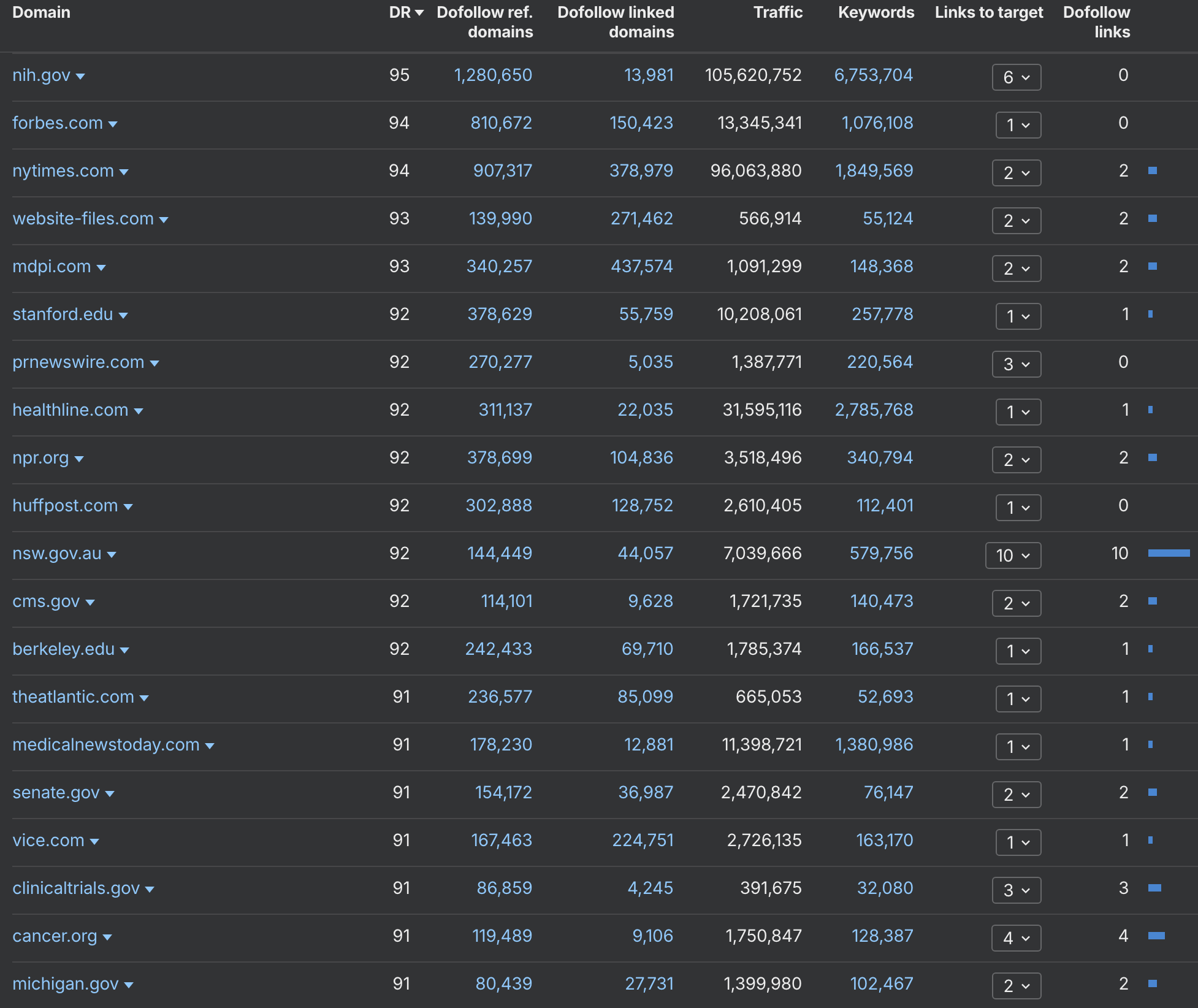
However, the transition has been plagued by technical errors. The owners have implemented a mass redirect strategy, pointing every old filing URL and subdomain to the new homepage. This is a tactic that Google often penalizes as a "soft 404," meaning the SEO value of those thousands of high-quality historical links may never actually transfer to the new business. It serves as a cautionary tale: a great link profile without traffic or a proper technical transition is often a hollow investment.
The Broader Market for August Sales
The August data from NameJet and SnapNames paints a picture of a highly competitive market where "brandable" names are often overshadowed by "functional" SEO assets. While some domains like Wald.com sold for as much as $36,022, the bulk of the high-DR activity was concentrated in the $2,000 to $15,000 range.
Among the notable sales with a DR of 15 or higher were ThisNation.com ($5,099), CMANY.org ($14,510), and Ironworks.com ($13,150). Each of these domains represents a piece of digital real estate with a pre-existing reputation. Whether they will be used to build legitimate new brands or simply added to the growing pile of casino redirects remains to be seen.
As the SEO industry continues to evolve, the demand for expired domains shows no signs of slowing down. The ability to "buy" authority rather than earning it over years of content creation is too tempting for many operators to ignore. While this practice remains a point of contention for search engines, the August sales figures prove that for a significant portion of the domain market, the value of a name lies not in what it will become, but in what it used to be.
 Web Hosting & Domain Management
AI Automation Offers New Solution for Bulk Domain Transfer Authorization Challenges
The process of managing a large portfolio of domain names has long...
 Web Hosting & Domain Management
Slovenia’s .si Domain Experiences Unprecedented Surge Following "Super Intelligence" Executive Order
The digital landscape of Slovenia’s country-code top-level domain (ccTLD), .si, has undergone...
 Web Hosting & Domain Management
The Long Road to .web: Chris Ambler Reflects on Decades of Domain History and a New Path Forward with .epic
The landscape of the internet is on the verge of a significant...







