
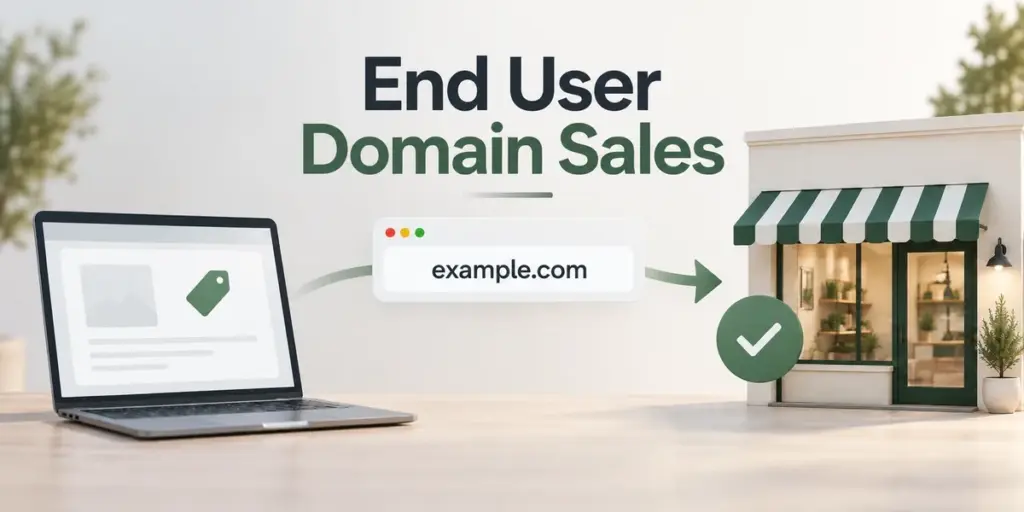
The secondary domain name market continues to serve as a critical barometer for global business trends, providing a clear window into the sectors currently experiencing growth and digital consolidation. A recent analysis of sales data from the Sedo marketplace, specifically focusing on reports from early October, highlights a significant wave of end-user acquisitions. These transactions, ranging from high-value .com legacy domains to strategic country-code top-level domain (ccTLD) purchases, underscore the ongoing premium that businesses place on clear, brandable, and industry-specific digital real estate.
End-user sales are particularly noteworthy in the domain industry because they represent the final destination of a domain name. Unlike "wholesale" flips between domain investors, end-user sales involve companies or entrepreneurs purchasing a name to build a brand, launch a product, or protect a trademark. The prices paid in these instances reflect the tangible value a business assigns to its online presence, often influenced by marketing strategy, search engine optimization (SEO) goals, and the desire for consumer trust.
The latest findings reveal a market driven by several key sectors, most notably the burgeoning artificial intelligence (AI) industry, the international expansion of consumer retail brands, and the continued strength of European regional markets. From baby clothing manufacturers in France to large language model benchmarking firms, the diversity of buyers in this period illustrates that the need for a strong domain name transcends industry boundaries.
High-Value Benchmarking and the AI Influence
At the top of the recent sales list is FrontierMemory.com, which commanded a purchase price of $9,888. This acquisition is a direct reflection of the current technological zeitgeist. FrontierMemory is a firm dedicated to the benchmarking of large language models (LLMs). As the AI sector matures, the infrastructure surrounding it—including testing, validation, and performance metrics—is becoming a lucrative niche.
For a company operating in the high-stakes world of AI and machine learning, a domain like FrontierMemory.com provides an air of authority and permanence. The "Frontier" prefix is often associated with the cutting edge of research, while "Memory" speaks to the fundamental hardware and data requirements of modern computing. This sale highlights how the AI boom is not just creating value for the creators of models, but also for the peripheral services that support the ecosystem.
Similarly, the AI and data economy influenced the sale of DataField.co for €2,899. This company operates in a rapidly emerging sub-sector: facilitating the sale of proprietary business data to LLM developers. As AI companies seek high-quality, human-generated data to train their models, intermediaries like DataField are stepping in to bridge the gap. The choice of the .co extension continues to be a popular alternative for tech-forward startups, offering a modern feel while maintaining a high level of recognizability.
International Retail and the Power of ccTLDs
The retail sector remains a dominant force in the domain secondary market, as evidenced by the $8,000 sale of LoveToDream.fr. Love to Dream is a well-established baby clothing company known for its innovative swaddles and sleepwear. While the company maintains a strong global presence, the acquisition of the French country-code extension (.fr) suggests a targeted push into the European market.
For international brands, owning the local ccTLD is often a prerequisite for success in specific regions. It signals to local consumers that the brand is committed to their market, often leading to higher click-through rates in search results and increased consumer confidence. In France, where national identity and local language are highly valued, the .fr extension is a powerful tool for any global brand looking to establish a foothold.
The furniture industry also saw significant activity, with two notable sales. CasaVolta.com was acquired for $5,320. The name carries a sophisticated, international appeal, as "Casa" translates to "house" or "home" in Italian, Spanish, and Portuguese. This linguistic versatility makes it an ideal brand for a furniture business looking to appeal to a broad, perhaps even global, audience.
On a more descriptive front, DHFurniture.com sold for $4,999. Unlike the more evocative CasaVolta, DH Furniture is a straightforward, utilitarian name for a furniture manufacturer. In the world of e-commerce, such domains are highly valued for their clarity and their ability to capture direct-type-in traffic from users looking for specific products.
Specialized Services and Niche Markets
The recent sales data also highlights the value of short, memorable names for specialized services and niche hobbies. Skomar.com, for instance, sold for $5,523 to a business centered around a billiards game. In the gaming and sports world, a short, unique name that can be easily branded on merchandise and digital platforms is essential.
Another intriguing sale is Heir.si, which was purchased for $5,000. This platform offers a unique service: virtual interviews designed to create a "living record" of an individual’s life, including their values, possessions, and final wishes. The use of the .si extension (the ccTLD for Slovenia) is a creative choice, though it functions here more as a short, punchy brand name for a global service. The concept of digital legacy and estate planning is a growing field, and a name like "Heir" perfectly encapsulates the company’s mission.
In the realm of entertainment and digital collectibles, KPics.com was acquired for $4,525. The site is set to sell limited-edition K-pop photo sets as digital downloads. Given the massive global footprint of the K-pop industry and the high engagement levels of its fanbase, a short, four-letter domain that combines "K" (for Korea/K-pop) with "Pics" is a highly efficient branding choice. It is easy to type, easy to remember, and perfectly describes the product offering.
European Market Dynamics and Localized Branding
The German-speaking markets were particularly active in this reporting period, with several sales involving the .de (Germany) and .at (Austria) extensions. These sales demonstrate the high value placed on localized, descriptive domains in Europe’s largest economies.
Dila.at, an Austrian domain, sold for €5,200. The buyer, Dila Sanieren, specializes in windows and doors. While the company already uses the more descriptive dila-sanieren.at, the acquisition of the shorter Dila.at serves as a strategic brand protection move and a more concise URL for marketing materials.
In Germany, Dentin.de sold for €4,950 to a dental provider branded as Dent.IN. This sale is a clever example of brand alignment. While the company uses a play on words with its name, securing the .de extension ensures they capture local traffic and prevent confusion with the .in (India) country code.
Other notable German sales include:
- Simpliciter.de (€3,980): A virtual legal assistant. The name "Simpliciter" is Latin for "simply," a common term in legal discourse. This choice of name conveys professional authority while promising a simplified user experience.
- Muuv.de (€2,299): A medical supply store that currently forwards the domain to muuv.ms. This acquisition shows a company consolidating its digital footprint under a more traditional and trusted regional extension.
- Pinja.de (€2,200): A technology solutions firm that forwards the traffic to its primary .com domain, a classic defensive and navigational acquisition.
- AktienDepot.de (€2,100): This domain translates directly to "stock portfolio" in German. It is set to become a comparison site for brokerage services, showcasing the value of high-intent, category-defining keywords in local languages.
In the Swedish market, the sale of Bilhandlare.se for €5,000 stands out. Translating to "car dealer," the domain is an quintessential example of a "category killer." For anyone in Sweden looking to find or compare car dealerships, this is the definitive search term, making the domain an incredibly valuable asset for lead generation and industry authority.
Emerging Trends in Tech and Social Communities
The diversification of the domain market is further evidenced by sales like Coincident.org for $3,999 and Bird.city for $2,999. Coincident Labs, the buyer of the .org domain, builds foundation models to track and forecast human behavior for use in political campaigns and infrastructure projects. The choice of .org often suggests a research-heavy or mission-driven focus, which aligns with the company’s work in large-scale social simulation.
Bird.city represents the growing use of "new gTLDs" (generic top-level domains). As a community hub for travelers, nomads, and free-thinkers, the .city extension provides a descriptive and modern alternative to traditional extensions. It allows the brand to immediately communicate a sense of place and community.
Finally, the telecommunications sector saw the sale of eSimPal.com for $2,000. As physical SIM cards are increasingly replaced by electronic versions (eSIMs), businesses providing these services are racing to secure relevant "pal" or "assistant" style names. This sale reflects the ongoing shift in mobile technology and the need for consumer-friendly brands in the space.
The Strategic Importance of Domain Acquisitions
These nineteen sales, while varied in price and industry, share a common thread: the strategic recognition that a domain name is more than just a web address. For these end users, the right domain is a foundational piece of their corporate identity, a tool for market expansion, and a shield against competitors.
As the digital landscape becomes increasingly crowded, the premium on short, memorable, and relevant domain names is likely to remain high. Whether it is a furniture store in Italy or a legal tech startup in Germany, the move to secure high-quality digital real estate continues to be a priority for businesses looking to establish a long-term presence in the global marketplace. The Sedo sales reports from October serve as a potent reminder that in the modern economy, your domain is often your first—and most lasting—impression.
 Web Hosting & Domain Management
The Long Road to .web: Chris Ambler Reflects on Decades of Domain History and a New Path Forward with .epic
The landscape of the internet is on the verge of a significant...
 Web Hosting & Domain Management
Norton antivirus software maker in talks to acquire GoDaddy
The discussions are currently in their early stages, and while there is...
 Web Hosting & Domain Management
Man tries to reverse hijack lotto domain name
The dispute was initiated by Rikshiram Aghria, an Indian national who sought...







