
The methodology used to identify these secrets was rigorous. A value was only flagged if it matched a known cryptographic key format or if it appeared as a password or token in immediate proximity to a public server address. To ensure accuracy and reduce false positives, an AI-based reviewer was used to confirm the nature of the data. While the researchers did not attempt to use the secrets to gain unauthorized access, they did notify several affected parties. One company confirmed that a leaked key found by the researchers was indeed active and provided access to their systems.
The nature of the leaked data is particularly concerning for enterprise security. More than a third of the identified secrets provided direct access to databases. The haul included 379 database passwords, 43 SSH logins for public-facing servers, and 23 AWS access keys. Additionally, 42 tokens for critical development platforms like GitHub, GitLab, and npm were discovered.
The victims of these leaks are not limited to individual hobbyists. Apiiro identified 63 distinct organizations among the owners of the leaked files, many of which are software companies ranging from small startups to established vendors. In one particularly egregious case, a database vendor’s own administrative-level cloud key was found in a public repository. In another, the owner password for a database containing medical records was left exposed.
The longevity of these leaks is another point of concern. As of earlier this week, every file identified as containing a secret remained on the default branch of its respective repository. In half of those cases, the sensitive information had been publicly available for at least 217 days. Even when a developer realizes the mistake and deletes the file, the danger persists. Because Git is a version control system, the secret remains embedded in the repository’s history and in any forks that were created while the file was present. Apiiro found 734 secrets in older versions of files that had since been deleted, and another 211 secrets in repository forks.
The Failure of Traditional Security Tools
One of the most alarming aspects of this discovery is that traditional security scanners are largely failing to detect these leaks. Common tools like gitleaks and TruffleHog are designed to scan repositories for secrets, but they often rely on identifying specific patterns or high-entropy strings that look like API keys.

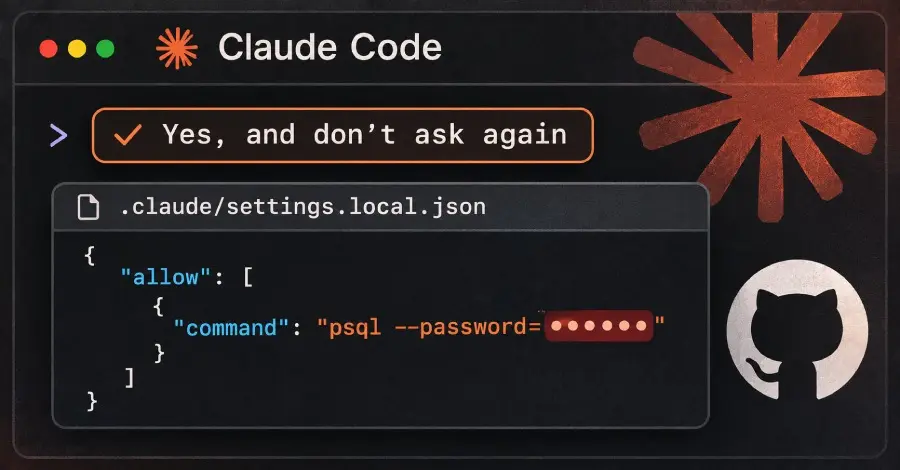
When Apiiro ran these tools over the 1,122 files known to contain secrets, the results were inconsistent. Gitleaks flagged 564 files, while TruffleHog identified 643. Most notably, 215 files containing confirmed secrets were missed by both tools. The reason for this blind spot lies in the context of the leak. Because the secrets are often embedded within a command string—such as a password following a -p flag in a terminal command—they look like ordinary words to a scanner that isn’t specifically looking for command-line arguments. To a standard scanner, mysql -p mypassword123 looks like a routine line of code rather than a critical security vulnerability.
This "contextual camouflage" makes the Claude Code leaks particularly dangerous, as developers may have a false sense of security, believing that their automated scanning tools would have alerted them to any accidental disclosures.
The risk is compounded by the fact that malicious actors are already aware of these types of vulnerabilities. In September 2025, security analysts tracked the "Shai-Hulud" worm, a piece of malware that specifically targeted developer machines. The worm was designed to run the TruffleHog scanner locally on infected systems to find and exfiltrate secrets. As AI agents like Claude Code become more common, they create new, centralized locations for malware to harvest credentials.
 Cybersecurity Basics & Security News
Google Issues Global Warning Over Mass Exploitation of Critical Oracle PeopleSoft Vulnerability
Cybersecurity researchers at Google’s Mandiant division have issued an urgent warning regarding...
 Cybersecurity Basics & Security News
Beyond Policy Intent: Why Identity Visibility Has Become the Critical Frontier in Modern Cybersecurity
In the current landscape of enterprise security, the traditional perimeter has not...
 Cybersecurity Basics & Security News
The Evolution of the Digital Frontier: How AI and Cloud Expansion are Redefining Modern Cybersecurity Strategy
The global cybersecurity landscape is currently undergoing a fundamental transformation, driven by...







