
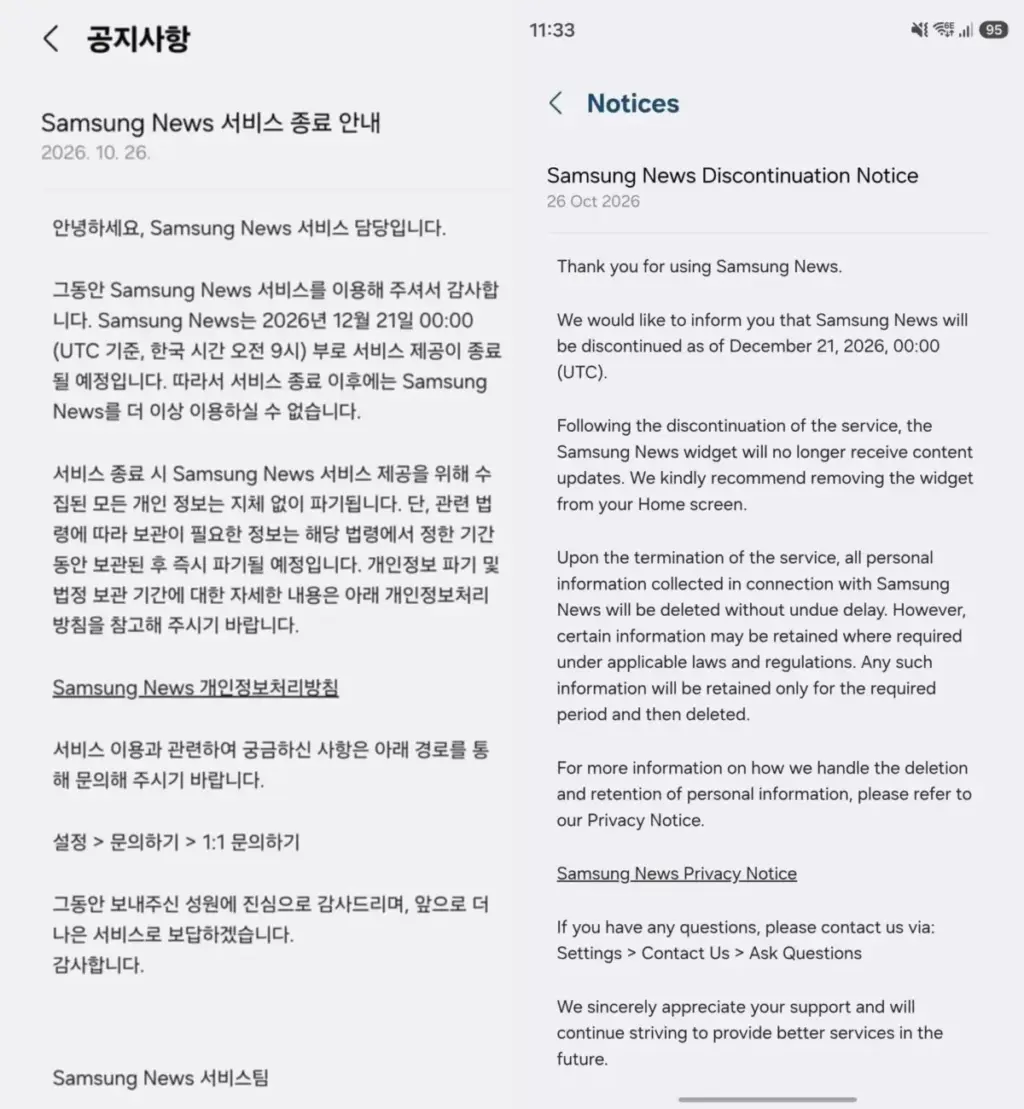
The long lead time—extending into late 2026—is notable. It suggests that Samsung may have existing contractual obligations with news publishers and content aggregators that must be honored before the service can be fully dismantled. These partnerships, which have historically included major media outlets and aggregators like Axel Springer (Upday in Europe), require significant coordination to wind down. The three-year window also ensures that devices currently on the market, many of which are now promised up to seven years of software updates, will have a clear roadmap for when this specific feature will be retired.
For the segment of the user base that has grown accustomed to the Samsung News interface, the 2026 deadline provides ample time to explore alternatives. Beyond Google Discover, the Android ecosystem offers a wealth of news aggregation options, including Flipboard, Microsoft Start, and dedicated apps from major news organizations. Many of these third-party services offer widgets and home screen integrations that can replicate the "at-a-glance" functionality that Samsung News currently provides.
As Samsung moves toward the eventual retirement of its news service, the focus remains on providing a stable and efficient platform. The removal of the app and its associated background processes may even yield minor improvements in system performance and battery life for some users, as the device will no longer need to sync and cache news data for a first-party service in the background. It marks a moment of maturation for One UI, as Samsung continues to trim features that do not significantly differentiate its hardware from the competition.
The eventual disappearance of the Samsung News feed will represent the end of an era for the Galaxy home screen. What began as an ambitious attempt to create a central hub for all user interactions has slowly narrowed in scope, finally arriving at a point where the company feels it is no longer necessary to maintain a branded news presence. As the December 21, 2026, date approaches, Samsung users can expect a gradual transition toward a more streamlined interface, where the news they read is likely to be delivered by the broader Android ecosystem rather than a built-in Samsung utility. This evolution reflects a broader industry trend toward service consolidation, where the platform holder focuses on the core operating system and leaves content aggregation to specialized providers.
 Mobile Device Management (MDM) & Mobile OS
Google Quietly Links Phone Numbers to All Secondary Android Accounts, Raising Significant Privacy Concerns
Android users have recently discovered a significant shift in how Google manages...
 Mobile Device Management (MDM) & Mobile OS
Early Black Friday Deals Bring Significant Savings to the Oura Ring 5 as the Wearable Market Shifts Toward Discreet Health Monitoring
The landscape of wearable technology has undergone a significant transformation over the...
 Mobile Device Management (MDM) & Mobile OS
Foldable Smartphone Market Set for 44% Surge in 2026 as Wide-Screen Designs Lead Industry Recovery
The landscape of the mobile industry is preparing for a significant shift...







