
As the autumn leaves begin to settle and the first frost takes hold across much of the country, the annual ritual of winter preparation has moved to the forefront for homeowners and outdoor enthusiasts alike. The transition into the colder months traditionally brings a list of chores that range from the mundane to the essential: sealing windows, stacking firewood, and ensuring that emergency equipment is in working order. However, the modern landscape of home maintenance is shifting away from the tether of extension cords and the maintenance-heavy requirements of gasoline engines. Leading this charge is Ryobi, the ubiquitous "green tool" brand that has spent the last decade aggressively expanding its lithium-ion ecosystem.
Known primarily for its lime-green drills and impact drivers, Ryobi—a cornerstone of the Home Depot tool aisle—has increasingly leaned into the "lifestyle" segment of the power tool market. This strategy focuses on tools that serve the user outside of traditional construction or woodworking tasks. As the mercury drops, the company is highlighting a specialized range of products designed to tackle the specific challenges of winter, from heating a workspace to ensuring a vehicle starts in sub-zero temperatures.
The core of Ryobi’s appeal lies in its battery platforms: the 18V ONE+ system, which supports over 300 products, and the higher-voltage 40V system designed for more demanding outdoor power equipment. By leveraging these existing batteries, the company has introduced a series of winter-specific tools that prioritize portability and ease of use when conditions are at their most difficult.
The Ryobi 18V Portable Propane Heater: A Hybrid Approach to Warmth
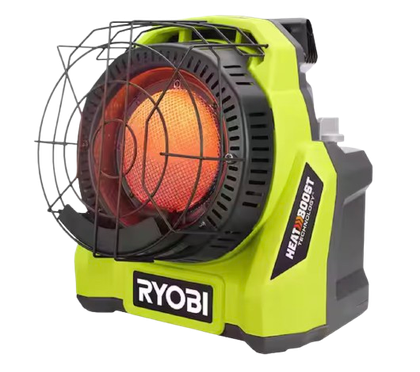
One of the most significant challenges of winter is maintaining a workable environment in unconditioned spaces like garages, sheds, or job sites. While electric space heaters are common, they often lack the raw output needed for large areas, and traditional propane heaters often struggle to distribute heat evenly. Ryobi’s solution to this problem is the new 18V Portable Propane Heater, a tool that effectively bridges the gap between fuel-based heating and battery-powered convenience.
Arriving just as the heating season begins, this unit is not a simple burner. While it utilizes standard propane tanks for its primary heat source—delivering a robust 13,000 BTU of output—it integrates Ryobi’s "HEATBOOST" technology. This system uses an 18V ONE+ battery to power an internal fan, which actively pushes the heated air forward rather than allowing it to rise passively to the ceiling. This forced-air approach allows the heater to cover approximately 325 square feet, making it an ideal companion for a two-car garage or a large tent during a late-season camping trip.
The design of the heater emphasizes durability and protection, two factors that are critical in winter environments. It features a built-in protective door that completely encloses both the propane tank and the 18V battery, shielding them from moisture and debris. For those using the heater in an emergency capacity—such as during a power outage—the ability to run the fan on a tool battery means that even without wall power, a household can maintain a localized heat source with active air circulation.
Ensuring Mobility: The 18V Cordless 1600A Jump Starter
Beyond the home, winter presents a unique set of challenges for automotive reliability. It is a well-documented fact of chemistry that cold temperatures significantly reduce a lead-acid battery’s ability to provide sufficient current to start an engine. Simultaneously, the oil in the engine thickens in the cold, requiring more power to turn the crankshaft. This "perfect storm" often leads to the dreaded sound of a clicking starter on a Monday morning.

While traditional jumper cables have been the standard for decades, they require a second vehicle and a willing participant—a luxury that isn’t always available in a dark driveway or a remote parking lot. To address this, Ryobi has introduced the 18V Cordless 1600A Jump Starter. Unlike many standalone jump packs that use internal, non-replaceable batteries, this unit runs on the same 18V ONE+ batteries used in the brand’s power tools.
The jump starter is capable of delivering 1,600 peak amps, a figure that provides enough "punch" to start most passenger cars, SUVs, and even light-duty diesel trucks. The integration into the tool ecosystem offers a distinct advantage: if the jump starter is low on power, the user can simply swap in a fresh battery from their drill or leaf blower. Safety is also a primary focus, as the unit includes anti-spark technology to prevent dangerous arcs when connecting to battery terminals. With a built-in LED work light and a compact frame, it is designed to be a permanent fixture in a vehicle’s emergency kit, providing peace of mind when the temperature drops below zero.
Specialized Outdoor Equipment: The 40V Ice Auger
For a specific subset of outdoor enthusiasts, winter does not mean retreating indoors; it means heading out onto the ice. Ice fishing is a tradition in northern climates, but it has historically been a noisy and labor-intensive endeavor. Traditionally, anglers had to choose between a manual hand auger—which is physically exhausting when the ice is two feet thick—or a gasoline-powered auger, which is heavy, loud, and prone to starting issues in extreme cold.
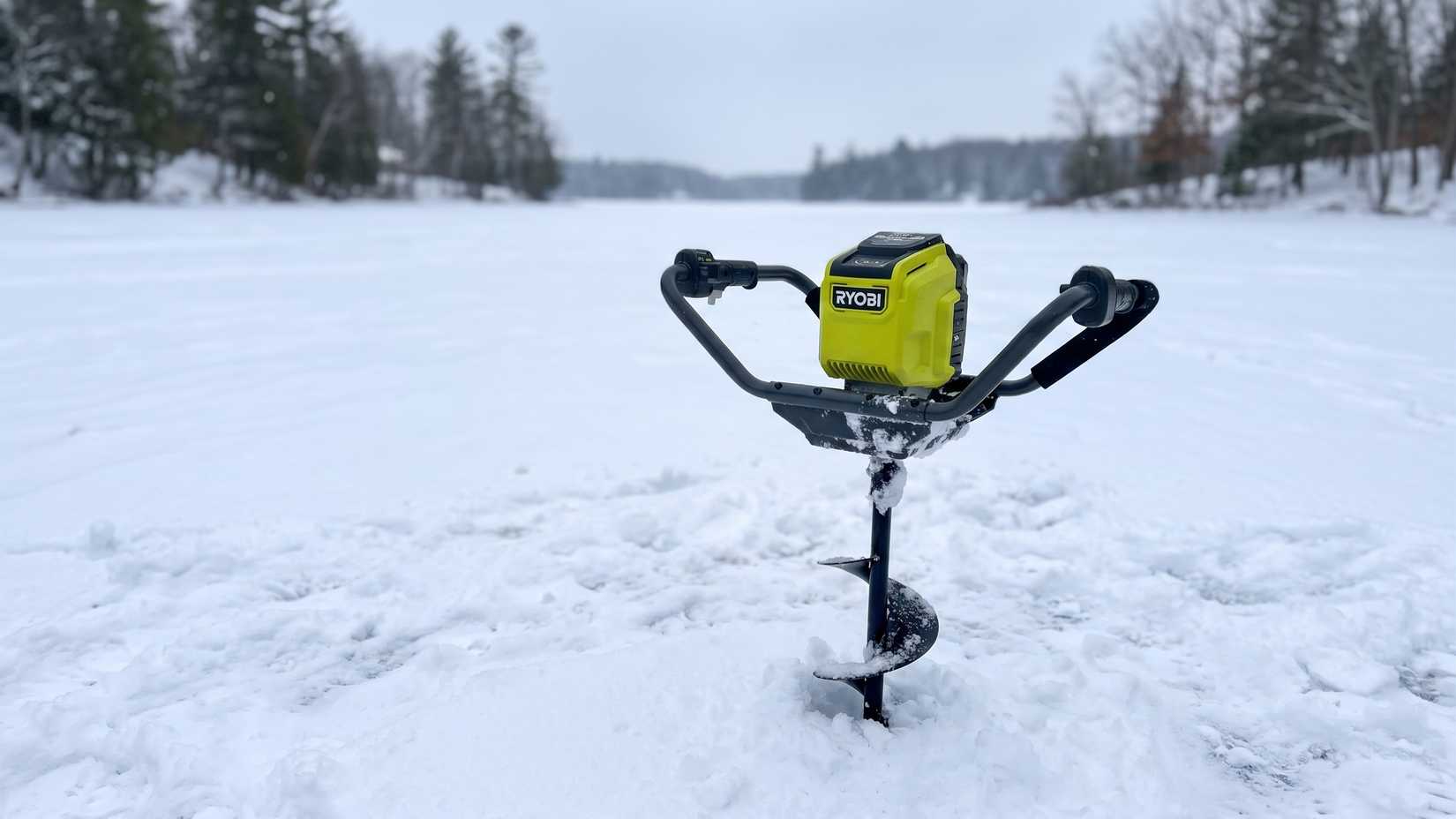
Ryobi’s entry into this niche market is the 40V Ice Auger. By utilizing the company’s higher-voltage 40V platform, this tool provides the torque necessary to drive an 8-inch bit through thick ice without the fumes or noise of a two-stroke engine. The brushless motor at the heart of the auger is designed for efficiency and longevity, with Ryobi claiming it offers up to 30% more torque than many traditional gas models.
The silence of the electric motor is a significant selling point for the ice fishing community, where the tranquility of the environment is often part of the appeal. On a single charge of a standard 40V battery, the auger can drill approximately 25 holes, which is typically more than enough for a full day on the lake. Furthermore, the handles are designed to be used with heavy winter gloves, and the overall weight reduction compared to gas units makes it much easier to transport across the ice.
Essential Maintenance and Storm Preparedness
While high-ticket items like heaters and augers often grab the headlines, Ryobi’s winter strategy also includes smaller, essential tools that address the day-to-day realities of cold-weather living. One such tool is the 18V High-Pressure Tire Inflator. Because air density changes with temperature, tires frequently lose pressure when the weather turns cold, often triggering "low tire" sensors across the dashboard. A portable, battery-powered inflator allows homeowners to top off their tires in their own driveway, avoiding the inconvenience of finding a working air pump at a gas station in the freezing wind.
Additionally, the company is highlighting its 18V Storm Preparation Combo Kit. This kit is designed as an all-in-one solution for the power outages that often accompany winter blizzards and ice storms. It typically includes lighting solutions and power inverters that allow users to charge cell phones and small electronics using their tool batteries.
For those concerned with the aesthetic and structural maintenance of their vehicles, the portable power cleaner has also become a winter staple. The ability to quickly spray down a car to remove road salt and grime—without having to set up a full-sized pressure washer in sub-freezing temperatures—is a significant advantage for those looking to prevent rust and corrosion.
As the industry continues to move toward a cordless future, Ryobi’s winter lineup serves as a case study in how battery technology is being adapted for seasonal needs. By focusing on the intersection of convenience, safety, and power, the brand is positioning itself not just as a provider of construction tools, but as an essential partner in navigating the harshest months of the year. Whether it is heating a garage, jumping a dead battery, or drilling through a frozen lake, the shift toward lithium-ion solutions is making winter preparation more accessible and less dependent on traditional fuels.
 Tech Tutorials & How-To Guides
The Power of Automation: Why Home Assistant Users Are Rediscovering These Underutilized Features
The landscape of the modern smart home has shifted dramatically over the...
 Tech Tutorials & How-To Guides
Netflix Top 10 Dominated by High-Stakes Thrillers as Breakout Hit ‘Obsession’ Continues Its Record-Breaking Run
The streaming landscape in late 2026 continues to be defined by a...
 Tech Tutorials & How-To Guides
The Case for the Cathode Ray Tube: Why Your Old Monitor is a Treasure, Not Trash
In an era defined by ultra-thin OLED panels, 4K resolutions, and refresh...







