

The company’s roadmap for the coming years is ambitious. Following the current validation phase, the AI250 is expected to start sampling in the first half of 2027. This will be followed by the Dragonfly C1000 CPUs, which are also set for next year, and samples of the Dragonfly AI300, which are scheduled for 2028.
Giaretta noted that the validation is a "clear differentiator" for Qualcomm. He stressed that the solution is not just about improving memory bandwidth—it is about the integration of compute directly under the memory stack. This "High-Bandwidth Compute" label is intentional, signaling that the company is looking beyond simple storage and retrieval to a more holistic processing model.
Furthermore, Qualcomm is actively collaborating with various partners to explore the diverse applications of HBC. While the Dragonfly AI250 is the flagship product for this technology, it will not be the only one. The architecture’s versatility suggests potential applications across various segments of the computing market where the memory wall remains a hurdle.
The successful bring-up of the HBC silicon in the lab is also intended to address industry skepticism regarding manufacturing. Because HBC involves a novel way of stacking and connecting components, questions have been raised about whether Qualcomm could achieve the high yields necessary for mass production. Giaretta addressed these concerns directly, stating that the decision to share these early lab results—a rare move for a company that produces a vast volume of chips—was made specifically to prove the maturity of the technology.
"It’s important to understand that this is not a normal chip," Giaretta said. "This is the first time that somebody has done something like this." By validating the silicon now, Qualcomm aims to provide the industry with a "good validation" of the high-yield manufacturing capabilities they expect to demonstrate next year.
As the AI industry shifts its focus from training massive models to the more frequent and cost-sensitive task of running them (inference), the efficiency of the underlying hardware will become the primary battleground. With HBC, Qualcomm is betting that the key to winning that battle lies not in how fast a chip can think, but in how little effort it takes to remember.
 Enterprise Tech & Infrastructure
Strategic Navigation of Amazon S3 Economics: Beyond the Per-Gigabyte Price Point
In the landscape of modern enterprise cloud architecture, Amazon S3 has long...
 Enterprise Tech & Infrastructure
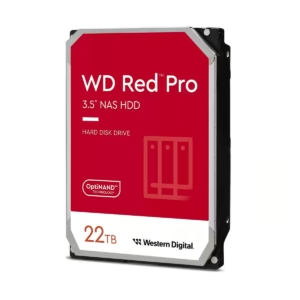
The Critical Role of Enterprise Hard Drives in Modern Data Infrastructure: A Comprehensive Review of the Top 2023 Solutions
In the rapidly evolving landscape of digital infrastructure, enterprise hard drives remain...
 Enterprise Tech & Infrastructure
Navigating the Complexity of Amazon S3: A Strategic Approach to Enterprise Storage Cost Management
The most significant driver of overspending within Amazon S3 environments is a...







