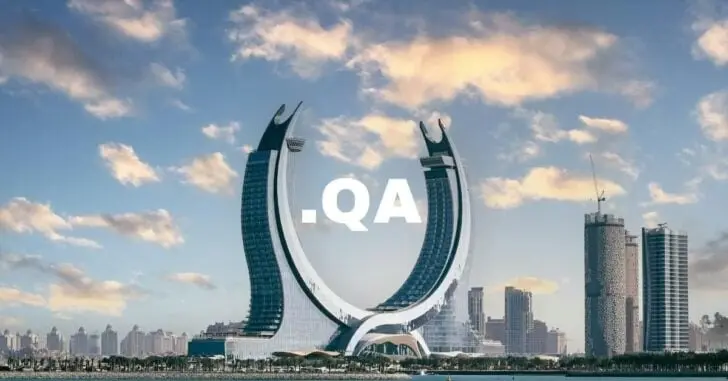
The timing of the migration means that the "clock is ticking" for anyone currently managing .qa assets. Registrars are expected to be busy in the days leading up to the transition as owners scramble to lock in their settings or seek clarification on their status. The fact that the registry has not yet updated its official public guidelines adds a layer of difficulty, forcing many to rely on the information provided by local intermediaries like QHost.
A Broader Context of Digital Sovereignty
The shift in Qatar’s domain policy can be viewed as part of a larger global movement toward digital sovereignty. In recent years, several countries have re-evaluated the "openness" of their ccTLDs. While generic top-level domains (gTLDs) like .com and .net remain the wild west of the internet, country-code domains are increasingly being viewed as national resources.
By restricting .qa to those with a Qatari ID or Commercial Registration, the government is ensuring that the extension remains a trusted space for local consumers. When a user visits a .qa website in the future, they will have a higher degree of certainty that the entity behind the site has a verified legal presence in the country. This can help reduce phishing, fraud, and the "squatting" of names that might be better used by local entrepreneurs.
However, the transition is rarely without friction. For the international community, these changes represent a shrinking of the global internet. Companies that have invested in marketing materials, SEO, and brand recognition using .qa addresses now face a period of uncertainty. If they cannot meet the new requirements, they may be forced to migrate their services to other extensions, a process that can be costly and disruptive.
Conclusion of the Open Era
As the October 22 deadline approaches, the era of the "open" .qa domain is drawing to a close. The implementation of residency requirements and the ban on the secondary market represent a firm stance by the Qatari authorities to reclaim their national domain for local use.
For current owners, the immediate priority is technical stability. Ensuring that nameservers are correctly configured before the backend migration is the only way to avoid an immediate eligibility challenge. For the broader domain industry, Qatar’s move serves as a reminder that country-code domains are ultimately subject to the whims and policy shifts of their respective national governments.
The coming weeks will reveal how strictly these rules are enforced and whether the registry will provide a grace period or a clear "grandfathering" clause for existing international users. For now, the message to the global community is clear: the .qa space is no longer a global playground, but a protected national asset. Owners must act now to secure their standing or prepare to exit the Qatari digital market.
 Web Hosting & Domain Management
ICANN Confirms 1,616 Applications for 2026 New gTLD Round as Fees Top $350 Million
The Internet Corporation for Assigned Names and Numbers (ICANN) has officially confirmed...
 Web Hosting & Domain Management
Verisign Reveals $171.4 Million Total Investment in .Web TLD as High-Stakes Launch Approaches
For nearly a decade, the domain name industry has watched from the...
 Web Hosting & Domain Management
New gTLD Applicants Withdraw and Amend Strings to Navigate Strict ICANN Geographic and Similarity Rules
As the global domain name industry prepares for the next significant expansion...