
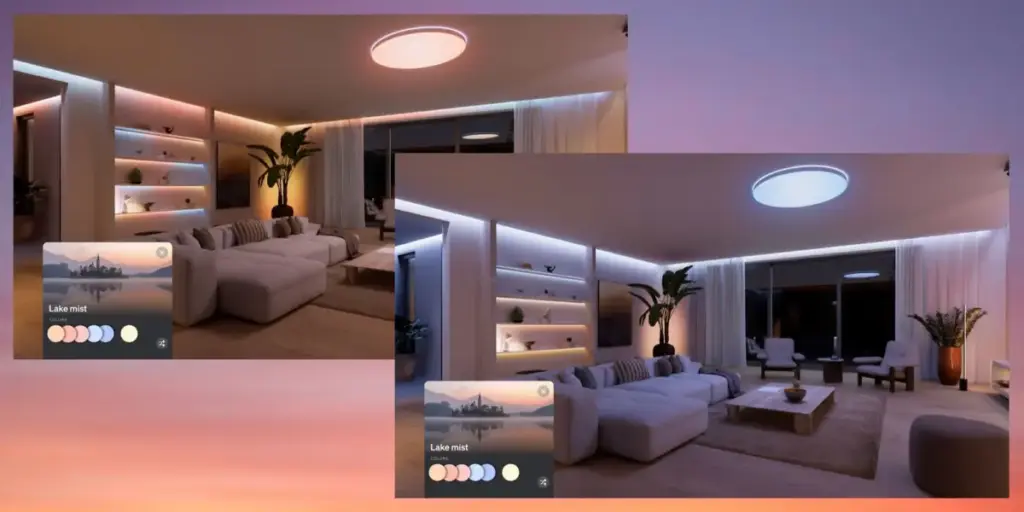
The landscape of smart home lighting has undergone a significant transformation today as Signify, the parent company of Philips Hue, officially released its highly anticipated "SpatialAware" technology. First teased in January as a glimpse into the future of immersive environments, the feature is now available to the public through a comprehensive update to the Philips Hue application for iPhone and iPad. This rollout marks a pivotal shift for the brand, moving beyond simple color-changing bulbs toward a sophisticated, spatially-conscious lighting ecosystem that understands the physical layout of a home.
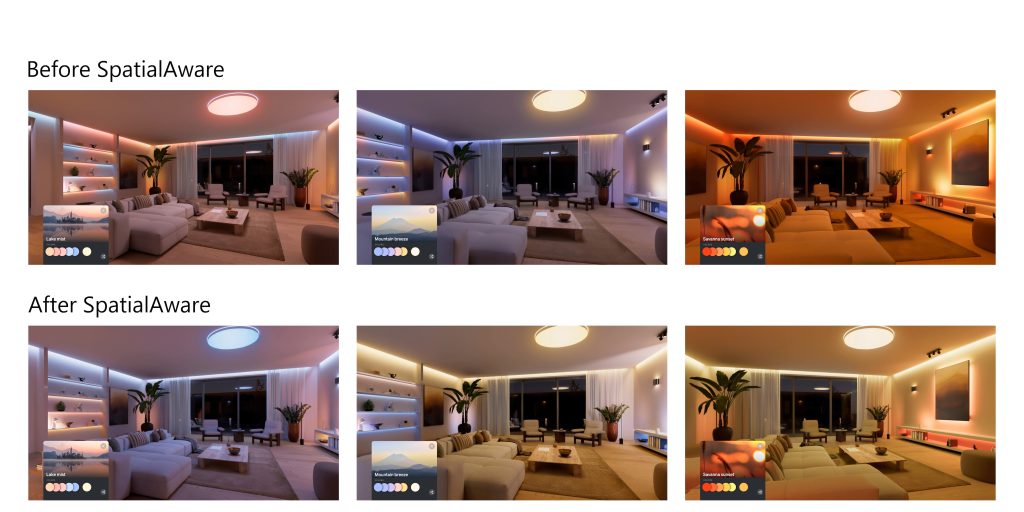
SpatialAware is designed to solve one of the most persistent challenges in smart lighting: the disconnect between a digital "scene" and the physical placement of hardware. In traditional setups, a lighting scene—such as "Savanna Sunset" or "Arctic Aurora"—applies pre-set colors to specific bulbs regardless of where they are positioned in a room. This often results in a fragmented look where colors may clash or fail to flow logically across a space. With the introduction of SpatialAware, Philips Hue aims to create a more "natural and immersive" experience by allowing the system to intelligently distribute light based on the actual geometry of the environment.
The launch is accompanied by a series of updates for the Philips Hue video doorbell, further cementing the brand’s ambition to be a holistic provider of both home ambiance and domestic security. As users update their devices today, the integration between lighting and home monitoring becomes more seamless, offering a more unified interface for the modern smart home.
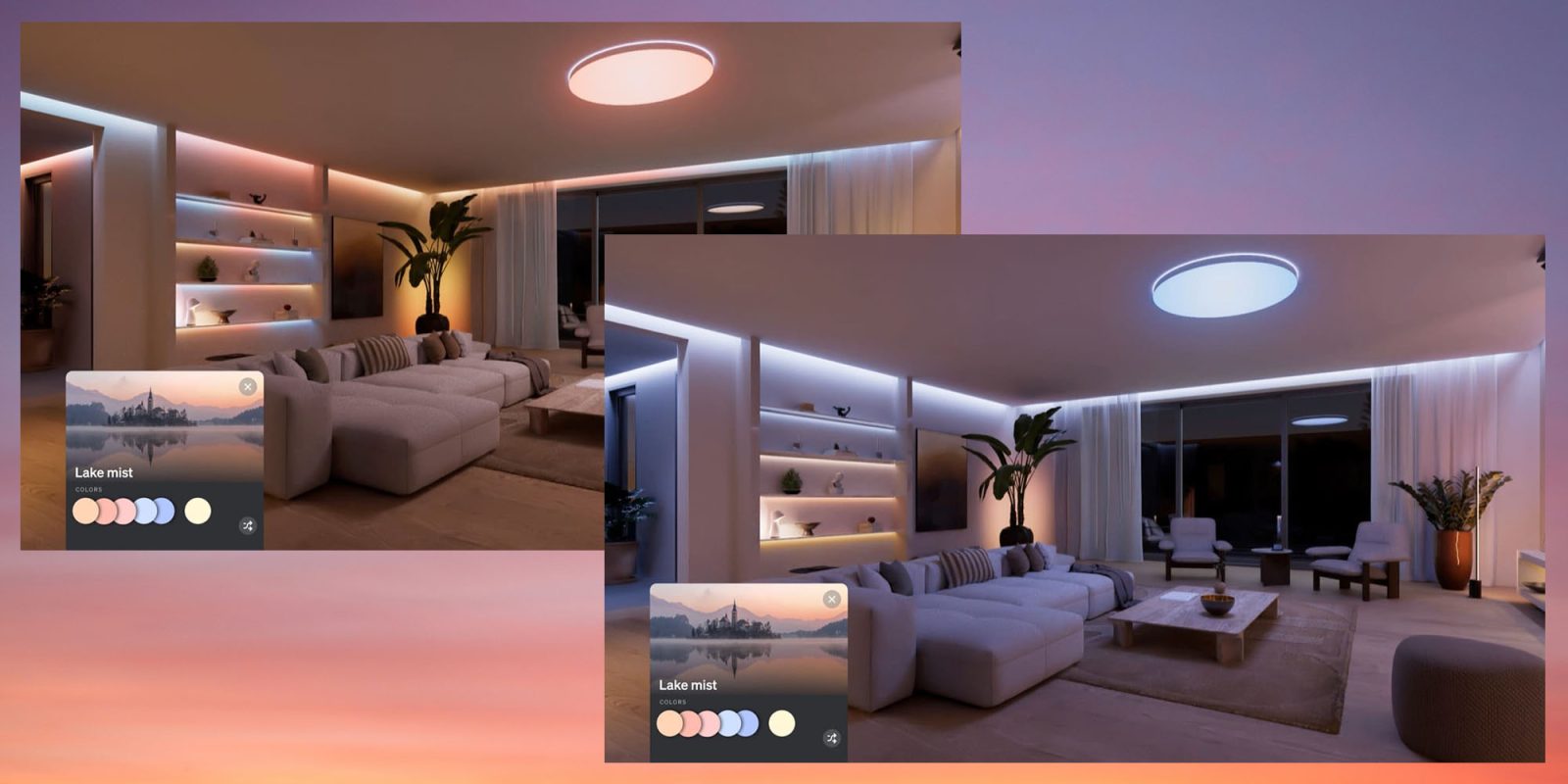
SpatialAware requires Hue lighting scenes to be remastered
The core of the SpatialAware experience lies in its ability to map a room and treat the entire space as a single, cohesive canvas. According to the release notes accompanying the latest iOS and iPadOS app update, the feature allows users to scan their rooms using their mobile devices. Once the scan is complete, the app uses intelligent algorithms to distribute scenes from the Hue Scene Gallery across the room’s various light points. This ensures that gradients flow smoothly from one corner to another and that the intensity and hue of each bulb are calibrated to match the physical distance between them.
However, this level of spatial intelligence requires a fundamental change in how lighting data is processed and delivered. To facilitate this, Philips Hue has begun the process of "remastering" its extensive library of lighting scenes. At launch, approximately half of the available scenes in the official Scene Gallery have been updated to support SpatialAware. These remastered versions contain the additional metadata required for the system to understand how colors should bleed and blend in a three-dimensional space.
The hardware requirements for this feature also signal a new era for the brand. To power the complex calculations necessary for SpatialAware, the new Philips Hue Bridge Pro is a mandatory requirement. While the standard Hue Bridge has served as the backbone of millions of homes for years, the Bridge Pro offers the enhanced processing power and memory needed to handle real-time spatial mapping and the intelligent distribution of remastered scenes. This hardware transition suggests that as smart home features become more reliant on edge computing and local AI processing, more powerful hubs will become the standard for high-end installations.
The scanning process itself has been designed to be user-friendly and efficient. Philips Hue indicates that for a standard-sized room, the digital mapping procedure usually takes less than ten minutes. During this time, the app utilizes the device’s camera and sensors to identify the positions of walls, furniture, and, most importantly, the Hue light fixtures themselves.
Crucially, the company has ensured that SpatialAware is not restricted solely to the latest high-end smartphones. While the feature performs exceptionally well on iPhones equipped with LiDAR (Light Detection and Ranging) sensors—which provide professional-grade depth mapping—it is also compatible with non-LiDAR devices. On these older or standard models, the app utilizes advanced computer vision techniques to estimate depth and positioning, ensuring that a broad base of the Philips Hue community can access the new technology without needing to upgrade their phones immediately.
Once a room is scanned and a remastered scene is applied, the difference is immediately palpable. Instead of individual bulbs acting as isolated points of light, the room feels as though it is bathed in a singular, atmospheric glow. A "Forest" scene, for example, might place deep emerald tones in the corners and dappled sunlight-yellows in the center of the room, mimicking the natural distribution of light through a canopy. This level of environmental storytelling is what Signify believes will set Philips Hue apart in an increasingly crowded market of generic smart bulbs.
New Hue video doorbell features arrive
Beyond the atmospheric upgrades to indoor lighting, the latest app update brings significant attention to the front door. The Philips Hue ecosystem has been steadily expanding into the realm of home security, and today’s update introduces two new features specifically tailored for owners of the Philips Hue video doorbell.
These updates are integrated directly into the primary Hue app, continuing the company’s "single pane of glass" philosophy. By housing security and lighting in the same interface, users can create powerful automations that link the two. For instance, a doorbell press can trigger specific lighting responses throughout the house, or motion detected at the door can cause outdoor floodlights to shift from a warm welcoming glow to a bright, deterrent white.

The new features focus on enhancing the speed and clarity of communication between the doorbell and the user’s mobile device. As security becomes a more prominent part of the Hue value proposition, the ability to quickly "see who is at the door"—a pun the company has leaned into with its marketing—becomes a critical utility. The integration ensures that notifications are not just faster, but also more contextual, allowing users to view live feeds and interact with visitors with minimal latency.
The expansion of the video doorbell’s capabilities highlights the importance of the Philips Hue Bridge Pro in the modern home. As more devices—from security cameras to dozens of spatially-aware bulbs—are added to a single network, the demand for a robust, high-performance hub becomes undeniable. The Bridge Pro is currently being positioned as the essential upgrade for those looking to maximize their investment in the Hue ecosystem. It is available both as a standalone purchase for existing users looking to swap out their older bridges and as part of various starter bundles for those just beginning their journey into high-end smart lighting.
The timing of this update is also notable within the context of the broader smart home industry. With the rise of the Matter standard and the increasing sophistication of Apple Home, Google Home, and Amazon Alexa, Philips Hue is positioning itself as a premium "prosumer" choice. By offering features like SpatialAware that require specific hardware and software synergy, they are creating a "sticky" ecosystem that rewards users for staying within the Hue family of products.
For long-time users, the integration with Apple Home remains a standout feature. Philips Hue has historically been one of the most reliable partners for Siri-controlled environments, offering deep support for Home app automations and Adaptive Lighting. The addition of SpatialAware and enhanced doorbell features only strengthens this bond, providing Apple users with more ways to customize their living spaces through the Home app and the dedicated Hue interface.

To take advantage of these new developments, users are encouraged to download the latest version of the Philips Hue app from the App Store. Once updated, the app will guide users through the process of checking hardware compatibility, upgrading to the Bridge Pro if necessary, and beginning their first room scan to unlock the potential of SpatialAware.
As the smart home moves toward a future where devices are not just "connected" but truly "aware" of their surroundings, Philips Hue’s latest update serves as a significant milestone. By combining spatial intelligence with robust security features, the company is moving closer to its goal of creating a home that doesn’t just respond to commands, but actively enhances the lifestyle and safety of its inhabitants. Whether it is the immersive glow of a remastered sunset in the living room or the peace of mind provided by a more responsive video doorbell, the latest Hue update offers a glimpse into a more intelligent, more "aware" domestic environment.
 Smart Home & IoT Solutions
Apple Prepares Major Smart Home Overhaul as Apple Intelligence Breathes New Life into Siri
For several years, Apple’s presence in the smart home market has been...
 Smart Home & IoT Solutions
Abode Expands Apple Home Ecosystem with New Ruggedized Garage and Outdoor Security Sensors
The landscape of DIY home security continues to evolve as homeowners move...
 Smart Home & IoT Solutions
SwitchBot Unveils Lock Vision Series Featuring 3D Facial Recognition and Native Matter Integration
In the rapidly evolving landscape of smart home security, the transition toward...







