
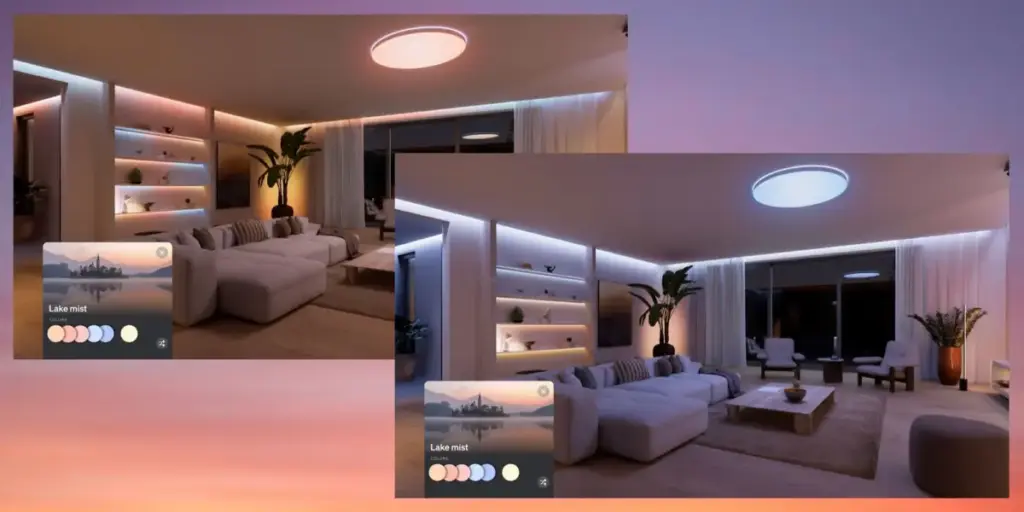
The scanning process itself has been designed to be user-friendly and efficient. Philips Hue indicates that for a standard-sized room, the digital mapping procedure usually takes less than ten minutes. During this time, the app utilizes the device’s camera and sensors to identify the positions of walls, furniture, and, most importantly, the Hue light fixtures themselves.
Crucially, the company has ensured that SpatialAware is not restricted solely to the latest high-end smartphones. While the feature performs exceptionally well on iPhones equipped with LiDAR (Light Detection and Ranging) sensors—which provide professional-grade depth mapping—it is also compatible with non-LiDAR devices. On these older or standard models, the app utilizes advanced computer vision techniques to estimate depth and positioning, ensuring that a broad base of the Philips Hue community can access the new technology without needing to upgrade their phones immediately.
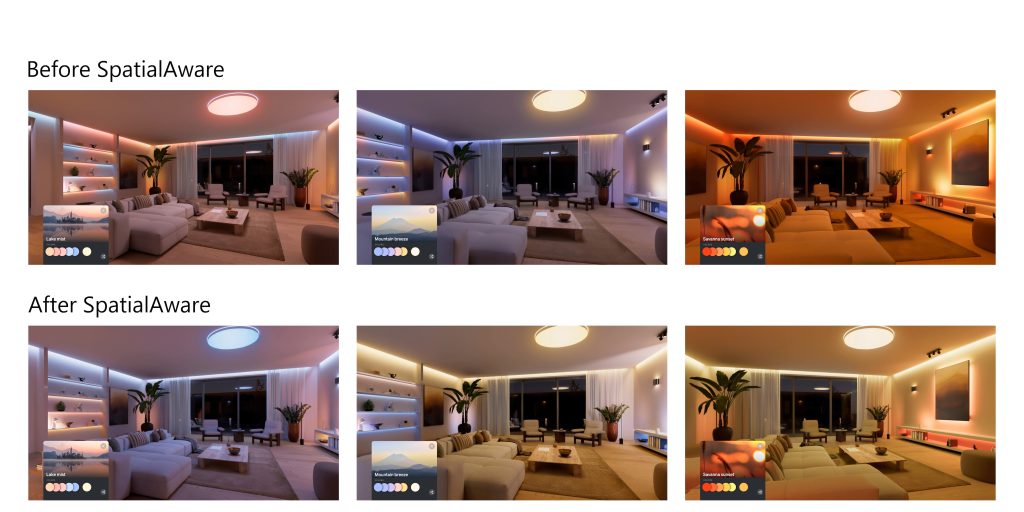
Once a room is scanned and a remastered scene is applied, the difference is immediately palpable. Instead of individual bulbs acting as isolated points of light, the room feels as though it is bathed in a singular, atmospheric glow. A "Forest" scene, for example, might place deep emerald tones in the corners and dappled sunlight-yellows in the center of the room, mimicking the natural distribution of light through a canopy. This level of environmental storytelling is what Signify believes will set Philips Hue apart in an increasingly crowded market of generic smart bulbs.
New Hue video doorbell features arrive
Beyond the atmospheric upgrades to indoor lighting, the latest app update brings significant attention to the front door. The Philips Hue ecosystem has been steadily expanding into the realm of home security, and today’s update introduces two new features specifically tailored for owners of the Philips Hue video doorbell.
These updates are integrated directly into the primary Hue app, continuing the company’s "single pane of glass" philosophy. By housing security and lighting in the same interface, users can create powerful automations that link the two. For instance, a doorbell press can trigger specific lighting responses throughout the house, or motion detected at the door can cause outdoor floodlights to shift from a warm welcoming glow to a bright, deterrent white.

The new features focus on enhancing the speed and clarity of communication between the doorbell and the user’s mobile device. As security becomes a more prominent part of the Hue value proposition, the ability to quickly "see who is at the door"—a pun the company has leaned into with its marketing—becomes a critical utility. The integration ensures that notifications are not just faster, but also more contextual, allowing users to view live feeds and interact with visitors with minimal latency.
 Smart Home & IoT Solutions
IRobot Re-emerges Under New Ownership with Ambitious Eight-Model Roomba Lineup Following Bankruptcy
In a significant turn of events for the consumer robotics industry, iRobot,...
 Smart Home & IoT Solutions
Controller for HomeKit Introduces Generative AI to Simplify Complex Smart Home Automations
The landscape of smart home management is undergoing a significant shift as...
 Smart Home & IoT Solutions
Apple and LG’s Upcoming Smart Home Accessories to Feature Exclusive Dynamic Island Proximity Controls
As Apple prepares for its highly anticipated "Welcome home" special event scheduled...







