

The enterprise perimeter remains a primary battleground, as evidenced by new advisories from major networking and security vendors. WatchGuard (multiple CVEs including CVE-2026-98432), Cisco (CVE-2026-76506), and SonicWall (CVE-2026-19868) all released patches for vulnerabilities that could allow for unauthorized access or denial-of-service attacks.
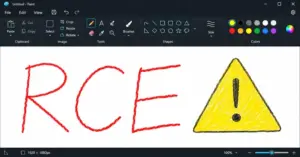
Perhaps most surprising in this week’s roundup is the inclusion of a vulnerability in Microsoft Paint (CVE-2026-83844). While often viewed as a simple utility, the persistence of bugs in legacy Windows components illustrates the difficulty of maintaining a completely "clean" codebase in complex operating systems. Simultaneously, Google Chrome continues its frequent update cycle to address seven new vulnerabilities, including CVE-2026-121156 and CVE-2026-121229, reinforcing the browser’s status as a primary attack vector for web-based threats.
Rounding out the list is a critical update for Veeam (CVE-2026-98432) and a warning regarding multiple vulnerabilities in the BaseChat Android application (version 9.8.1). The breadth of these vulnerabilities—ranging from core server utilities to niche mobile apps—highlights the necessity of a comprehensive, multi-layered defense strategy.
The Lingering Impact of Configuration Drift
A recurring theme throughout this week’s developments is the danger of "configuration drift"—the gradual moving away of a system’s settings from its original, secure state. Whether it is an administrator disabling PAM for a temporary troubleshooting task and forgetting to re-enable it, or a system remaining online long after its intended decommissioning, these small deviations create the "SSHoles" of the digital world.

Security experts emphasize that not every attack requires a clever trick or an advanced exploit. In many cases, the "strange" findings in recent research suggest that attackers are simply more patient than defenders. They wait for the moment when a setting is overlooked or an update is questioned and delayed. This patience, combined with the increasing speed of automated scanning, means that even minor mistakes can rapidly escalate into full-scale security incidents.
The data from this week serves as a call to action for security teams to prioritize basic hygiene alongside advanced threat hunting. This includes regular audits of system configurations, the enforcement of strict password policies (or the transition to passwordless authentication), and the immediate application of patches for high-risk vulnerabilities like those found in OpenSSH and Synology.
As the industry looks toward the coming weeks, the focus will likely remain on the "SSHole" exploitation attempts. Analysts will be watching to see if the current trickle of probes turns into a flood of automated attacks targeting the millions of Alpine Linux-based containers currently powering the modern web. For now, the message to the cybersecurity community is clear: verify your settings, check your passwords, and never assume that a simple bug is too small to cause a major problem.
 Cybersecurity Basics & Security News
CERT-UA Issues Urgent Warning Over Massive Compromise of Dahua Video Surveillance Systems via P2P Vulnerabilities
The Computer Emergency Response Team of Ukraine (CERT-UA) has issued a critical...
 Cybersecurity Basics & Security News
Microsoft Addresses Critical Remote Code Execution Vulnerability in Windows Paint via Microsoft Store Update
Microsoft has officially released a definitive patch for CVE-2026-83844, a significant remote...
 Cybersecurity Basics & Security News
Google Pixel 10 and Samsung Galaxy S26 Breached as Ikotas Labs Claims Top Honors at Pwn2Own Ireland 2026
The competitive landscape of cybersecurity research reached a fever pitch this week...







