
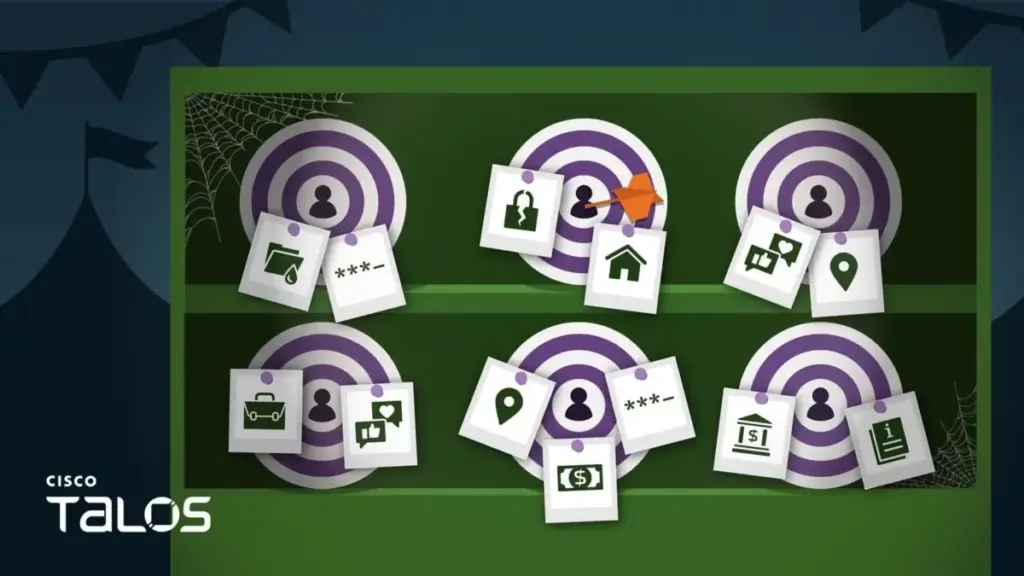
What truly sets VOLTA-AUTODOXER apart, however, is what happens after the data has been harvested. Once the malware has finished its collection routine, it assembles what researchers call an "evidence bundle." This bundle is a structured compilation of the most identifying and valuable information found on the system. It includes the victim’s geolocation and physical home address, their employer’s name and domain, an inferred birth year based on available records, and authorship metadata from local documents. It also captures the last four digits of any payment cards found on the system to help the attacker identify specific accounts.
This evidence bundle is then fed into an AI model. Cisco Talos reports that the malware is configured to use Anthropic’s Claude by default, though it is designed with the flexibility to switch to other models if one refuses the request or becomes unavailable. The malware provides the AI with a specific set of instructions, or a "prompt," to guide its analysis. The prompt commands the AI to act as a "forensic intelligence analyst" and demands that the resulting assessment be "blunt, specific, [and] accurate."
The AI is tasked with reviewing the evidence bundle and generating a list of the victim’s valuables. Crucially, the malware asks the model to rank these items based on how much they could be "cashed out" for. This allows the attacker to see at a glance whether a victim is a high-net-worth individual, a corporate executive with sensitive access, or a low-value target not worth the effort of manual follow-up. This use of AI for target appraisal represents a "force multiplier" for cybercriminals, enabling them to operate at a scale and level of sophistication that was previously reserved for well-funded state-sponsored groups.
The distribution of VOLTA-AUTODOXER often relies on social engineering and the exploitation of popular trends. Recent reports indicate that the malware has been packaged within fake PlayStation 5 (PS5) emulators. These malicious programs are advertised on platforms like GitHub and YouTube, promising users the ability to play high-end console games on their PCs. Two well-known GitHub repositories, including one named "AnyPS5," were found to be serving the malware. By targeting the gaming community, the attackers can infect a large number of home computers, which are often less protected than corporate workstations.
 Hardware Reviews & PC Building
Shareholder Lawsuit Alleges Top Supermicro Executive Had Full Knowledge of Massive $2.5 Billion AI Chip Smuggling Operation
The legal storm surrounding Supermicro has intensified as new details emerge from...
Hardware Reviews & PC Building
Nvidia Unveils Rubin HPC Architecture at Supercomputing 2026 to Power Next-Generation Scientific Simulation and Agentic Workflows
The Supercomputing 2026 conference has officially opened its doors, serving as the...
 Hardware Reviews & PC Building
Rising Component Costs and AI Demand Create Unprecedented Crisis for Consumer PC Market
The landscape of the consumer PC market is currently navigating a period...







