

As the underlying technology matures, the way employees interact with Copilot is becoming more sophisticated. Over the past year, the number of AI conversations per user has nearly doubled. Furthermore, the number of users engaging with multiple Copilot features simultaneously has seen triple-digit growth. Perhaps most telling is that average weekly engagement with Copilot is now on par with foundational communication tools like Microsoft Outlook and Teams, suggesting that AI is no longer a "special use" tool but a staple of the daily routine.
There is also a noticeable shift in the types of requests being made. Microsoft’s analysis shows a significant rise in multi-step workflows. Users are no longer just asking for a summary of a meeting; they are asking Copilot to analyze a data set, draft a corresponding email, research potential solutions to a discovered problem, and then write the code to implement those solutions. Analysis-related work now accounts for 49% of all tasks when integrated into multi-step workflows, a sharp increase from the 29% seen when analysis is performed as a standalone task. This indicates that AI is increasingly responsible for managing entire sequences of work.
While early adopters were concentrated in the banking, manufacturing, and technology sectors, new industries are quickly catching up. Automotive and healthcare have emerged as some of the fastest-growing sectors for agent adoption. This suggests that the value of AI agents is successfully translating to industries with highly specific, non-digital operational needs.
The scale of deployment is also reaching new heights. The number of Microsoft customers with more than 50,000 seats has increased more than sevenfold year over year. Additionally, the number of enterprise customers deploying Copilot to the majority of their information workers grew by nearly 75% in the last quarter alone. Most impressively, the time it takes for a company to reach "high usage"—defined as more than 80% monthly active usage across the user base—has dropped from several months to just a few days over the last year.
What AI Makes Possible
For many organizations, the initial goal of AI was simple efficiency. However, the leaders in the space are now looking at how AI can expand the very boundaries of what an organization can achieve. Microsoft’s own Cloud Supply Chain team recently demonstrated this by taking a "lean before agents" approach. They first simplified six end-to-end workflows and established a shared data foundation before deploying 70 purpose-built agents across sourcing and logistics. This led to a 75% reduction in cycle time, proving that AI is most effective when it is layered onto optimized processes rather than broken ones.
At Eaton, an intelligent power management company, AI is being used to transform root cause analysis in manufacturing. Traditionally a time-intensive process, Eaton now employs an AI-powered quality agent to review manufacturing reports. The agent surfaces potential supplier insights and trends across thousands of reports, allowing experts to identify risks much earlier than before. To date, the agent has been applied to 5,000 reports, keeping human experts at the center of the final decision-making process while drastically accelerating the data-gathering phase.
In the healthcare sector, Premera Blue Cross has empowered its employees to build their own AI agents using Copilot Studio. By providing training and clear guardrails, the company allowed its staff to automate repetitive manual work. The result has been the creation of over 900 agents. One specific agent, designed for intelligent document processing, reduced a manual contract exhibit workflow from 45 minutes down to just three minutes. This time savings allows staff to focus more on member care and critical questions rather than paperwork backlogs.
Other companies are using AI to perform tasks that were previously deemed impossible due to their sheer scale. Levi Strauss & Co. utilized an agent to analyze 1,100 finance standard operating procedures, cataloging 18,000 individual tasks in a single day. Lisa Sterling, Vice President of Finance at Levi’s, noted that the agent was able to quantify opportunities that she had previously assumed were impossible to measure.
 Productivity Software & Office Suites
Microsoft Announces General Availability of Work IQ APIs, Ushering in the Era of Agentic Software
REDMOND, Wash. — In a move that signals a fundamental transformation in...
 Productivity Software & Office Suites
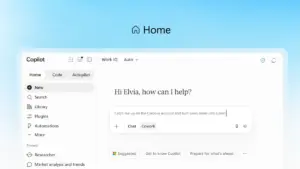
Microsoft Reimagines Copilot as a Central Hub for AI-Driven Enterprise Productivity
In a significant move to redefine the landscape of modern work, Microsoft...
 Productivity Software & Office Suites
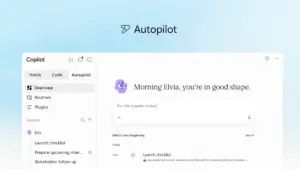
Microsoft Unveils Reimagined Copilot with Agentic Capabilities and New "Autopilot" Digital Teammate
Microsoft has announced a sweeping overhaul of its Copilot platform, signaling a...







