

However, the rapid expansion of these underwater data highways has not gone unnoticed by government officials. While the need for greater connectivity is indisputable, the sheer scale and importance of these cables have made them a focal point for national security discussions. In the United States, lawmakers have become increasingly "twitchy" regarding the security implications of subsea infrastructure. Because these cables carry the vast majority of international data traffic—including sensitive financial, government, and personal communications—they are viewed as critical national infrastructure that must be protected from both physical and digital threats.
The concerns among US lawmakers are rooted in the fear that these cables could be targeted for espionage or sabotage. There have been growing calls for major service providers and technology companies to provide comprehensive details regarding their subsea assets. Legislators are seeking greater transparency regarding the locations of these cables, the companies involved in their maintenance, and the security protocols in place to prevent unauthorized access to the data they carry. This push for oversight reflects a broader shift in how subsea cables are perceived: they are no longer seen merely as private commercial ventures, but as vital arteries of national and international security.
These security concerns are not merely theoretical. Industry experts have pointed to a growing number of incidents involving subsea cables that warrant high-level attention. These incidents range from accidental damage caused by fishing trawlers and ship anchors to more sinister possibilities, such as intentional tampering or state-sponsored interference. In an era of heightened geopolitical tensions, the vulnerability of the global subsea network has become a primary concern for defense and intelligence agencies. Protecting this infrastructure involves a multi-layered approach, including physical monitoring of the seabed, advanced encryption for the data being transmitted, and strict vetting of the companies and personnel involved in the construction and operation of the cables.
The Petal project also highlights a significant shift in the subsea cable industry: the transition from traditional telecommunications consortiums to projects led by "hyperscalers" like Meta, Google, and Amazon. In decades past, subsea cables were typically built and owned by groups of national telecom carriers. Today, the world’s largest technology companies are increasingly taking the lead, often building private cables to connect their own massive data centers across different continents. This shift has changed the dynamics of the industry, leading to faster deployment times and a push for ever-higher capacities, but it has also raised questions about the concentration of critical infrastructure in the hands of a few private corporations.
 Small Business IT & Cloud Computing
OpenAI Terminates Contractors for Utilizing Artificial Intelligence in Model Training Processes
In an industry defined by the rapid advancement of artificial intelligence, a...
 Small Business IT & Cloud Computing
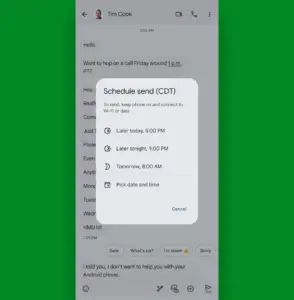
Maximizing Mobile Productivity: The Hidden Architecture of Google Messages on Android
In the modern mobile landscape, the smartphone has transitioned from a simple...
 Small Business IT & Cloud Computing
Google Positions Gemini as the Central Hub for Enterprise AI Orchestration with New Autonomous Agent Capabilities
At its high-profile Gemini at Work 2026 event this week, Google Cloud...







