

Furthermore, the $24,000 refund is not the only way applicants might see money returned. The New gTLD Program includes a structured withdrawal policy. If an applicant decides to pull their application at various stages of the process—perhaps due to a change in corporate strategy, a successful private auction, or the realization that a string is likely to face insurmountable objections—they are eligible for additional refunds. The amount of a withdrawal refund typically decreases as the application moves further through the evaluation pipeline, reflecting the work already performed by ICANN’s review teams.
Looking Ahead
As ICANN moves toward the next phases of the gTLD expansion, the management of these funds will remain under close scrutiny. The domain name industry has grown significantly since the 2012 round of gTLD applications, and the current round is being watched as a benchmark for how the organization handles large-scale administrative and financial tasks.
The announcement of the $41 million surplus is generally being viewed as a positive sign of the program’s health and the industry’s enthusiasm. It also serves as a reminder of the scale of the "Next Round" of gTLDs, which aims to further diversify the internet’s naming structure. By returning the overcollected fees, ICANN reinforces its mandate to operate in a manner that is both fiscally responsible and aligned with the interests of the community it serves.
For the 1,615 applicants currently in the queue, the pending $24,000 refund per application provides a modest but welcome reduction in the cost of entry. As the organization works to finalize the timing of these payments, the focus of the industry remains on the upcoming evaluation results and the eventual delegation of these new extensions into the internet’s root zone.
ICANN’s ability to efficiently process these refunds "as soon as practicable" will be a key indicator of its operational readiness as the program transitions from the application phase into the intensive evaluation and delegation phases. For now, the $41 million surplus stands as a testament to an internet expansion that, at least in terms of volume, has already exceeded the expectations of its architects.
 Web Hosting & Domain Management
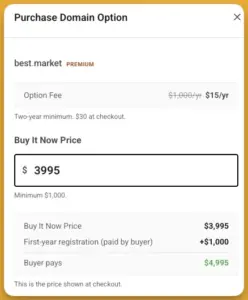
Identity Digital launches “domain options” for domain investors
The first partner to facilitate these options is Deqo, a newly developed...
 Web Hosting & Domain Management
GoDaddy Reports Strong Third Quarter Results as Aftermarket Domain Sales and AI Momentum Outpace Expectations
GoDaddy Inc. (NYSE: GDDY) has reported a robust financial performance for the...
 Web Hosting & Domain Management
Afternic Expands Automation Capabilities with Public Release of Portfolio API for Domain Investors
In a significant move aimed at modernizing the infrastructure of the domain...







