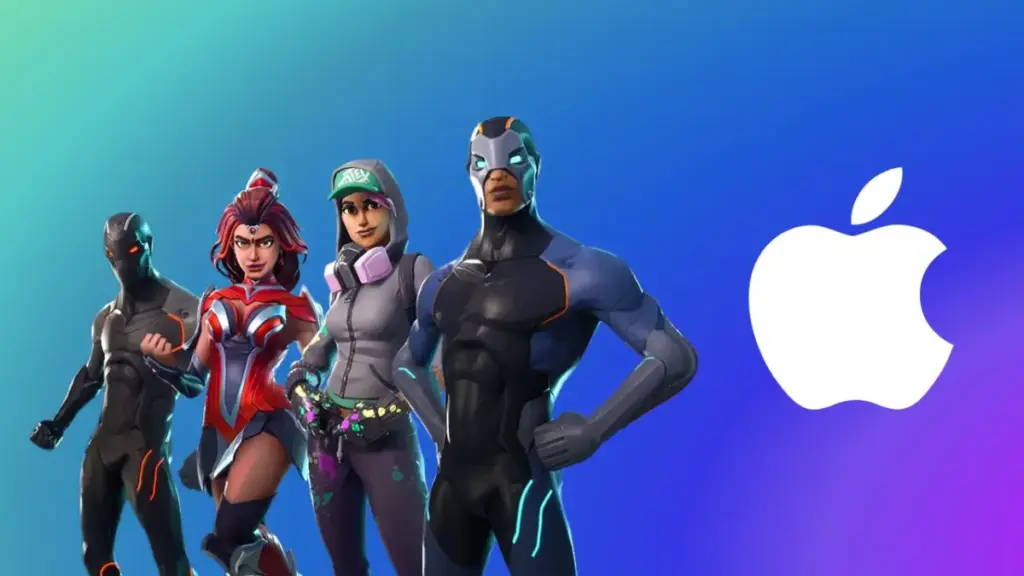
In a major development following years of legal maneuvering over mobile marketplace policies, Epic Games has confirmed that its flagship battle royale title, Fortnite, is returning to the iOS App Store in Australia today. The move comes after an Australian federal court issued an order mandating that Apple permit eligible software applications developed by Epic Games back onto its digital storefront. Epic Games disclosed the court’s mandate and the game’s immediate restoration plans in statements provided to Reuters, bringing an end to a distinct period of exclusion for Australian iPhone and iPad users.
The court order marks the resolution of a notable anomaly in the global distribution of Fortnite. While the game made a high-profile return to the App Store in markets worldwide in May 2026, Australia stood out as the sole territory excluded from that global relaunch. At the time of the worldwide reinstatement, Epic Games chose to hold back its software submissions in Australia, opting instead to maintain its legal challenge in the Australian court system to seek targeted judicial orders addressing Apple’s in-app payment terms and commission structures.
Under the specific terms of the court’s order, Apple is required to process Epic’s compliant application submissions without delay. Crucially, the federal court ruled that this requirement takes effect immediately, allowing Epic Games to bypass the waiting period for broader, platform-wide App Store operational changes that Apple is scheduled to implement in March 2027. By granting immediate relief, the court has paved the way for Australian players to regain native access to Fortnite on iOS devices without having to wait for the larger systemic overhauls slated for the coming year.
The dispute between Epic Games and Apple has long centered on the mechanics of app distribution and payment processing on mobile platforms. When Epic initially sought to bypass Apple’s standard payment systems to avoid in-app purchase commissions, Apple removed Fortnite from the App Store, sparking a global series of regulatory challenges, anti-trust investigations, and litigation across multiple jurisdictions. While international legal developments gradually paved the way for Fortnite to re-enter the App Store in most global markets in May 2026, Australia remained a key legal battleground where Epic continued to press for explicit judicial orders regarding payment terms.
Epic’s deliberate strategy to delay its return in Australia was rooted in its effort to secure specific binding rulings regarding how Apple handles processing options and payment structures within the app ecosystem. Rather than re-entering the Australian App Store under Apple’s existing terms during the May 2026 global rollout, Epic pursued further court intervention. The resulting judicial directive ensures that as long as Epic’s application submissions meet established software compliance standards, Apple must process and approve them for distribution to Australian consumers on iOS devices.
This court-ordered restoration occurs during a period of significant activity and evolution for Apple’s digital software marketplace. In recent weeks, Apple has been actively managing both hardware-driven software updates and platform governance policy changes across the App Store. On the technical front, Apple announced on October 5, 2026, that developers could officially begin submitting applications optimized for its upcoming foldable device, the iPhone Duo, ahead of the hardware’s scheduled commercial release on Friday, October 23, 2026.

According to Apple’s developer guidelines for the new form factor, existing App Store applications will automatically run on the iPhone Duo. However, developers seeking to take full advantage of the device’s hardware capability must compile their software using the iOS 27.1 Software Development Kit (SDK) or later. Only applications built with these updated tools possess the technical capability to dynamically resize and expand across the entire surface area of the inner display, whereas unoptimized legacy software will run in standard legacy display modes. This technical transition highlights the evolving hardware environment into which Fortnite is returning on the iOS platform.
Simultaneously, Apple has been strengthening its enforcement rules regarding developer conduct and safety within the App Store. On October 16, 2026, Apple expanded its core developer moderation policies under App Store Guideline 1.2 to explicitly target artificial intelligence-generated content. While sexually explicit material was already strictly prohibited on the platform, the updated rule explicitly mandates that app developers must proactively implement preventative measures to stop and remove nonconsensual intimate imagery, AI deepfakes, and so-called "nudify" applications from their services. Apple warned developers that failure to actively moderate and eliminate offending AI-generated material would result in swift removal from the App Store.
At the same time Apple has been refining its regulatory guidelines and hardware capabilities, the company has also been highlighting a broader strategic effort to expand the scope and technical quality of games available through its mobile platform. On October 20, 2026, Carson Oliver, Apple’s Head of App Store Worldwide, discussed the company’s gaming strategy in an interview with Polygon, emphasizing an explicit corporate push to attract high-caliber, premium titles to the App Store.
Oliver noted that the App Store has experienced notable growth in gaming software releases, pointing out that significantly more premium games are launching on iOS this year compared to previous years. He observed that while a substantial portion of these releases consists of independent developer titles, Apple has seen a growing influx of major gaming franchises making the transition from PC and console platforms to iOS mobile devices. The return of high-profile, online multiplayer titles like Fortnite fits directly into this larger trend of expanding high-end, competitive gaming experiences on iOS hardware.
The Australian court’s ruling forcing Apple to accept Epic’s compliant submissions represents an important procedural step in resolving the extended conflict between the two technology companies. For years, the legal standoff had left Australian iOS users unable to natively download or update Fortnite through the official App Store, creating a fragmented user experience compared to players in other global regions where access had already been restored.
By establishing that Apple must process Epic’s submissions immediately rather than holding them until the March 2027 App Store structural changes, the Australian federal court has effectively decoupled Epic’s immediate marketplace return from the broader timeline of Apple’s future policy shifts. This ensures that Australian consumers receive timely access to the title under current compliance standards, while the broader regulatory framework governing mobile software ecosystems continues to evolve globally.
With the federal court’s mandate in effect, the administrative obstacle preventing Epic’s software from appearing on the Australian App Store has been removed. Epic Games has indicated that the necessary processes to bring Fortnite back to Australian iOS users are occurring today, marking the formal re-entry of one of the world’s most popular digital games into Apple’s Australian storefront.
 macOS & Apple IT Support
Apple Expands ‘True Apple Watch Story’ Campaign with New Accounts of Emergency Medical Alerts and Life-Changing Fitness Transformations
Apple has officially released the latest installments in its ongoing "True Apple...
 macOS & Apple IT Support
Apple Updates Free Invites App for iPhone With Full-Resolution Shared Albums, Photorealistic AI Backgrounds, and Simplified Email Verification
CUPERTINO, Calif. — Apple on Wednesday released a substantial software update for...
 macOS & Apple IT Support
Amazon Launches Early Prime Big Deal Days Savings on Apple’s 2026 Mac Mini and Mac Studio Lineups
Amazon has officially initiated its early Prime Big Deal Days sales campaign,...