
The modern driving experience is often defined by a sense of seamless connectivity and mechanical reliability. However, the veneer of automotive dependability can vanish in an instant when a vehicle refuses to start in a parking lot or a tire loses pressure on a remote stretch of highway. For decades, the standard response to such setbacks involved a combination of hope and external assistance: flagging down a stranger for a jump-start or waiting hours for a tow truck to arrive. But as battery technology has advanced, a new philosophy of self-reliance has emerged among tech-savvy drivers and DIY enthusiasts alike.
Cory Gunther, a senior author and editor with over a decade of experience covering the intersection of technology and automotive trends, argues that the era of being "caught empty-handed" should be a thing of the past. Drawing from his extensive background reviewing thousands of gadgets and spending significant time off-roading in the rugged terrain of the American outdoors, Gunther has identified a specific category of tools that bridge the gap between professional-grade recovery gear and affordable consumer electronics. Central to this strategy are two specific offerings from Ryobi’s 18V ONE+ ecosystem: a portable jump starter and a high-pressure tire inflator.
The Evolution of the Emergency Toolkit
For the average motorist, the concept of a "travel toolkit" often evokes images of heavy, grease-stained metal boxes filled with specialized wrenches and screwdrivers. While a basic set of hand tools remains valuable, the most frequent causes of roadside failure—dead batteries and flat tires—require specific interventions that traditional tools cannot provide. Gunther, who maintains a curated toolkit in his own Toyota truck, notes that automotive tools can become prohibitively expensive when purchasing niche items for specific repairs.
The shift toward battery-powered portable tools represents a democratization of roadside assistance. By leveraging the same lithium-ion technology found in smartphones and laptops, manufacturers like Ryobi have created devices that are compact enough to live in a trunk permanently while remaining powerful enough to handle the demands of a full-sized vehicle. This move toward portability is not merely a convenience; it is a fundamental shift in how drivers manage risk.
Addressing the Most Common Failure: The Dead Battery
Statistical data from roadside assistance providers consistently ranks battery failure as a primary reason for service calls. Whether the cause is an interior light left on overnight, the parasitic drain of modern vehicle electronics, or the inevitable degradation of lead-acid cells in extreme temperatures, a dead battery is a universal equalizer.
Traditionally, the solution was a set of jumper cables. However, cables are inherently dependent on the presence and cooperation of another vehicle. In a secluded area or late at night, this dependency becomes a significant liability. Gunther’s solution involves the Ryobi 18V ONE+ Cordless 1600A Jump Starter, a device he integrated into his vehicle’s permanent kit after finding it on sale for approximately $139.
The technical specifications of this unit reveal why it has become a staple for prepared drivers. Delivering 1,600 peak amps, the jump starter is engineered to provide the massive surge of current required to turn over not just small sedans, but also large SUVs, heavy-duty trucks, and even demanding diesel engines. The integration of Ryobi’s 18V ONE+ battery pack system means that users who already own Ryobi power tools can swap batteries between their drill and their jump starter, ensuring they always have a charged power source.
Safety is another critical factor in the shift toward these portable units. Traditional jump-starting carries the risk of sparks or damage to sensitive vehicle electronics if the cables are connected incorrectly. The Ryobi model features integrated anti-spark technology and a protective enclosure designed to shield the battery and internal components from the elements. Furthermore, the inclusion of a built-in LED work light addresses the practical reality that many battery failures are discovered at night or in poorly lit environments.
Pneumatic Preparedness: The Role of the Portable Inflator
While a dead battery prevents a trip from starting, a flat tire can end one dangerously. Punctures, slow leaks, and seasonal pressure fluctuations are common issues that often lead to expensive tow bills or the precarious task of changing a tire on a narrow highway shoulder.
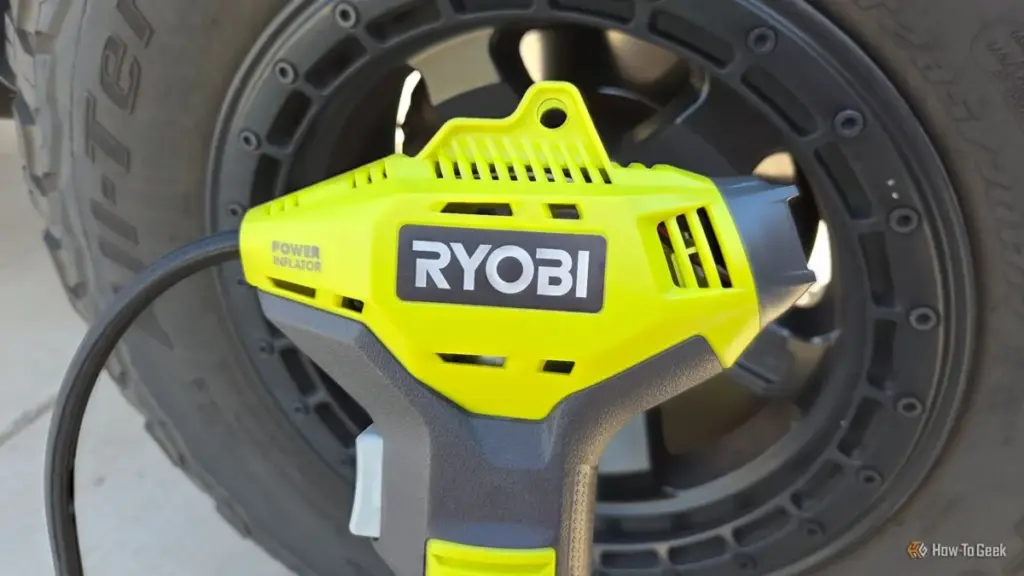
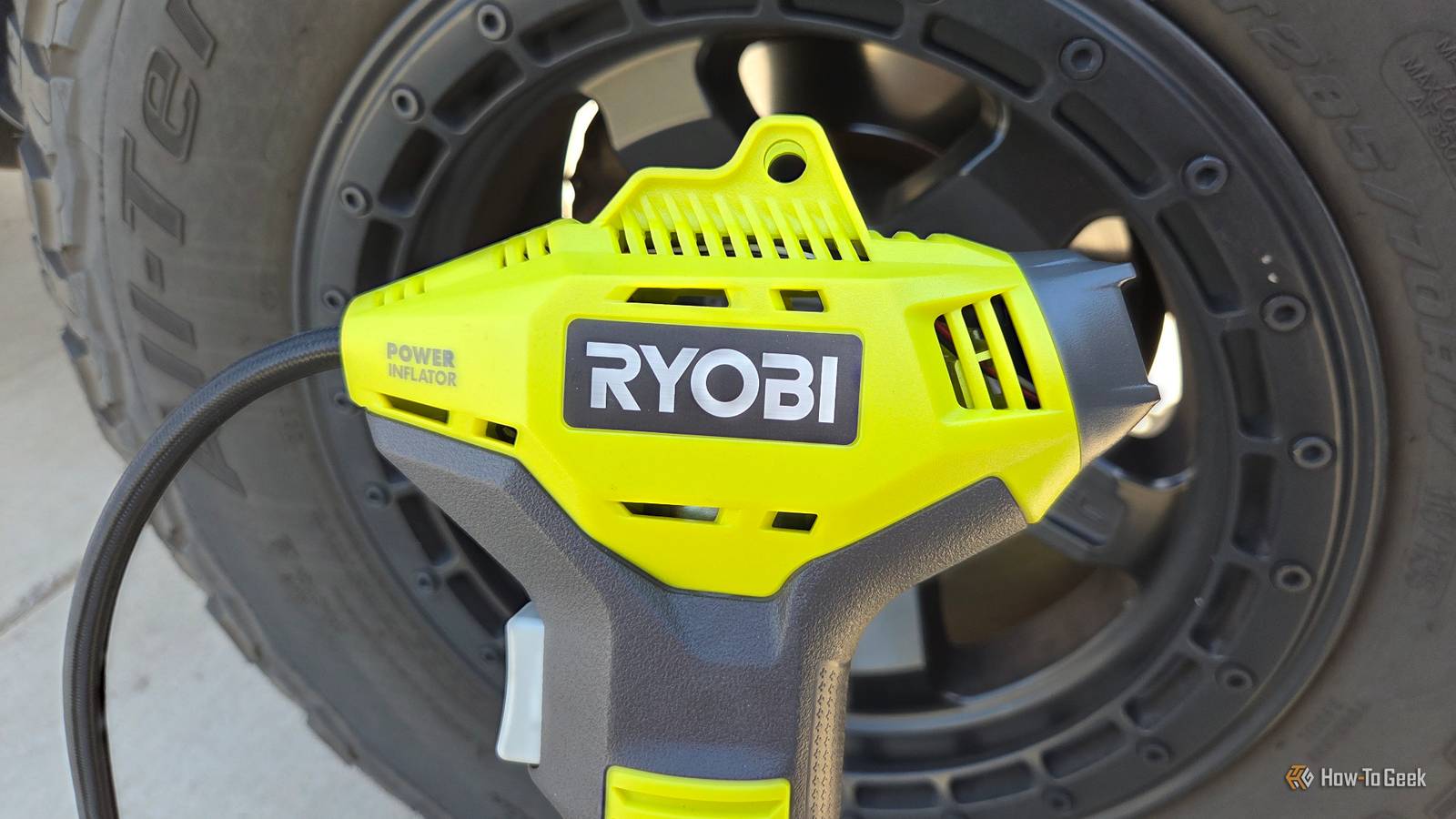
Gunther emphasizes that while a total blowout requires a spare tire, many pneumatic issues can be managed with a simple, high-pressure inflator. Ryobi’s High-Pressure Tire Inflator, which often retails for around $40—and has been seen on sale for as little as $18—offers a level of utility that far exceeds its modest price point.
The modern iteration of this tool is designed for speed and precision. Capable of delivering up to 160 PSI, it can air up a standard passenger tire in minutes. One of its most valuable features for the non-expert user is the digital display and the ability to preset a target PSI. Once the tire reaches the manufacturer’s recommended pressure, the device automatically shuts off, preventing overinflation and ensuring the vehicle remains within its optimal safety parameters.

The versatility of the inflator extends beyond the automotive realm. Because it is lightweight and cordless, it serves as a multi-purpose tool for outdoor activities. From inflating bicycle tires and sports equipment to filling air mattresses during camping trips, the device maximizes its value through frequent use rather than sitting idle until an emergency strikes. Gunther notes that the "peace of mind" provided by such a tool is often worth the investment alone, particularly for families or those who frequently travel long distances.
The Ecosystem Advantage and Maintenance
A recurring theme in modern tool ownership is the "ecosystem" effect. By choosing tools that utilize a standardized battery platform, such as the Ryobi 18V ONE+, drivers can reduce the clutter in their vehicles. A single 4Ah battery can power the jump starter, the tire inflator, and even a portable vacuum or work light.
However, the efficacy of these tools is entirely dependent on maintenance. A jump starter with a depleted battery is no more useful than a set of cables without a second car. Gunther advises a proactive approach, reminding users to periodically check and recharge their batteries, especially after a tool has been used or after periods of extreme temperature changes. While a 2Ah battery is often sufficient for smaller tasks, he recommends the larger 4Ah cells for maximum reliability when jumping larger engines or inflating multiple tires.
Redefining the Standard for Vehicle Readiness
The integration of these tools into a daily driver or an off-road rig represents a broader trend toward DIY resilience. In addition to the jump starter and inflator, a comprehensive kit might include a storage bin with essentials such as recovery straps, a 10mm socket set, and perhaps a cordless impact wrench for those who are comfortable performing more involved repairs.
The primary takeaway from Gunther’s experience is that the barrier to entry for high-quality roadside preparedness has never been lower. For an investment that is often less than the cost of a single out-of-pocket tow, a driver can equip themselves with the means to handle the two most common roadside emergencies independently.
In a world where time is a precious commodity and roadside safety is a constant concern, the transition from being a passive observer of automotive failure to an active participant in its resolution is a logical step. By embracing affordable, battery-powered technology, drivers can ensure that a minor mechanical setback remains just that—a minor delay rather than a major ordeal. Whether one is a seasoned mechanic or a casual commuter, the utility of a portable jump starter and a reliable tire inflator is undeniable, serving as a silent insurance policy for every mile of the journey ahead.
 Tech Tutorials & How-To Guides
Reliability Without the Premium Price: The Evolution of Affordable Multi-Tools for Modern Everyday Carry
The concept of "Everyday Carry," or EDC, has evolved from a niche...
 Tech Tutorials & How-To Guides
Essential Ryobi 18V ONE+ Tools Under $80 for New Homeowners and DIY Enthusiasts
The landscape of home improvement has shifted significantly over the last decade,...
 Tech Tutorials & How-To Guides
The Hidden Bottleneck: Why Standard Speed Tests Often Fail to Detect Faulty Network Hardware
In the modern digital household, few things are as frustrating as a...







