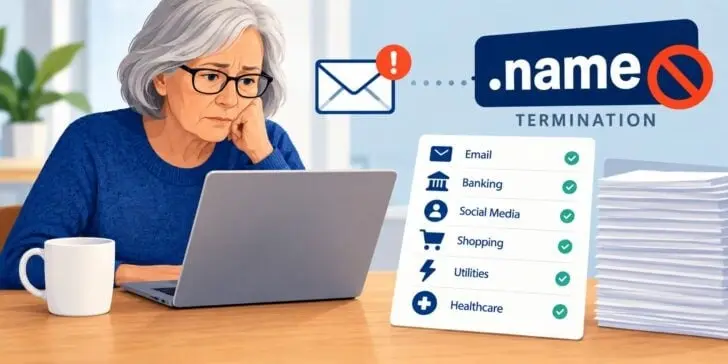
The hardship experienced by Johnston is a direct result of a policy decision made by Verisign and ICANN. While the industry has moved toward different standards and the popularity of third-level .name domains may have waned in favor of more traditional formats, the users who remain on the platform are often those with the deepest roots. Industry experts, including Andrew Allemann of Domain Name Wire, have argued that the decision to terminate these domains should be reversed. The argument is simple: the technical overhead required to maintain these existing registrations is negligible compared to the massive personal and professional disruption caused by their elimination.
One of the most troubling aspects of this transition is the lack of clear communication and support from the registrars responsible for managing these domains. Johnston’s experience with Network Solutions, a major domain registrar, serves as a cautionary tale of institutional incompetence. After receiving a notification about the impending termination of her domain, Johnston contacted Network Solutions to explore her options and verify the timeline. To her shock, multiple customer service representatives told her that the notification was a scam.
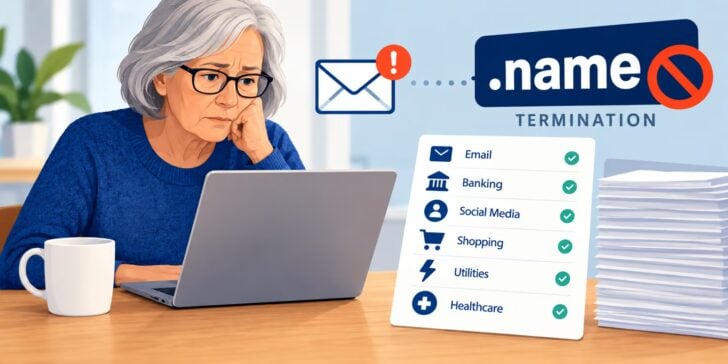
These representatives assured her that her domain was secure and pointed to the fact that her registration was paid for and valid through the year 2030. They encouraged her to ignore the warnings, effectively advising her to walk blindly into a digital lockout. It was only after Johnston insisted that the representatives perform a specific search for ".name termination" that they realized the notice was legitimate. This breakdown in communication highlights a dangerous gap: if the frontline support staff of a major registrar are unaware of a major policy change, the average user stands little chance of navigating the transition successfully.
The confusion at the registrar level suggests that many other .name users may be currently ignoring valid termination notices, believing them to be phishing attempts or fraudulent emails. For those who are not as persistent as Johnston, the first realization that their email is gone may come only after the service is disconnected. By then, the path to recovery will be significantly more difficult, if not impossible.
The plight of Johnston and her 97-year-old mother also brings to light the digital divide that exists within the aging population. While younger, tech-savvy users might find the migration of 211 accounts to be a nuisance, for senior citizens, the technical and cognitive load can be overwhelming. The internet has become a vital utility for seniors, providing access to telehealth, social security management, and communication with family. Forcing this demographic to undergo a complex digital migration with little to no professional support is a failure of the systems meant to govern the internet for the benefit of all users.
 Web Hosting & Domain Management
The AI-Driven Acceleration of the Domain Aftermarket: Why 2026 is Seeing Record-Breaking Development Speeds
The secondary market for domain names has long been characterized by a...
 Web Hosting & Domain Management
Major Domain Registrars Challenge auDA Over Policy Shifts Threatening Millions of .au Registrations
A coalition of ten prominent domain name registrars has formally petitioned the...
 Web Hosting & Domain Management
Verisign Unveils New "Verisign Informed" Security Service and Moves to Secure .pki Top-Level Domain
In a significant expansion of its security and infrastructure portfolio, Verisign (NASDAQ:...