
Cynet’s investigation into the installation process for this SSH backdoor revealed a high degree of resourcefulness. If the standard SSH service (sshd) was not already available on the system, the script would automatically download a legitimate OpenSSH-Win64 zip archive from the attackers’ staging server. It would then extract the files, run a script to install the service, set it to start automatically, and even modify the Windows Firewall to allow inbound traffic on TCP port 22. This automated "IT support" style of malware execution demonstrates how threat actors are increasingly using the system’s own administrative capabilities against it.
Perhaps the most concerning discovery made during the investigation was the contents of the attackers’ staging infrastructure. By analyzing the exposed directory on the server at 45.115.26[.]23:8012, researchers found a veritable toolkit for modern cyber warfare. In addition to the custom Go backdoors and SSH persistence scripts, the directory contained exploit code for CVE-2023-46604, a critical remote code execution vulnerability in Apache ActiveMQ.

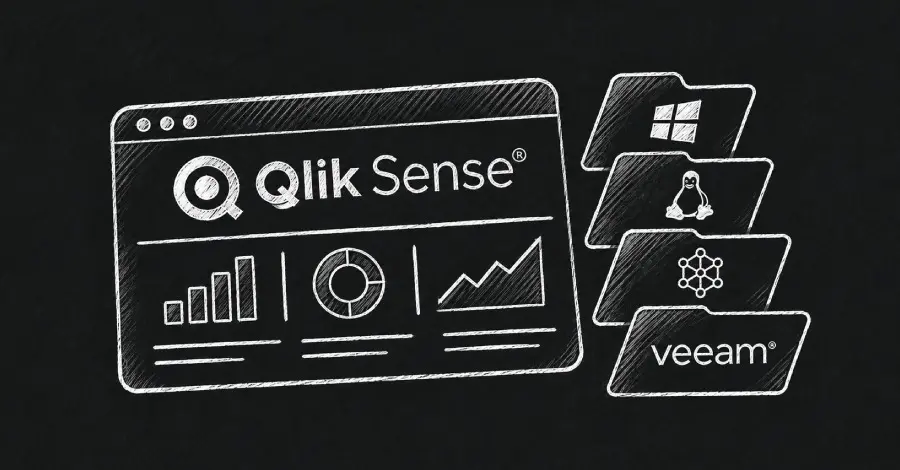
Even more significant was the presence of a modified toolchain for exploiting CVE-2024-40711, a critical vulnerability in Veeam Backup & Replication software. Veeam is a cornerstone of data protection for many large enterprises, and vulnerabilities in such software are highly prized by ransomware groups because they allow for the deletion or encryption of backups, leaving the victim with no choice but to pay the ransom. The inclusion of these tools indicates that the targeting of Qlik Sense servers is likely just the initial phase of a broader attack strategy aimed at crippling an organization’s entire data infrastructure.
The discovery of this activity serves as a stark reminder of the "long tail" of software vulnerabilities. Even years after a patch has been released, known flaws in enterprise software like Qlik Sense remain a primary target for sophisticated threat actors. These groups rely on the fact that large organizations often have complex, sprawling IT environments where a few legacy or unpatched servers can remain hidden, providing a perfect entry point for an intrusion.
For organizations utilizing Qlik Sense Enterprise for Windows, the current threat landscape necessitates a proactive approach to security. This includes not only ensuring that all software is patched to the latest version but also monitoring for the specific indicators of compromise (IoCs) identified by researchers. Patterns such as unusual PowerShell execution under "scheduler.exe," the creation of unauthorized scheduled tasks like "WinUpdCheck," and unexpected outbound connections to unfamiliar IP addresses should be treated as high-priority alerts.
As the investigation into this campaign continues, the cybersecurity community remains on high alert. The overlap between the tools used in these attacks and those favored by ransomware operators suggests that the ultimate goal of these intrusions is likely a large-scale data extortion or encryption event. By identifying and blocking these attempts at the initial access stage, security teams can prevent the much more damaging secondary phases of a ransomware attack from ever taking place.
 Cybersecurity Basics & Security News
Binance Hit by Record-Breaking $6.3 Billion Security Breach Attributed to North Korean Hackers
In what has been characterized as the most significant financial heist in...
 Cybersecurity Basics & Security News
Advanced Wazza Phishing Kit Leverages Multi-Stage Routing and Device Code Tactics to Target Critical Global Sectors
The landscape of email-based threats is undergoing a fundamental transformation. Phishing kits,...
 Cybersecurity Basics & Security News
Critical Linux Kernel TCP Vulnerability Triggers Urgent Patching Cycle Across Enterprise Distributions
A severe security flaw residing within the Linux kernel’s networking stack has...







