

Furthermore, the malicious domains are specifically designed to be "skimmed, not read." In the heat of a busy workday, an employee is unlikely to carefully parse a URL like office[.]com-access-sharepoint[.]com, which contains enough familiar keywords to pass a cursory glance.
While the current version of the Google spoof may contain a configuration error regarding password collection, Dickson warned that the threat actors behind the campaign will likely fix such issues in future iterations. The sophistication of the mimicry is only expected to increase as attackers themselves begin to use AI tools to refine their scripts and design.
The researchers at Cofense suggested several practical steps for users, such as checking for consistent branding across the entire journey from email to login and verifying that the URL and domain match the service being used. However, Dickson emphasized that the burden of defense should not rest solely on the individual worker.
"Training helps, but I would not hang the defense on an employee squinting at a URL at 4:45 on a Friday," Dickson said. He argued that the value of a stolen password is a leadership decision, not a personal failure of the employee. If a single stolen password can lead to a catastrophic breach, the organization’s security architecture is fundamentally at fault.
To mitigate these risks, Dickson and the researchers advocate for the implementation of phishing-resistant multi-factor authentication (MFA), such as passkeys. Unlike traditional SMS-based or app-based MFA, which can still be bypassed through sophisticated proxy attacks, passkeys and hardware security keys make a stolen password virtually useless to an attacker.
Ultimately, this campaign serves as a stark reminder of how easily trusted digital environments can be turned against users. By using legitimate-looking tools and exploiting the current cultural obsession with AI, attackers have found a way to bypass both technical filters and human skepticism.
"Bottom line: This campaign uses trusted tools to defeat defenses built on trust," Dickson concluded. "The employee should not be the last line of defense." As the AI boom continues to dominate corporate interest, organizations must ensure that their security infrastructure evolves as quickly as the lures used to target their staff.
 Small Business IT & Cloud Computing
Box Redefines Content Management with New Agentic Workflow Tools and Nvidia-Powered Retrieval Engine
SAN FRANCISCO — At its annual BoxWorks 2026 conference on Thursday, cloud...
 Small Business IT & Cloud Computing
Meta’s AI Vision Is the Best in the Industry—But Its History Makes It Impossible to Trust
We are currently standing on the precipice of a fundamental revolution in...
 Small Business IT & Cloud Computing
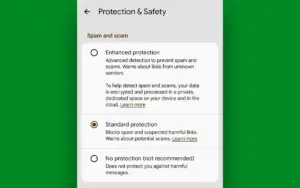
Google Bolsters Android Security with New ‘Enhanced Protection’ for Messaging Scams
In the modern digital landscape, the most sophisticated firewall or biometric lock...







