
This vCenter exploitation was not an isolated incident but rather a critical phase of a broader, multi-stage campaign. Armory Castle’s tactical playbook involved the initial compromise of edge devices to gain a foothold in the target network. In this instance, the group exploited a separate zero-day vulnerability in BeyondTrust Remote Support, tracked as CVE-2026-102764 (CVSS score 9.3). This initial breach allowed the attackers to conduct internal reconnaissance and establish a persistent presence using a custom proxy tunneler named BARECLAW.
From the compromised BeyondTrust appliance, the threat actor demonstrated significant lateral movement capabilities. They transitioned to an internal Linux appliance, where they successfully escalated privileges to root. This secondary staging point was used to deploy additional payloads designed to map the internal network and identify high-value targets, specifically focusing on the virtualization layer.
The group’s reconnaissance efforts were highly targeted. Researchers found that Armory Castle utilized the network scanning tool nmap to search for systems running specific VMware-related services. They focused on port 9080, port 5480 (the vCenter Server Appliance Management Interface), and port 2012. Port 2012 is particularly significant as it serves as the control interface for vCenter Single Sign-On (SSO) and is the primary vector used by the BONESAW utility to execute the CVE-2026-123890 exploit.

As the attack progressed, the adversary deployed an extensive suite of malware families, many of which appear to be part of a coordinated toolkit. Beyond BONESAW and BARECLAW, investigators identified several other specialized utilities. One such tool, BEARBONES, was used to create a network listener on TCP port 33992, providing a stable channel for communication. Once this was established, the group moved into the vCenter appliance as an administrator and created a new local account with a deceptive name—[email protected]—to blend in with legitimate system services.
To further solidify their control, Armory Castle enabled Secure Shell (SSH) access on the vCenter appliance. They achieved this by interacting with the vCenter Server Appliance Management Interface (VAMI) API, sending a specific PUT request to the SSH access endpoint. With SSH enabled, the attackers could log in directly using their newly created administrator account, bypassing the need for further exploitation of the web-based management console.
In the final stages of the operation, the focus shifted toward the underlying ESXi hypervisors. The attackers were observed enumerating the ESXi file system and mounting Virtual Machine File System (VMFS) volumes. By adding an SSH public key to the root account’s authorized keys on the ESXi hosts, they ensured they could access the physical servers hosting the virtual machines at will. This level of access allowed for the theft of raw virtual disk files and other sensitive data, which were archived and exfiltrated via HTTP GET requests through the previously compromised Remote Support appliance.
 Cybersecurity Basics & Security News
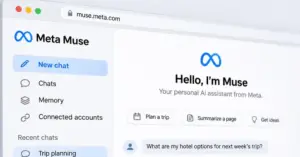
Critical Security Flaws in Meta Muse AI Agent Allowed Silent Data Theft and Full System Compromise
A sophisticated security vulnerability discovered in Meta’s personal artificial intelligence assistant, Muse,...
 Cybersecurity Basics & Security News
Chainalysis Targeted in Cybersecurity Breach Involving Advanced AI-Driven Offensive Techniques
In a disclosure that underscores the escalating sophistication of the modern threat...
 Cybersecurity Basics & Security News
The Silent Proliferation: Enterprise Security Grapples with the Rise of Invisible AI Agents
As the enterprise landscape prepares for the full-scale integration of artificial intelligence,...







