

The most alarming aspect of Operation CameraSwarm was the deployment of a persistent backdoor account. Researchers found that in nearly 2,000 of the compromised cameras, the attacker installed a hidden account with the credentials "p2pwn" and "p2password." This backdoor was implemented via Remote Procedure Call (RPC) after the initial authentication bypass was achieved. Unlike standard user accounts, this persistent backdoor was designed to survive password changes by the legitimate owner and, on many firmware versions, would even persist after a factory reset. This ensures that even if a user realizes their camera has been hacked and attempts to wipe the device, the attacker retains a permanent "key" to the system.

The strategic value of these compromised cameras cannot be overstated. In July 2026, Dutch intelligence agencies (AIVD) issued a bulletin warning that Russian state actors are systematically compromising IP cameras across E.U. and NATO member states. The goal of these operations is the acquisition of military intelligence through automated imagery analysis. By feeding hijacked video streams into advanced image recognition software, state actors can conduct targeted, real-time searches for military hardware, such as tanks, air defense systems, and transport vehicles.
The AIVD noted that this intelligence is used to map out NATO military transport routes and track weapon deliveries destined for Ukraine. In a combat environment, the data harvested from a simple home or business security camera can be used to identify the locations of military personnel and coordinate strikes against hardware and infrastructure. The transition of IP cameras from simple security tools to frontline espionage assets highlights a new era of "visual SIGINT" (Signals Intelligence) where consumer-grade technology becomes a critical component of modern warfare.
In light of these findings, CERT-UA and the SSSCIP have provided a set of urgent recommendations for administrators and owners of Dahua surveillance equipment. The most effective defense is to disable the P2P (Easy4IP) feature entirely if it is not strictly necessary for operations. If remote access is required, it should be facilitated through secure, encrypted channels such as a Virtual Private Network (VPN) rather than relying on third-party cloud relays. Furthermore, users are urged to audit their devices for the presence of unauthorized accounts, particularly the "p2pwn" credential, and to ensure that all hardware is running the latest available firmware to patch known vulnerabilities like CVE-2021-33044.
The ongoing exploitation of Dahua systems serves as a stark reminder of the inherent risks associated with the "plug-and-play" convenience of modern IoT devices. When serial numbers are predictable and cloud relays bypass local security, the traditional boundaries of network defense are effectively neutralized. As international intelligence agencies continue to monitor the situation, the focus remains on securing the "unseen eyes" that monitor our streets, businesses, and homes—before they are turned against the very people they were meant to protect.
 Cybersecurity Basics & Security News
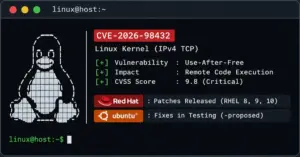
Critical Linux Kernel TCP Vulnerability Triggers Urgent Patching Cycle Across Enterprise Distributions
A severe security flaw residing within the Linux kernel’s networking stack has...
 Cybersecurity Basics & Security News
Active Exploitation of Two New Unpatched Zero-Day Vulnerabilities Discovered in Citrix NetScaler Appliances
Security researchers and enterprise IT departments are on high alert following reports...
 Cybersecurity Basics & Security News
Critical Security Flaws in Meta Muse AI Agent Allowed Silent Data Theft and Full System Compromise
A sophisticated security vulnerability discovered in Meta’s personal artificial intelligence assistant, Muse,...







