

The CBOW model functions by attempting to predict a "target" word based on the context of the words surrounding it. For instance, in the sentence "The cat is sleeping on the sofa," if the word "sleeping" is hidden, the model looks at "The," "cat," "is," "on," "the," and "sofa" to guess the missing piece. Through millions of such iterations, the model refines its understanding of which words typically fill certain roles.
Conversely, the Skip-gram model reverses this logic. It takes a single target word and attempts to predict the words that are likely to appear in its vicinity. If the model is given the word "cat," it learns to predict that words like "the," "is," or "sleeping" are likely neighbors. While Skip-gram is often more computationally expensive, it has proven particularly effective at capturing the nuances of rare words and complex relationships within large datasets. Later refinements, such as negative sampling, have further optimized these processes, making it possible to train models on billions of words in a relatively short timeframe.
Practical Implementation and the Role of Python
For developers and data scientists, the theoretical brilliance of Word2Vec is made accessible through robust software libraries. In the Python ecosystem, the gensim library has emerged as a standard tool for implementing these models. By using gensim, researchers can take a raw corpus of text—even a small, artificial dataset—and generate functional word vectors.
The process involves defining specific hyperparameters that shape how the model learns. The "vector_size" determines the dimensionality of the embedding, while the "window" defines how many nearby words the model should consider as context. Another critical parameter, "min_count," ensures the model focuses on words that appear frequently enough to provide meaningful statistical data.
Once a model is trained, functions like most_similar() allow users to query the vector space. For example, asking the model for words similar to "cat" might yield "dog" or "animal," provided the training data is sufficiently rich. This highlights a crucial lesson in machine learning: the quality of the embedding is a direct reflection of the data used to train it. A model trained on medical journals will have a very different "understanding" of the word "cell" than a model trained on architectural blueprints.
The Wild Logic of Vector Analogies
One of the most startling discoveries to emerge from the study of word embeddings is their ability to perform linguistic algebra. Because these words are represented as vectors in a mathematical space, they can be added and subtracted to reveal underlying relationships.
The most famous example of this phenomenon is the equation: "king – man + woman ≈ queen." This implies that if you take the vector for "king," subtract the vector for "man" (effectively removing the "maleness" from the concept), and add the vector for "woman," the resulting point in the embedding space is remarkably close to the vector for "queen."
 Software Development & Scripting for IT
CogniRunner Unveils AI-Driven License Management and Workflow Validation for Atlassian Cloud Ecosystem
The landscape of enterprise software management is undergoing a significant shift as...
 Software Development & Scripting for IT
Architecting Precision: Why Staged Retrieval and Explicit Contracts are Redefining AI Insurance Claims Intake
In the rapidly evolving landscape of insurance technology, the integration of Large...
 Software Development & Scripting for IT
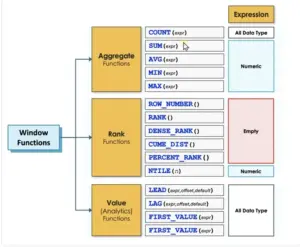
The Evolution of Data Analysis: Mastering the Power of SQL Window Functions
In the modern landscape of data-driven decision-making, Structured Query Language (SQL) remains...







