

Challenges of FCoE
Despite its advantages, FCoE is not a universal panacea and comes with its own set of challenges that IT leaders must weigh carefully. One of the primary hurdles is the complexity of the initial configuration. Implementing the Data Center Bridging (DCB) standards required for lossless Ethernet is more demanding than setting up a standard LAN. If the network switches are not configured correctly to prioritize FCoE traffic, the storage performance can suffer significantly, or the connection may fail entirely.
Another challenge involves the "hop" limit. While FCoE is excellent for connecting servers to the first or second layer of switches, it is generally not recommended for complex, multi-hop fabrics spanning long distances. In these scenarios, native Fibre Channel still maintains a performance and stability edge.
There is also the matter of vendor interoperability. While FCoE is a standard, ensuring that CNAs from one vendor work perfectly with switches from another and storage arrays from a third can sometimes require rigorous testing and specific firmware versions. Finally, the emergence of newer technologies, such as NVMe over Fabrics (NVMe-oF), has introduced new competition for FCoE. Organizations must decide if they want to invest in the FCoE transition or leapfrog directly to newer protocols designed specifically for high-speed flash storage.
Bottom Line
For organizations currently running a modern, high-performing Fibre Channel SAN, there is often no urgent pressure to switch to FCoE. However, as that infrastructure begins to age or reach its end-of-life, augmenting the network with FCoE becomes a highly viable option. Many businesses choose a path of gradual transition, introducing hybrid switches that support both native FC and FCoE, allowing them to migrate workloads at their own pace.
FCoE excels at bridging the performance gap between the cost-effectiveness of iSCSI and the raw power of Fibre Channel. It provides the high-speed data transfer and low latency required for demanding modern workloads, including artificial intelligence (AI) training, real-time data analytics, and high-performance computing (HPC).
When evaluating a move to FCoE, organizations must look closely at their specific performance requirements. While FCoE is significantly more affordable than a pure FC environment, it does carry a cost premium over a basic iSCSI SAN built on commodity hardware. Ultimately, FCoE stands as a robust, enterprise-grade solution for those looking to modernize their data centers through network convergence, offering a sophisticated blend of Fibre Channel’s reliability and Ethernet’s flexibility.
 Enterprise Tech & Infrastructure
Navigating the Hidden Complexities of Amazon S3 Cost Management for Enterprise Storage
In the modern enterprise landscape, cloud storage has transitioned from a simple...
 Enterprise Tech & Infrastructure
The Essential Architecture of Digital Storage: Understanding the Critical Role of Computer Memory Systems
In the modern computing landscape, the term "memory" serves as a broad...
 Enterprise Tech & Infrastructure
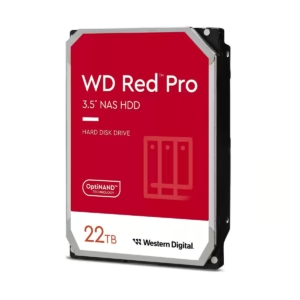
Seagate, Western Digital, and Toshiba Lead 2023 Rankings for Enterprise-Grade Storage Solutions
In the rapidly evolving landscape of corporate data infrastructure, the demand for...







