

The Strategic Importance of FCoE in Modern Infrastructure
The ubiquity of Ethernet is its greatest strength. From small offices to hyperscale data centers, Ethernet is the global standard for connectivity. As Ethernet speeds have surged from 10 Gbps to 100 Gbps, and with 400 Gbps becoming increasingly common in high-end environments, the bandwidth available for storage traffic has expanded dramatically. FCoE allows enterprises to capitalize on this roadmap, ensuring that their storage performance can scale alongside their general networking capabilities.
One of the primary drivers for FCoE adoption is the reduction of complexity and cost. Maintaining two distinct networks—one for data and one for storage—requires double the amount of cabling, switches, and interface cards. It also requires two different sets of management tools and, often, two different teams of specialists. By converging these networks, organizations can significantly reduce their physical footprint and power consumption, which are critical factors in modern data center management.
Furthermore, the skill set required to manage Ethernet is far more common in the labor market than the specialized expertise needed for traditional Fibre Channel SANs. This availability of talent lowers staffing costs and reduces the risk of operational bottlenecks caused by a lack of specialized knowledge. For many large enterprises, the ability to run FCoE over existing Ethernet-supported equipment—or via high-performance CNAs—provides a level of flexibility that traditional FC simply cannot match.
Operational Advantages of FCoE Implementation
The benefits of implementing FCoE extend across the entire lifecycle of data center operations. Perhaps the most immediate advantage is the consolidation of hardware. By using CNAs and converged switches, an organization can drastically reduce the number of cables and ports required in a rack. This leads to better airflow, lower cooling costs, and a much cleaner physical environment, which simplifies troubleshooting and maintenance.
From a financial perspective, FCoE offers a compelling Total Cost of Ownership (TCO) model. While traditional Fibre Channel hardware remains expensive and proprietary, Ethernet hardware is commoditized and widely available from a variety of vendors. While FCoE-capable hardware does carry a premium over basic iSCSI equipment, it remains significantly more affordable than a dedicated, end-to-end Fibre Channel infrastructure.
Reliability and performance also remain high. Because FCoE maintains the Fibre Channel stack, it continues to support the same management tools and security features that storage administrators have relied on for decades. This allows for a seamless operational experience where the underlying transport mechanism changes, but the way storage is provisioned, zoned, and managed remains consistent. This consistency is vital for organizations that need to maintain strict compliance and data governance standards.
 Enterprise Tech & Infrastructure
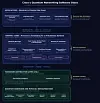
Quantum Elements Bridges the Hardware-Software Gap in Quest for Fault-Tolerant Computing
The journey toward a practical, large-scale quantum computer has long been defined...
 Enterprise Tech & Infrastructure
Cisco Unveils Automated Control Layer to Bridge the Gap Between Isolated Quantum Nodes and Distributed Architectures
In the rapidly evolving landscape of quantum information science, the primary focus...
 Enterprise Tech & Infrastructure
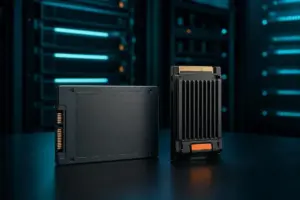
Understanding the Architecture of Modern Storage: Why the Choice Between Flash and SSD Is a Matter of Components, Not Categories
In the rapidly evolving landscape of enterprise data management, the terminology used...







