
With just one month remaining for eligible consumers to submit claims, details regarding individual payout amounts in Apple’s massive $250 million Siri AI class action settlement have begun to materialize. According to court documents filed by attorneys representing the class members, claimants can expect to receive a minimum payout of at least $61 per eligible iPhone, with the potential for higher individual disbursements depending on final participation numbers.
The settlement resolves a high-profile U.S. class action lawsuit stemming from Apple’s delayed launch of promised artificial intelligence features for its virtual assistant, Siri. Consumers who purchased qualifying iPhone models during the specified timeframe have until December 21 to complete and submit their claim forms via the official settlement portal.
While the maximum statutory cash distribution under the terms of the agreement is capped at $95 per device, the actual per-unit compensation will be dictated by the volume of valid submissions received before the deadline. Based on early participation rates gathered in court filings, legal representatives anticipate that payments will hover at or above the $61 threshold, barring a sudden and dramatic surge in last-minute claim submissions.
Apple has consistently denied all allegations of wrongdoing, maintaining that its marketing practices were lawful and that its product disclosures were accurate. The tech giant agreed to the $250 million payout strictly to avoid the escalation of legal expenditures and the inherent risks associated with a protracted trial, allowing the company to maintain its focus on software development and product delivery.
Why Was Apple Sued?
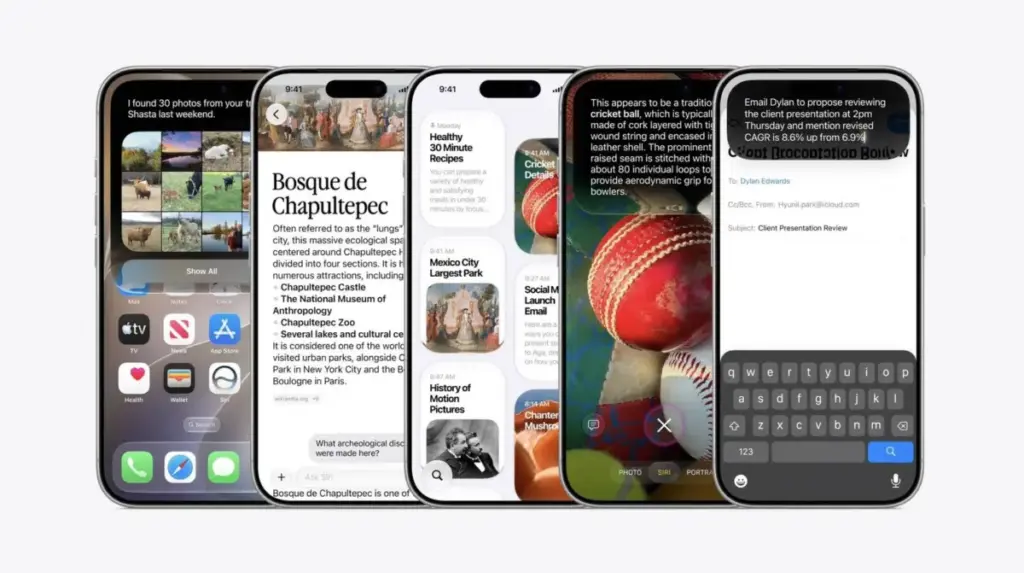
The origins of the class action litigation date back to June 2024, when Apple hosted its annual Worldwide Developers Conference (WWDC). During the event, the company unveiled a comprehensive vision for Apple Intelligence, highlighting an upgraded version of Siri designed to deliver personalized context, on-screen awareness, and advanced per-app control mechanisms.
To demonstrate the capabilities of the revamped virtual assistant, Apple presented scenarios in which Siri could process complex, individualized requests by scanning data across multiple native applications. For instance, in one prominent presentation, Apple demonstrated a user asking Siri for details regarding their mother’s upcoming flight and lunch reservation plans. Siri was shown synthesizing this information seamlessly by pulling relevant data directly from messages in the Mail and Messages apps.
Following the initial reveal, Apple embarked on an extensive promotional effort across multiple media channels. The company highlighted the personal Siri features in official product demonstrations, on its website marketing materials, and through widespread video advertising campaigns. Among these promotions was a flagship television commercial featuring actor Bella Ramsey, which emphasized the personal, intuitive nature of the upcoming Siri experience.
However, the timeline for the software’s public rollout encountered significant friction. In March 2025, Apple formally delayed the release of the personalized Siri features. The unexpected postponement prompted immediate pushback from consumers who had purchased new hardware under the expectation that the advertised artificial intelligence features would be available upon launch or shortly thereafter. Shortly after the delay was announced, plaintiffs filed a class action lawsuit in U.S. federal court alleging false advertising and deceptive trade practices.
In response to the legal pushback, Apple issued statements highlighting that it had already delivered a broad selection of other Apple Intelligence capabilities to users as planned. Nonetheless, by May 2026, Apple elected to reach a $250 million settlement agreement with the class action plaintiffs. Company representatives reiterated that settling the lawsuit allowed Apple to move past the legal dispute and stay focused on delivering innovative products and services to its customer base.
Apple eventually released the long-awaited Siri AI feature set at WWDC 2026 in June. The software officially reached consumers in September 2026 alongside the public launch of iOS 27. The enhanced Siri AI features are supported on iPhone 15 Pro models and newer devices running the iOS 27 operating system. Despite the general release of iOS 27 out of its initial testing phase, Apple continues to designate Siri AI as a beta feature within the software environment.
Am I Eligible?
Eligibility for inclusion in the settlement distribution is defined by specific geographic, temporal, and purchasing criteria outlined in the court-approved settlement framework.
To qualify for a cash payout, an individual must meet the following requirements:
- Reside within the United States.
- Have purchased an eligible iPhone model in the U.S. between June 10, 2024, and March 29, 2025.
- Have purchased the device for personal or standard usage, explicitly excluding purchases made for resale purposes.
The settlement applies to a range of flagship devices sold during the promotional period, including the iPhone 15 Pro, iPhone 15 Pro Max, and subsequent generation hardware released prior to the March 29, 2025 cutoff.
Eligible customers should have received direct notification regarding the settlement via email. These communications contain a personalized Claim ID and PIN code designed to streamline the online submission process. However, individuals who believe they qualify but have not received an email notification—or who have misplaced their login credentials—are still able to submit a claim directly through the settlement website.
The online claim portal requires applicants to provide standard personal identification details alongside the serial number of the qualifying iPhone. For users who no longer have access to their device’s serial number, the claim system provides an alternative verification path, allowing applicants to submit the Apple Account email address and phone number associated with the eligible device during the ownership period.
How Much Will Apple Pay Me?
Under the structured terms of the $250 million settlement fund, financial compensation is distributed on a per-device basis. The absolute ceiling for compensation is set at $95 per qualifying iPhone.
Because the settlement fund is a fixed amount that must also cover administrative costs, legal fees, and service awards, the exact cash amount allocated to each claimant depends directly on the total quantity of valid claims filed before the submission window closes.
In a motion for attorneys’ fees, expenses, and service awards filed on November 16, 2026, legal counsel representing the class provided an updated projection of the expected individual payouts. Based on claim volume data collected through mid-November, the lawyers estimated that participants will receive at least $61 per eligible device.
This $61 figure represents a baseline projection. Should the final number of valid claim submissions remain steady or experience only modest growth over the final month of the filing period, individual checks could match or exceed that estimate, moving closer to the $95 maximum cap. Conversely, if an unexpected surge of claims occurs prior to the December deadline, the per-device payout could be adjusted downward to accommodate the larger pool of claimants.
Where and When Can I Submit a Claim?
All claim filings must be submitted electronically through the designated settlement website at smartphoneaisettlement.com.
The deadline to submit a fully completed claim form is December 21, 2026. Submissions made after midnight on the deadline date will be deemed invalid, forfeiting the device owner’s right to collect a cash payment under the settlement agreement.
Consumers who wish to opt out of the settlement class in order to retain their right to pursue independent legal action against Apple must also adhere to specific instructions and deadlines outlined on the official portal.
When Will I Receive Payment?
While claim submissions are drawing to a close in December 2026, actual cash disbursements will not occur immediately.
The court has scheduled a final approval hearing for February 24, 2027. During this proceeding, the presiding judge will evaluate the fairness of the settlement, review requests for legal fees and administrative costs, and consider any formal objections that have been submitted by class members.
Assuming the court grants final approval to the settlement terms without unexpected delays or legal appeals, distribution of payments to verified claimants is expected to begin later in 2027. Payouts will be issued via the payment methods selected by claimants during the online submission process.
Siri AI Evolution and Ecosystem Expansion
The resolution of the Siri AI false advertising lawsuit comes amid Apple’s continued rollout and refinement of its artificial intelligence features across its entire software ecosystem throughout 2026.
Following the initial launch of iOS 27 and iPadOS 27 in September 2026, Apple released iOS 27.2 and iPadOS 27.2 in late October 2026. The major point update marked the first significant expansion of the core operating systems, extending Siri AI language capabilities to additional international markets and broadening device support to include new hardware offerings such as the iPhone Duo and the OLED iPad mini.
Furthermore, Apple has expanded its Siri AI features beyond mobile form factors. On November 13, 2026, Apple issued tvOS 27.2.1, bringing specialized Siri AI capabilities to home entertainment devices, specifically adding support for second- and third-generation Apple TV 4K models alongside existing compatible hardware.
Concurrently, Apple has begun testing new functional frameworks and monetization structures for its server-bound artificial intelligence processes. With the release of the iOS 27.3, iPadOS 27.3, and macOS 27.3 developer betas in mid-November 2026, the company initiated system-level testing of daily usage allowances for server-dependent AI processing.
Under this framework, all supported Apple devices receive a free daily tier of cloud-based AI requests for intensive tasks—such as image generation via Image Playground and advanced photo editing tools like Clean Up in Photos. Once users exhaust their daily free processing allocation, the system provides options to upgrade to expanded limits integrated into paid iCloud+ subscription tiers.
As Apple continues to expand Siri AI’s global reach and integrate cloud-processing tiers into its broader software strategy, the settlement of the 2025 class action lawsuit closes a turbulent chapter in the company’s multi-year AI transition. For affected iPhone owners, the coming weeks represent the final window to claim their portion of the $250 million settlement before the December 21 cutoff.
 macOS & Apple IT Support
Apple Expands watchOS 27.0.1 Update to All Compatible Apple Watch Models Following Targeted Initial Patch
Apple has officially broadened the distribution of watchOS 27.0.1, making the software...
 macOS & Apple IT Support
Apple Details Workaround for Apple Watch Daylight Saving Time Display Glitch
Apple has officially published a support document addressing a software issue that...
 macOS & Apple IT Support
Amazon Launches Early Prime Big Deal Days Savings on Apple’s 2026 Mac Mini and Mac Studio Lineups
Amazon has officially initiated its early Prime Big Deal Days sales campaign,...






