
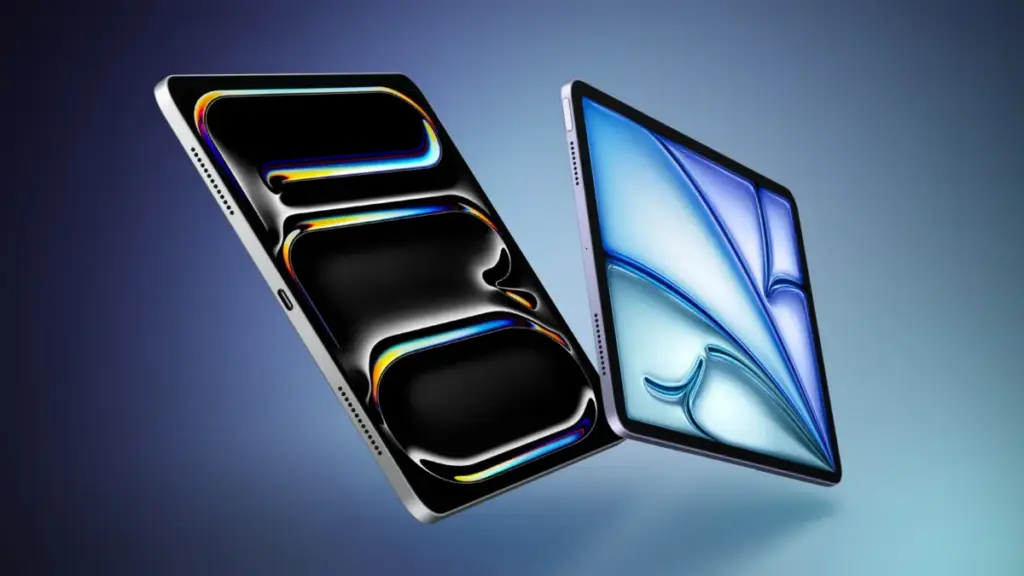
Following the recent announcement of a redesigned iPad mini equipped with an OLED display earlier in October, Apple is turning its attention toward a broad refresh of the remainder of its tablet portfolio. According to the latest intelligence shared by Bloomberg reporter Mark Gurman in his Power On newsletter, the Cupertino tech giant plans to release updated versions of the mid-range iPad Air, the flagship iPad Pro, and the budget-friendly entry-level iPad during the first half of 2027. The planned update signals a coordinated push by Apple to advance display technologies across its middle-tier hardware, introduce new thermal architecture to its top-tier professional tablets, and bring modern silicon and custom connectivity components to its baseline devices.
The timing of the reported first-half 2027 releases places the upcoming devices on a structured timeline following Apple’s late-2026 hardware announcements. The recent introduction of an OLED display on the iPad mini marked an important milestone for Apple’s smaller tablet form factor, setting a new precedent for visual contrast, color accuracy, and energy efficiency in compact devices. According to Gurman, Apple intends to build directly on that momentum by bringing OLED screen technology to the next iteration of the iPad Air during the early 2027 launch window.
Transitioning the iPad Air to an OLED display represents a significant shift for Apple’s mid-range tablet line. Historically positioned between the standard entry-level model and the top-tier iPad Pro, the iPad Air has long focused on offering balanced performance at a mid-tier price point. Incorporating OLED panels into the iPad Air will narrow the visual display gap between the mid-tier lineup and the flagship Pro models, delivering deeper black levels, higher contrast ratios, and improved dynamic range to a broader audience of consumers. Alongside the display upgrade, the next-generation iPad Air is expected to adopt Apple’s M5 processor, offering a natural bump in processing capabilities and graphics performance over previous models while maintaining a clear tier distinction below the Pro series.
While the iPad Air prepares for its display upgrade, the top-tier iPad Pro is slated for performance-oriented architectural enhancements aimed at demanding power users. Gurman reports that the upcoming iPad Pro update in the first half of 2027 will feature a transition to the next-generation M6 chip. The M6 processor is expected to push raw computational speeds and graphics processing capabilities even further, reinforcing the iPad Pro’s position as a primary workstation device for intensive computational workloads such as high-resolution video editing, complex 3D graphics rendering, audio production, and multi-stream media workflows.
To accommodate the elevated thermal output associated with high-performance silicon like the M6 chip within an ultra-thin chassis, Apple is reportedly planning to equip the next iPad Pro with a dedicated vapor chamber cooling system. Ultra-thin mobile devices often face physical limits when managing heat under prolonged high-intensity workloads, which can lead to thermal throttling and reduced sustained processing speeds over extended periods. By integrating a vapor chamber heat dissipation system inside the iPad Pro, Apple aims to channel heat away from the core processor far more efficiently across a wider internal surface area. This thermal engineering solution is designed to allow the M6 chip to maintain higher sustained clock speeds for longer durations without overheating, resolving performance bottlenecks for creative professionals.
At the base of the tablet lineup, Apple is also preparing a major feature upgrade for its entry-level twelfth-generation iPad. According to previously reported details regarding the upcoming iPad 12, Apple plans to equip its most affordable tablet with the A19 processor. The inclusion of the A19 chip is particularly significant because it provides the underlying hardware processing power required to support Apple Intelligence, the company’s suite of artificial intelligence features. Bringing Apple Intelligence support to the entry-level iPad ensures that AI-driven software functionality will be accessible across Apple’s entire tablet family, rather than remaining restricted to higher-tier M-series and flagship A-series hardware.
The entry-level iPad 12 is also expected to benefit from key architectural advancements in wireless and mobile connectivity. Reports indicate that the device will include Apple’s proprietary N1 chip, bringing native support for Wi-Fi 7 standards to the base tablet model. Wi-Fi 7 technology offers higher data throughput, reduced latency, and improved handling of crowded network environments compared to older Wi-Fi standards. Furthermore, for cellular variants of the iPad 12, Apple plans to incorporate its custom C1X modem. Engineered as a power-efficient in-house alternative to off-the-shelf cellular modems, the C1X chip is designed to manage mobile data connections while actively optimizing overall device power consumption during cellular use.
These upcoming 2027 tablet updates arrive against the backdrop of an exceptionally active product cycle for Apple throughout the fall of 2026. In late October, Apple invited selected members of the press and media to an all-day product launch experience in Los Angeles on Wednesday, October 28. The gathering focused on hands-on demonstrations and briefings surrounding several major hardware announcements. Highlights of the event included Apple’s touchscreen MacBook Pro laptops, the newly introduced OLED iPad mini, and an array of updated Mac desktop and portable computers powered by M6 series processors.
The October 28 media event followed reports from earlier in the month detailing an October 13 product release wave. During that timeframe, reports from Gurman indicated that Apple was preparing to introduce several updates to its smart home and streaming ecosystem, including an all-new smart home hub, a refreshed HomePod mini, and an updated Apple TV 4K. Taken together, these announcements demonstrate Apple’s broader strategy of updating its computing, tablet, smart home, and streaming video hardware in rapid succession across late 2026 and early 2027.
However, Apple’s intensive release schedule has not been completely free of operational challenges. Gurman recently raised critical questions regarding Apple’s execution during the launch of the dual-screen iPhone Duo. In an earlier edition of his Power On newsletter on October 18, Gurman detailed how Apple encountered severe supply constraints with the iPhone Duo stemming from complex manufacturing challenges. Despite knowing in advance that the device faced acute inventory shortages, Apple made the choice to open iPhone Duo pre-orders on a Friday as scheduled rather than waiting until sufficient inventory had been manufactured and distributed to retail channels.
Gurman characterized Apple’s decision to proceed with iPhone Duo pre-orders under severe supply constraints as a "major mistake." The resulting inventory bottleneck left many early buyers facing extended shipping delays and immediate stockouts, underscoring the operational risks involved when launching complex new device designs into global retail channels. As Apple prepares to roll out its first-half 2027 tablet updates—incorporating OLED screens, M5 and M6 processors, custom N1 wireless chips, and C1X cellular modems—supply chain readiness and manufacturing efficiency will remain crucial factors in ensuring steady product availability for consumers worldwide.
With the iPad portfolio set to receive targeted enhancements across every price point, Apple’s hardware roadmap for the first half of 2027 highlights a clear focus on display uniformity, custom thermal architecture, and widespread hardware support for Apple Intelligence. From the sustained performance goals of the vapor-cooled M6 iPad Pro to the OLED display transition on the iPad Air and the modernized connectivity suite of the entry-level iPad 12, the upcoming update cycle is poised to refresh Apple’s tablet offerings from top to bottom.
 macOS & Apple IT Support
Amazon Cuts $49 Off 11th-Generation iPad as Fall Discounting Continues
Amazon has introduced a new round of price reductions on Apple’s standard...
 macOS & Apple IT Support
Early Black Friday 2026 Apple Deals Hit Record-Low Prices Across Mac, iPhone 18, Apple Watch, and Accessories
With Black Friday approaching on Friday, November 27, 2026, the annual holiday...
 macOS & Apple IT Support
Early Black Friday Deals Bring Record-Low Prices Across Apple’s 2026 Lineup: AirPods, Apple Watch Ultra 4, Mac mini, and iPhone 18 Pro
With Black Friday set for Friday, November 27, 2026, the holiday shopping...







