
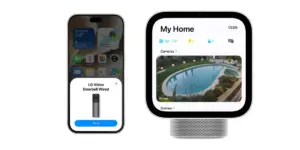
Technical details within the leaked code suggest that this feature relies on a sophisticated handshake between the iPhone and the accessory. The devices reportedly utilize a Matter-based payload that includes a specific "apple-deviceid" stored on an NFC tag within the hardware. When the iPhone is tapped against or brought very close to the accessory, the NFC tag triggers the initial recognition. Simultaneously, the accessory broadcasts a Bluetooth Low Energy (BLE) advertisement specifically for Apple Proximity Control to maintain the connection and handle the data transfer for the UI elements.
This system also streamlines the initial setup process. The leak indicates that the Dynamic Island will provide real-time feedback as the iPhone launches the setup sequence the moment it first detects a new accessory. This would eliminate the need for users to manually scan QR codes or enter setup digits—a common pain point in the current smart home ecosystem. While the feature is expected to be a major selling point for these co-developed accessories, Apple will likely include a toggle within the Home app settings to disable Proximity Control for users who prefer a more traditional manual interface.

The "Second-Party" Strategy and the LG Collaboration
The term "second-party" is a relatively new descriptor in the context of Apple’s hardware ecosystem. Traditionally, Apple either designs and manufactures its own products (first-party) or provides a certification platform, like HomeKit and MFi, for other manufacturers (third-party). This middle-ground collaboration with LG suggests that Apple is taking a more hands-on role in the industrial design and software architecture of these products without taking on the full burden of manufacturing and global supply chain management for a diverse range of home appliances.
Bloomberg’s Mark Gurman first detailed this collaboration earlier this week, noting that the initiative includes at least five distinct products: a smart thermostat, a deadbolt lock, an indoor security camera, an outdoor security camera, and a floodlight camera. By partnering with LG, a company with extensive experience in home appliances and display technology, Apple can ensure that the hardware meets its stringent aesthetic and reliability standards while ensuring deep, low-level integration with iOS and the Matter protocol.
This move is seen by industry analysts as a necessary step for Apple to regain momentum in the smart home space. While HomeKit has been praised for its security and privacy-first approach, it has often lagged behind Amazon’s Alexa and Google Home in terms of the sheer variety of affordable, easily accessible hardware. By co-developing these products, Apple can offer a "gold standard" experience that showcases the full potential of the Home app and the Matter standard, potentially encouraging other third-party manufacturers to adopt similar high-integration features.
 Smart Home & IoT Solutions
The Apple Home Collection: Why Seamless Integration Could Finally Drive Mass Market Smart Home Adoption
In the rapidly evolving world of consumer technology, it is often difficult...
 Smart Home & IoT Solutions
Apple Revolutionizes Smart Home Ecosystem with iOS 27: 4K HomeKit Secure Video and AI-Driven Notifications Lead the Charge
As Apple prepares for its highly anticipated "Welcome Home" special event on...
 Smart Home & IoT Solutions
Apple Partners with LG for Major Smart Home Expansion Featuring New Cameras, Locks, and Thermostats
In a significant strategic shift for its domestic technology ecosystem, Apple is...







