
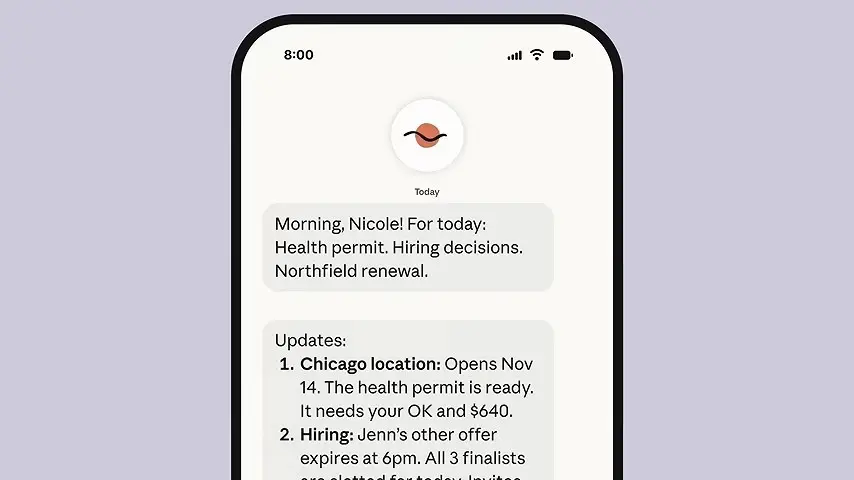
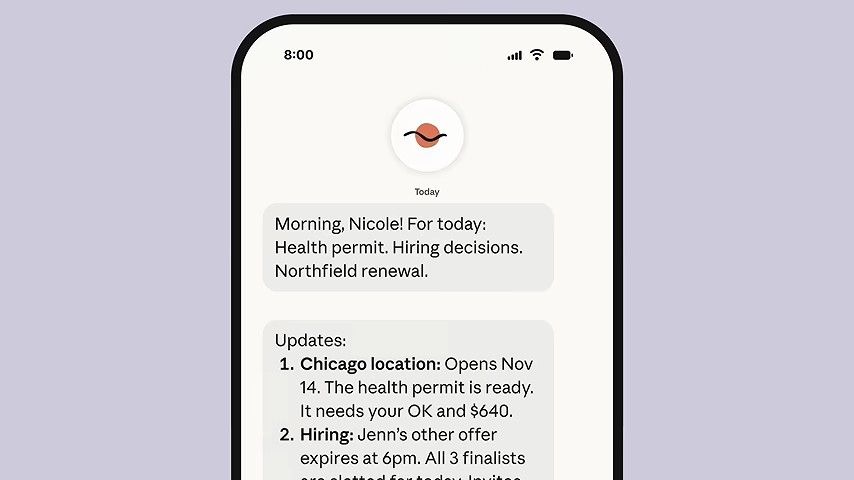
Anthropic, the artificial intelligence research company often recognized for its safety-first approach to model development, is taking a significant step toward integrating AI more deeply into the daily professional lives of its users. The company has officially unveiled Claude Duet, a proactive AI agent designed to move beyond the traditional "question-and-answer" format of standard chatbots. Instead of waiting for a prompt to act, Claude Duet is built to operate autonomously in the background, intervening only when it deems a situation requires human attention or when it has completed a complex task.
Currently available in a research preview across Android, iOS, and web platforms, Claude Duet represents a strategic pivot for Anthropic. While the company’s flagship Claude models have long been praised for their nuanced understanding and conversational abilities, Duet is aimed squarely at the productivity market. It is specifically tailored for professionals, freelancers, and small business owners who find themselves overwhelmed by the friction of juggling multiple projects, data streams, and administrative responsibilities.
At the heart of this new offering is Anthropic’s most advanced model to date, the Claude Opus 5.5. By leveraging the reasoning capabilities of this high-end model, Duet is capable of more than just simple text generation; it is designed to understand context, manage multi-step processes, and exercise a degree of professional judgment that was previously absent from consumer-facing AI assistants.
Redefining the AI Interaction Model
The introduction of Claude Duet marks a departure from the "reactive" nature of modern AI. Traditional chatbots are typically idle until a user types a command. Claude Duet, however, is designed to be "proactive." Upon integration with a user’s suite of professional applications, the agent begins its day by providing a comprehensive morning rundown. This briefing synthesizes important updates, upcoming deadlines, and critical communications from various connected apps, allowing the user to start their day with a clear picture of their priorities.
Throughout the workday, Duet continues to monitor these connected streams. It doesn’t just watch for new messages; it analyzes changes in project status and data. If a critical shift occurs—such as a sudden change in a financial forecast or a high-priority request from a client—Duet is designed to "nag" the user, bringing the information to the forefront only when it is truly necessary. This filtering mechanism is intended to reduce the "notification fatigue" that many professionals face, ensuring that when an alert does chime, it carries genuine weight.
Beyond monitoring, Duet is capable of executing a wide array of high-level tasks. Users can assign it responsibilities that go far beyond simple scheduling. While it can certainly manage calendars and set up meetings, it is also equipped to build data dashboards, prepare detailed financial and sales forecasts, and even assist in technical development. For developers and entrepreneurs, Duet can prototype and develop web applications, acting as a background collaborator that handles the heavy lifting of coding and architecture while the human user focuses on high-level strategy.
The Architecture of Autonomy
One of the most significant technical distinctions of Claude Duet is its operational environment. Unlike standard AI interfaces that rely on the user keeping a browser tab open or an app active, Duet runs within its own virtual machine. This architectural choice is crucial for its "always-on" functionality. Because it operates in an independent environment, Duet can continue working on complex tasks—such as compiling a massive data report or monitoring a live project—even when the user is offline or focused on other work.
This autonomy is paired with a sophisticated "judgment" engine. Anthropic has programmed the agent to evaluate when it should act independently and when it must seek explicit permission. This is a delicate balance in AI development; an agent that is too timid is unhelpful, while one that is too bold could make costly mistakes. Duet is designed to navigate this middle ground, attempting to discern which actions are routine enough to execute and which require the oversight of its human partner.
Security and Privacy in an Agentic World
As AI agents gain more autonomy and deeper access to professional environments, privacy and security have become the primary concerns for both individual users and enterprises. An agent that can read work messages and analyze financial data is, by definition, handling sensitive information. Anthropic has addressed these concerns by implementing several layers of safeguards within the Duet framework.
According to the company, Claude Duet does not have direct access to a user’s passwords or sign-in tokens. Instead, it utilizes secure integration methods to interact with other software. Furthermore, Anthropic has built-in filters and safeguards designed to prevent the unauthorized sharing or processing of highly sensitive personal data, such as credit card numbers and government-issued identification.
The company emphasized that the system underwent rigorous security testing prior to the research preview launch. The goal is to provide a tool that can be trusted with professional workflows without creating new vulnerabilities for the user’s digital identity or proprietary business data. In a landscape where data breaches are a constant threat, these privacy measures are positioned as a core component of the Duet value proposition.
Navigating the Limitations of Early AI Agency
Despite the ambitious scope of Claude Duet, Anthropic is transparent about the fact that the technology is still in its early stages. As a research preview, the current version has several notable limitations that users should be aware of. Anthropic has noted that the agent can sometimes be "overly enthusiastic," perhaps over-communicating or attempting to tackle tasks that are not yet within its ideal wheelhouse.
Furthermore, while Duet excels at professional and data-driven tasks, it is not yet optimized for personal administrative chores. Tasks such as booking travel or purchasing tickets are currently listed as poor fits for the model. Another hurdle for early adopters is the "black box" nature of its background work; currently, Duet cannot show users its internal browser or a live view of its workspace. This means users must trust the agent’s output without necessarily seeing the step-by-step process it followed behind the scenes.
These limitations highlight the ongoing challenge of developing "Agentic AI." Moving from a system that generates text to one that performs actions requires a higher level of reliability and a more robust interface for human oversight. Anthropic’s decision to release Duet as a research preview suggests that the company is looking for real-world usage data to refine these behaviors before a wider, more polished rollout.
A Growing Field of Competitors
Anthropic is not alone in the race to move AI from the chat box to the workstation. The launch of Claude Duet places the company in direct competition with other tech giants who are pursuing similar "agentic" visions. Meta has recently been developing Meta Muse, while OpenAI—the creator of ChatGPT—is reportedly working on its own proactive assistant technology, often referred to in industry circles as "Dots."
This industry-wide shift suggests that the era of the simple chatbot may be drawing to a close, replaced by a new generation of AI assistants that are defined by their ability to "do" rather than just "say." For Anthropic, the success of Duet will likely depend on whether it can maintain its reputation for safety and precision while delivering the proactive utility that modern professionals crave.
Access and Availability
For those interested in testing the boundaries of AI autonomy, Claude Duet is currently available on a waitlist basis for users in the United States. Access is not open to all; it requires an active subscription to either the Claude Pro or Claude Max tiers.
It is also important for users to manage their expectations regarding the "labor" Duet provides. While the agent works in the background, its activities are not "free" in terms of processing power. Anthropic has clarified that the work Duet performs while the user is away counts toward the same usage limits as standard interactions with the Claude model. Therefore, while Duet can certainly save a user time by outsourcing their workload, it remains subject to the constraints of the user’s subscription plan.
As the research preview progresses, Anthropic is expected to gather feedback on how Duet handles complex professional environments, with the eventual goal of refining its judgment and expanding its capabilities to more regions and a wider variety of tasks. For now, it stands as a bold experiment in the future of work—a future where the AI doesn’t just wait for orders, but actively helps carry the load.
 Mobile Device Management (MDM) & Mobile OS
Xreal One Pro Receives Significant Price Cut During Prime Big Deal Days as the Market for Wearable Displays Expands
The landscape of personal entertainment and mobile productivity is undergoing a quiet...
 Mobile Device Management (MDM) & Mobile OS
Foldable Smartphone Market Set for 44% Surge in 2026 as Wide-Screen Designs Lead Industry Recovery
The landscape of the mobile industry is preparing for a significant shift...
 Mobile Device Management (MDM) & Mobile OS
Regulatory Filings Indicate Samsung Galaxy S27 Will Retain 25W Charging Speed, Continuing a Multi-Year Stagnation
As the global smartphone market prepares for the next cycle of flagship...







