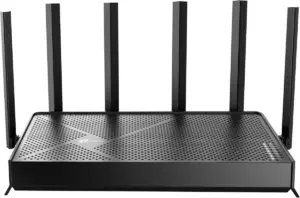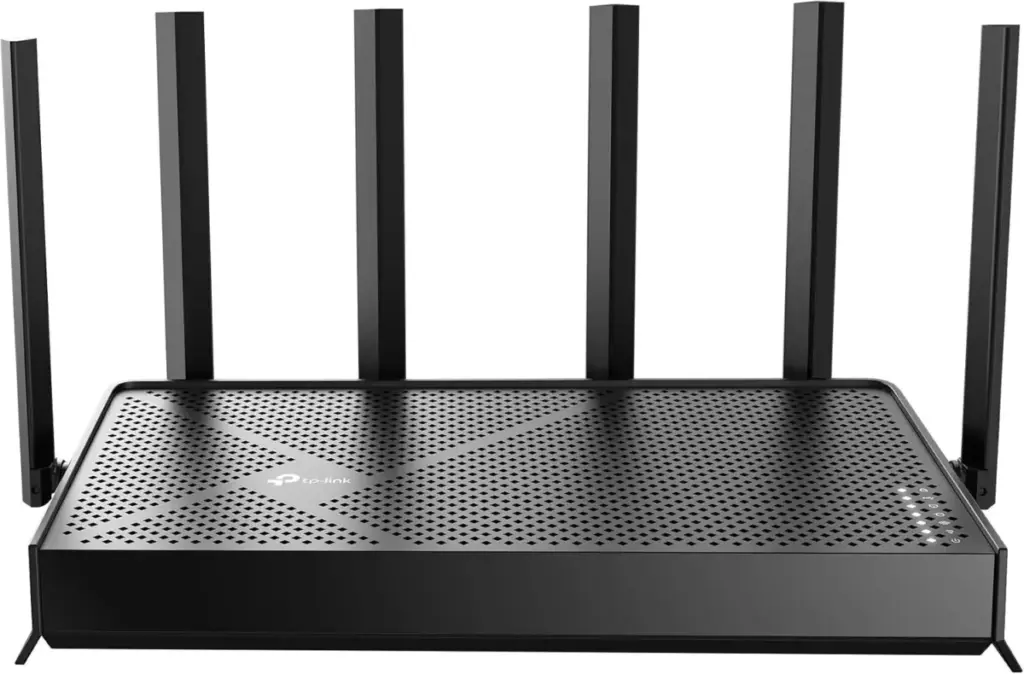
The landscape of home networking is currently undergoing one of its most significant transformations in a decade, driven by the rapid adoption of the Wi-Fi 7 standard. While new wireless generations typically remain the exclusive domain of early adopters and high-budget enthusiasts for several years after launch, the transition to Wi-Fi 7 has moved at a surprisingly aggressive pace. In a development that marks a significant milestone for consumer accessibility, the TP-Link Archer BE9500 tri-band Wi-Fi 7 router has reached a new pricing floor, appearing at Best Buy for just $89.99. This price point is particularly notable because it brings high-performance, tri-band connectivity into a territory previously occupied only by entry-level Wi-Fi 6 or mid-range Wi-Fi 6E hardware.
The emergence of Wi-Fi 7, technically known as 802.11be or "Extremely High Throughput," promised to revolutionize how we handle data-heavy environments, and the market has responded with a flood of new hardware. Over the past several months, the industry has seen various dual-band Wi-Fi 7 routers dip below the $100 mark, occasionally even touching the $80 range during major holiday sales. However, those ultra-budget offerings often come with a significant technical compromise: the omission of the 6 GHz band. By operating only on the traditional 2.4 GHz and 5 GHz frequencies, those entry-level units miss out on one of the most transformative aspects of the modern wireless era. The TP-Link Archer BE9500 distinguishes itself by maintaining a full tri-band architecture, ensuring that users can actually utilize the 6 GHz spectrum that defines the high-end Wi-Fi 7 experience.
To understand the significance of this deal, one must look at the technical leap Wi-Fi 7 represents over its predecessors. While Wi-Fi 6 and 6E focused on improving efficiency in crowded environments, Wi-Fi 7 is designed for raw speed and ultra-low latency. It introduces several key technologies that the Archer BE9500 leverages to provide a more stable connection. Chief among these is Multi-Link Operation, or MLO. In previous generations, a device would connect to a single band—either 2.4 GHz, 5 GHz, or 6 GHz—and stay there until forced to switch. MLO allows a Wi-Fi 7-compatible device to connect to multiple bands simultaneously. This means a smartphone or laptop can transmit data across both the 5 GHz and 6 GHz bands at the same time, significantly increasing throughput and providing a redundant path for data if one band encounters interference.
The inclusion of the 6 GHz band in a sub-$90 router is a major shift for the industry. The 6 GHz frequency was first introduced with Wi-Fi 6E, offering a massive "greenfield" of spectrum that is not cluttered by older legacy devices like microwave ovens, old cordless phones, or neighbors’ aging Wi-Fi 4 routers. Because the 6 GHz band is so wide, it allows for 320 MHz channels—double the 160 MHz maximum found in Wi-Fi 6. This wider "highway" allows for much faster data transfers, which is essential for 4K and 8K video streaming, large file downloads, and the growing market for virtual and augmented reality headsets. By offering a tri-band solution at this price, TP-Link is effectively lowering the barrier to entry for the most advanced consumer wireless technology available today.
 Hardware Reviews & PC Building
Cinebench world record that stood for 12 years gets toppled — OC expert scores 10.8cb in Cinebench R11.5 using an…
The achievement is not merely a personal victory for Luumi but a...
 Hardware Reviews & PC Building
Thermal Grizzly Unveils PhaseSheet PTM Pro with Enhanced Thermal Conductivity and Improved Application Reliability
Thermal Grizzly, the German-based manufacturer synonymous with high-performance cooling solutions for PC...
 Hardware Reviews & PC Building
Nvidia CEO Jensen Huang admits to an affair with a suspected Chinese spy — Jensen apologizes in letter to staff,…
The revelation came to light after a series of reports suggested that...