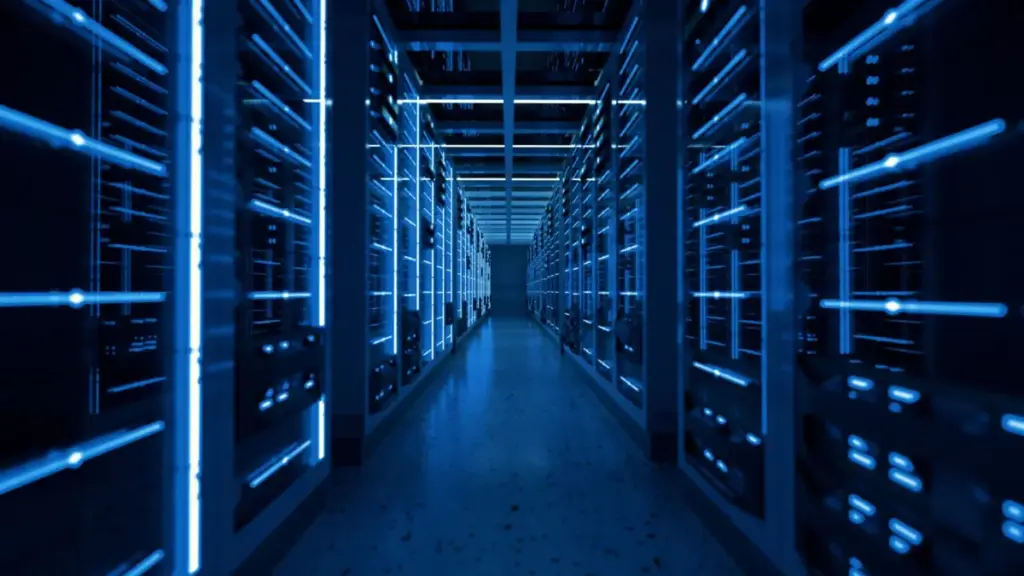
At this year’s Microsoft Ignite conference, the tech industry’s attention shifted from the ephemeral cloud toward the physical racks of the enterprise data center. Microsoft officially announced the public preview of Windows Server 2028, marking the platform’s most significant evolution since the release of Windows Server 2025. This latest iteration is not merely an incremental update of features; it represents a fundamental bet on a hybrid future where artificial intelligence (AI) is decentralized, moving closer to the sensitive data it processes.
The move signals a recognition that while the public cloud remains a powerhouse for training massive models, the practical reality of enterprise AI—specifically inference—often demands a different architecture. By positioning Windows Server 2028 as the foundation for "enterprise hybrid intelligence," Microsoft is attempting to bridge the gap between the flexibility of Azure and the security, latency, and cost requirements of local infrastructure.
Supporting Enterprises Where They Live
The central thesis of Windows Server 2028 is the empowerment of the "local token factory." This concept, championed by Microsoft leadership, suggests that enterprises should be able to run AI workloads exactly where their physical operations exist, whether that is a corporate headquarters, a manufacturing plant, or a regional data center. The goal is to eliminate the need for organizations to build and maintain a fragmented, bespoke AI stack for every geographic location or department.
Neil Hinnant, the product team leader for Windows Server, emphasized this shift in a recent technical briefing, noting that the decision to run AI locally is rarely based on a single factor. Instead, it is a complex calculation involving cost, latency, intellectual property protection, data residency, and increasingly stringent regulatory requirements. By integrating AI infrastructure directly into the server operating system, Microsoft aims to provide a standardized environment that can handle these diverse needs.
To support this vision, Microsoft is leaning heavily into hardware acceleration. A key highlight of the announcement is the integration of AI accelerators, most notably the AMD Instinct MI350P card. This hardware is slated to be available in preview during the first half of 2027 for supported systems running Windows Server 2028. Beyond hardware support, the OS includes a suite of new tools designed to manage these accelerators, deploy specialized inference environments, and intelligently route model requests to the most appropriate hardware resources.
Furthermore, Microsoft is extending its "Foundry" initiative to the edge. Windows Server 2028 is designed to support a wide array of open-weight and custom models through integrations with Foundry Local, Windows ML, vLLM, and Llama.cpp. This flexibility ensures that enterprises are not locked into a single model architecture, allowing them to leverage the rapidly evolving landscape of open-source AI.
A New Standard for Security and Storage
While AI is the headline-grabbing feature, the underlying infrastructure of Windows Server 2028 has undergone a rigorous hardening process. Microsoft is introducing a "secure by default" philosophy that seeks to eliminate the dangerous gap between the initial deployment of a server and its eventual hardening by IT staff.
 Small Business IT & Cloud Computing
Trump’s Rebranding of Artificial Intelligence to ‘Super Intelligence’ Sparks Unprecedented Domain Rush for Slovenia’s .si Registry
The global landscape of digital real estate is undergoing a seismic shift...
 Small Business IT & Cloud Computing
GhostCode: The Emerging Phishing Threat Exploiting Microsoft 365 Device Authorization Flows
In a significant escalation of identity-based cyberattacks, security researchers have uncovered a...
 Small Business IT & Cloud Computing
Box Redefines Content Management with New Agentic Workflow Tools and Nvidia-Powered Retrieval Engine
SAN FRANCISCO — At its annual BoxWorks 2026 conference on Thursday, cloud...