
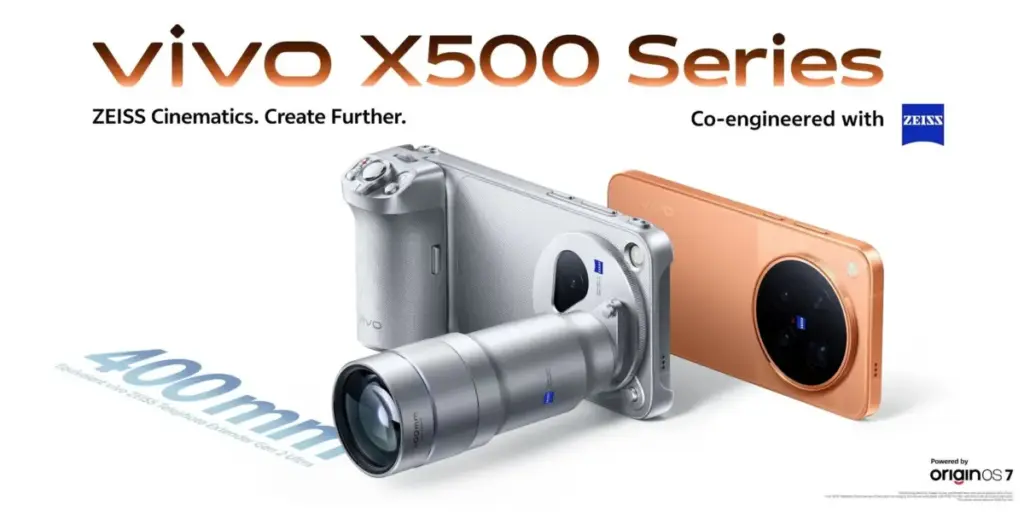
Vivo has officially pulled back the curtain on its latest flagship smartphone lineup, the X500 series, during a high-profile launch event held in Shanghai, China. The announcement marks a significant leap forward for the manufacturer, as it introduces three distinct models designed to cater to different segments of the high-end market: the standard X500, the X500 Pro, and the top-tier X500 Pro Max. While the entire series represents a major update over previous generations, the X500 Pro Max has emerged as the clear technological showcase, pushing the boundaries of mobile hardware with a massive display, a record-breaking battery capacity for the brand, and a sophisticated imaging system developed in close collaboration with industry leaders.
At the heart of the X500 Pro Max is a commitment to sheer scale and endurance. The device features a sprawling 6.85-inch AMOLED panel, providing one of the largest canvases available on a modern flagship. This display is not just large but also sharper than its predecessors, boasting an upgraded resolution of 3168 x 1440. This move toward a higher-density screen suggests that Vivo is targeting users who prioritize media consumption and mobile gaming, where the extra real estate and pixel clarity can be fully utilized. To support such a demanding display and the high-performance internals, Vivo has equipped the X500 Pro Max with a staggering 8,000mAh battery. This represents the largest battery ever included in a Vivo smartphone, a feat that fundamentally changes the expectations for flagship longevity.
The ability to include such a massive battery without compromising the device’s form factor is likely aided by the efficiency of the internal hardware. The X500 Pro Max is powered by MediaTek’s latest Dimensity 9600 Pro platform, which is built on a cutting-edge 2nm process. The transition to a 2nm architecture is a milestone for the industry, offering substantial improvements in power efficiency and thermal management compared to the previous 3nm and 4nm generations. Vivo claims that the combination of this ultra-efficient processor and the 8,000mAh cell allows the X500 Pro Max to easily last three days on a single charge under normal usage conditions. This claim, if it holds true in real-world testing, would place the X500 Pro Max in a league of its own, as most contemporary flagships still struggle to reliably exceed two days of heavy use.
While the battery and display are impressive, the X500 series remains, at its core, a photography-centric lineup. The X500 Pro Max serves as the pinnacle of Vivo’s imaging ambitions, utilizing a 1/1.28-inch 50MP main camera sensor. This primary module features Sony’s new Lytia 910 sensor, which is designed to capture more light and detail than previous iterations, particularly in challenging low-light environments. Complementing the main sensor is a 200MP telephoto lens that offers 3.5x optical zoom. This high-resolution telephoto module is carried over from the well-regarded X300 Ultra, allowing for extreme digital cropping and high-detail zoom shots that maintain clarity even at higher magnifications. Rounding out the rear camera array is a 50MP wide-angle module, ensuring that the device remains versatile for everything from expansive landscapes to detailed architectural photography.
Vivo’s approach to mobile photography with the X500 series goes beyond hardware specifications. The company emphasized its "BlueImage Dynamic Imaging Technology Stack," a concept of vertical integration that involves deep collaboration across the entire imaging pipeline. By working closely with Sony on the sensor level, MediaTek on the customization of the Dimensity 9600 Pro’s image signal processor, and ZEISS for the optics and stabilization, Vivo aims to provide a cohesive experience that rivals professional equipment. A key component of this partnership is the inclusion of ZEISS-certified gimbal-level stability, which helps to eliminate camera shake in both high-resolution stills and complex video sequences.
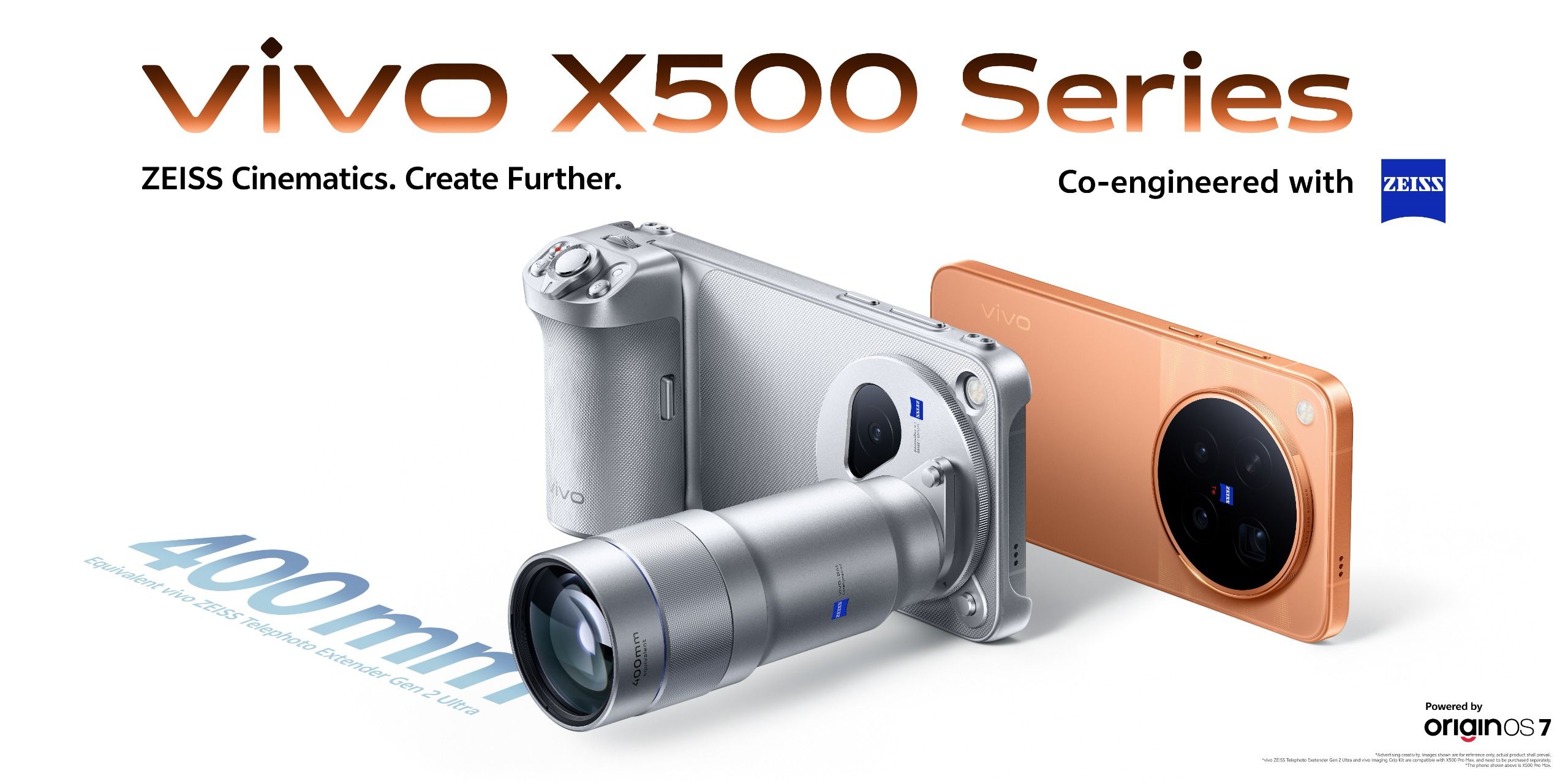
The video capabilities of the X500 Pro and Pro Max are particularly noteworthy. Both devices are capable of shooting 4K video at 240 frames per second, a feature intended for "cinematic" slow-motion effects that retain high levels of detail. Furthermore, the phones support 8K video recording for those seeking the maximum possible resolution. To handle the immense data processing required for these tasks, Vivo has integrated its custom-designed V3 and VS1 imaging silicon. These dedicated chips work in tandem with the primary Dimensity processor to boost the fidelity of images and videos, applying real-time enhancements and noise reduction that might otherwise tax the main CPU and GPU.
On the software front, the X500 series arrives with OriginOS 7, which is built upon the foundation of Android 17. This makes the X500 series among the first devices to ship with the latest version of the Android operating system out of the box, ensuring that users have access to the newest security features and interface refinements from day one. The integration of OriginOS 7 is expected to bring various AI-driven optimizations that take advantage of the Dimensity 9600 Pro’s neural processing capabilities, further enhancing the user experience through smarter resource management and more intuitive navigation.
While the X500 Pro Max takes the spotlight, the other models in the lineup offer compelling alternatives for different budgets. The X500 Pro shares much of its DNA with the Max model, including the primary camera and the Dimensity 9600 Pro chipset, though it lacks the high-resolution 200MP telephoto lens. This makes it a powerful option for those who want flagship performance and a top-tier main camera but do not require extreme zoom capabilities. The standard X500, meanwhile, is powered by the Dimensity 9600M platform. While it does not feature the same advanced camera hardware found in the Pro models, it still boasts a substantial 7,500mAh battery, ensuring that even the entry-level model in the series offers exceptional endurance compared to the broader market.
The pricing structure for the new series reflects its premium positioning. In China, the X500 Pro Max starts at approximately $1,045 (CNY 6,999). The X500 Pro follows at roughly $970, and the standard X500 is priced at the equivalent of $830. These prices represent the domestic Chinese market, and history suggests that when these devices eventually make their way to international markets, the costs will likely increase due to import duties, logistics, and local taxes. As of the launch event, Vivo has not yet confirmed specific dates for a global rollout, leaving international enthusiasts to wait for further announcements regarding availability in regions such as Europe, India, and Southeast Asia.
The launch of the X500 series marks a pivotal moment for Vivo as it seeks to solidify its reputation as a leader in mobile innovation. By focusing on the critical pillars of battery life, processing efficiency, and professional-grade imaging, the company is addressing the primary pain points of modern smartphone users. The X500 Pro Max, in particular, stands as a testament to what is possible when hardware and software are developed in a tightly integrated ecosystem. Given the critical success of the previous X300 Pro and X300 Ultra, the industry will be watching closely to see how the X500 series performs in the wild and how its 2nm architecture handles the rigors of daily use.
As the smartphone market continues to mature, the distinction between brands often comes down to these specific technological breakthroughs. Vivo’s decision to invest heavily in custom imaging silicon and the massive 8,000mAh battery suggests a strategy of differentiation through extreme specifications. For consumers who have grown tired of the incremental updates seen in many other flagship lines, the X500 Pro Max offers a more radical departure from the norm. Whether it is the three-day battery life, the cinematic 4K240 video, or the sheer power of the 2nm Dimensity 9600 Pro, there is no shortage of features to pique the interest of mobile enthusiasts and professional creators alike. For now, the X500 series remains a China-exclusive powerhouse, but its influence on the global smartphone landscape is likely to be felt as other manufacturers scramble to match its impressive technical milestones.
 Mobile Device Management (MDM) & Mobile OS
Samsung Accelerates Exynos 2700 Production Amid Strategic Shifts for the Galaxy S27 Series
Samsung’s semiconductor division is reportedly entering a critical phase of its roadmap...
 Mobile Device Management (MDM) & Mobile OS
Samsung Reportedly Developing ‘Galaxy Studio’ Over-Ear Headphones to Challenge Apple and Sony
The landscape of the premium audio market has long been defined by...
 Mobile Device Management (MDM) & Mobile OS
Nimble SharePower Redefines Portable Charging by Splitting the Difference for Modern Travelers
In the modern era of high-performance smartphones and power-hungry mobile applications, the...







