

However, industry experts suggest that AIO and SEO are not mutually exclusive. Instead, they are complementary strategies. While traditional search remains a massive traffic driver, AIO captures users at the point of synthesis. When an AI model cites a source, it provides a stronger credibility signal than a standard link. The model effectively pre-vettes the content, summarizing its key points and explaining its relevance to the user before they even click through. This results in higher-quality, better-qualified traffic for the website owner.
Google’s Pivot to AI Mode and the Economic Stakes
The significance of this shift is perhaps most evident in Google’s own evolution. The launch of "AI Mode," now available in over 180 countries, marks a pivotal moment where the world’s most popular search engine is moving toward a conversational interface. AI Mode provides direct, synthesized answers above traditional search results, mirroring the functionality of its AI-native competitors.
The financial motivations behind this transition are substantial. Google reported a 10% increase in search revenue in the first quarter of 2025, reaching $50.7 billion, a growth attributed in part to the integration of AI features. This suggests that AI-powered search is not a temporary experiment but a core component of the future of digital commerce. While Google has maintained traditional links alongside these summaries, the most valuable "real estate" on the search results page is increasingly occupied by AI-generated content.
For creators, the global rollout of AI Mode means that the window to prepare for this change is closing. Competitors who are already optimizing for these systems are gaining an advantage in capturing visibility within Google’s new interface, while those focusing exclusively on legacy SEO tactics risk a gradual decline in relevance.
The Challenge of Measuring Performance in an AI World
One of the primary hurdles in the adoption of AIO is the current lack of standardized analytics. Traditional SEO is supported by robust tools like Google Search Console, which provides granular data on impressions, clicks, and rankings. In contrast, AI platforms like ChatGPT and Claude do not yet offer a dashboard for website owners to track how often their content is cited.
This visibility gap has led to the emergence of a new sector of commercial tracking tools. Services such as Ahrefs, SE Ranking, and specialized platforms like First Answer and Keyword.com have begun offering AI visibility monitoring. These tools work by systematically querying models and analyzing the frequency and context of brand mentions. However, with monthly costs often ranging from $100 to over $300, these professional tools can be a significant investment for smaller creators.
As a result, some early adopters are turning to no-code automation to build bespoke tracking systems. By using platforms like Make.com, creators can automate queries to AI models to monitor brand mentions, keyword performance, and competitor positioning. This data-driven approach allows for strategic decisions, such as identifying topics where competitors are being cited more frequently and adjusting content to fill those gaps.
 Tech News & Digital Trends
Beyond the Blue Links: The Emergence of AI Optimization as the New Frontier for Digital Visibility
The landscape of organic traffic underwent a quiet but seismic shift recently...
 Tech News & Digital Trends
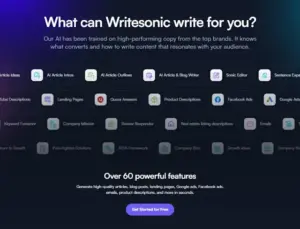
The Evolution of Digital Copywriting: A Deep Dive into the Top AI Content Generators Reshaping the 2022 Marketing Landscape
The digital landscape in 2022 has reached a critical juncture where the...
 Tech News & Digital Trends
The State of Content Creation in 2025: How Artificial Intelligence is Redefining the Creative Economy
As the digital landscape enters the mid-point of the decade, the integration...







