

Jeff Defilippi, Senior Director of Product Management at Arm, notes that while multi-tier and stateful computing are familiar concepts, the way these components are composed in an agentic workflow is entirely new. In an agentic system, a single task might dynamically chain together several model calls, data retrievals, database transactions, and tool invocations. The result of one step determines the logic of the next, creating a non-linear path of execution. Consequently, Defilippi argues that the most meaningful unit of performance is no longer a component-level metric, but rather the successful completion of the end-to-end task.
This perspective does not render existing benchmarks obsolete. Component-level measurements remain vital for engineers who need to diagnose where performance bottlenecks originate. However, Arm is pushing for these measurements to be tethered to end-to-end evaluations. The goal is to see how quickly a system completes a task and, perhaps more importantly, how that performance holds up as server utilization increases and more agents are introduced to the workload simultaneously.
Rather than proposing a single "golden" benchmark, Arm is championing a methodology that integrates established tests with new, agentic-specific measurements. While benchmarks like InferenceX and TPCx-AI can handle the machine learning and inference portions of the pipeline, they miss the "CPU-side" of the house. This includes orchestration, state management, security sandboxing, and the execution of external tools—all of which are essential to a functioning AI agent. Arm’s proposed framework seeks to characterize behaviors ranging from targeted component tests to "wall-clock" task completion and agent density.
This methodology is inherently cross-platform. Because agentic AI relies on a combination of CPUs, GPUs, and other accelerators, any useful testing framework must account for the interplay between these components. Sequential latency, which has long been the specialty of the CPU, is a primary constraint in the "agent loop." While GPUs are excellent at processing massive batches of tokens, they often have to wait for the CPU to handle the logic, queries, and tool activations that drive the workflow forward.
Defilippi emphasizes that single-threaded performance is a critical path for latency-sensitive parts of the agent loop. However, as infrastructure is tasked with supporting many agents at once, other factors like core count, memory bandwidth, and cache capacity become equally important. The challenge is that latency accumulates across the critical path; a delay in the CPU-side execution can prevent an accelerator from starting its next task, leading to underutilized hardware and slower overall response times.
 Enterprise Tech & Infrastructure
The Complexity of Cloud Efficiency: Navigating the Multi-Layered Economics of Amazon S3 Storage
In the modern enterprise landscape, the Amazon Simple Storage Service (S3) has...
 Enterprise Tech & Infrastructure
The Hidden Architecture of S3 Costs: Navigating the Complexities of Cloud Storage Optimization
In the modern enterprise data landscape, Amazon Simple Storage Service (S3) has...
 Enterprise Tech & Infrastructure
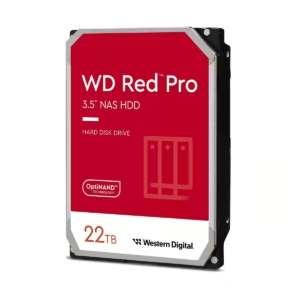
Seagate, Western Digital, and Toshiba Lead 2023 Rankings for Enterprise-Grade Storage Solutions
In the rapidly evolving landscape of corporate data infrastructure, the demand for...







