
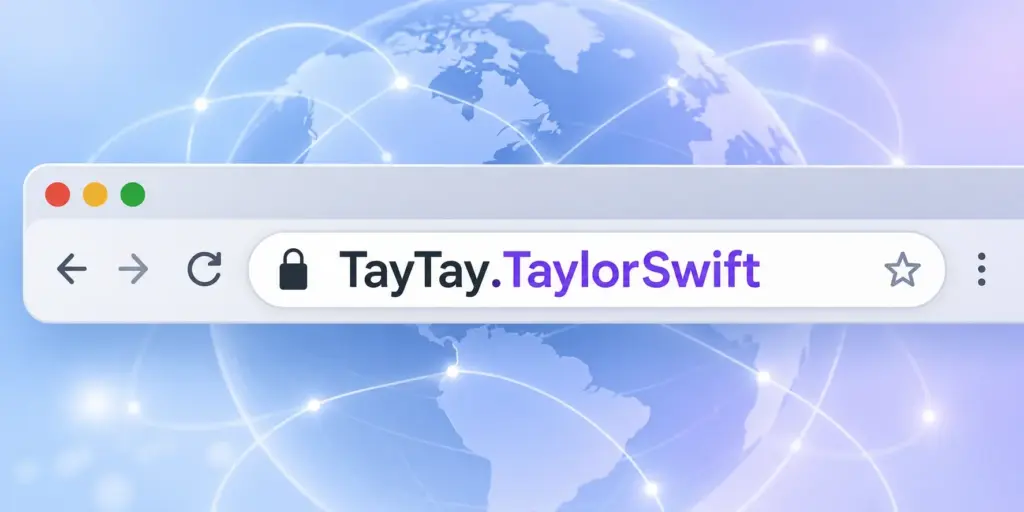
The digital landscape is preparing for a significant transformation as one of the world’s most influential artists moves to claim her own corner of the internet’s infrastructure. Taylor Swift, the billionaire singer-songwriter and business mogul, has officially applied for her own top-level domain (TLD), .taylorswift. This move, part of the Internet Corporation for Assigned Names and Numbers (ICANN) upcoming 2026 expansion round, signals a new chapter in how high-profile celebrities manage their digital identities and brand ecosystems.
For decades, the internet was defined by a handful of familiar endings like .com, .org, and .net. However, the next several years are expected to see a proliferation of "dot-brand" domains, and Swift is positioning herself at the forefront of this shift. If successful, the move would allow her team to bypass traditional domain structures entirely, creating a bespoke, secure, and highly branded environment for her global fan base.
The Strategy Behind the .taylorswift Application
The application for .taylorswift is more than a vanity project; it is a calculated business move that aligns with Swift’s long-standing history of protecting her intellectual property and controlling her narrative. By securing a dedicated top-level domain, the artist gains unprecedented authority over her digital presence.
Interestingly, the choice of .taylorswift appears to be a strategic necessity rather than just a stylistic preference. Had the artist attempted to apply for the shorter and more concise .swift, she likely would have entered a protracted and expensive legal battle. The Society for Worldwide Interbank Financial Telecommunication, the global entity better known as SWIFT that facilitates international banking transfers, has also applied for .swift as a top-level domain.
In the world of ICANN applications, "string contention" occurs when two or more parties apply for the same or confusingly similar domain strings. Given the massive global footprint of the financial network, a conflict over .swift would have been inevitable. By opting for .taylorswift, the singer’s team has navigated around a potential roadblock, ensuring a smoother path through the rigorous ICANN evaluation process.
Understanding the Dot-Brand Model
One of the most critical aspects of this application is its classification. Swift has applied for the domain as a "dot-brand" TLD. This distinction is vital for fans to understand: the .taylorswift extension will not be an open registry. Unlike .com or .net, where any member of the public can pay a fee to register a name, a dot-brand domain is a closed registry.
This means that individual fans hoping to purchase custom addresses like "yourname.taylorswift" will be disappointed. Only the owner of the TLD—in this case, Taylor Swift’s corporate entity—has the authority to create and use subdomains under that umbrella. This model is typically utilized by major corporations such as Google (.google), Apple (.apple), and BMW (.bmw) to ensure brand consistency and heighten security.
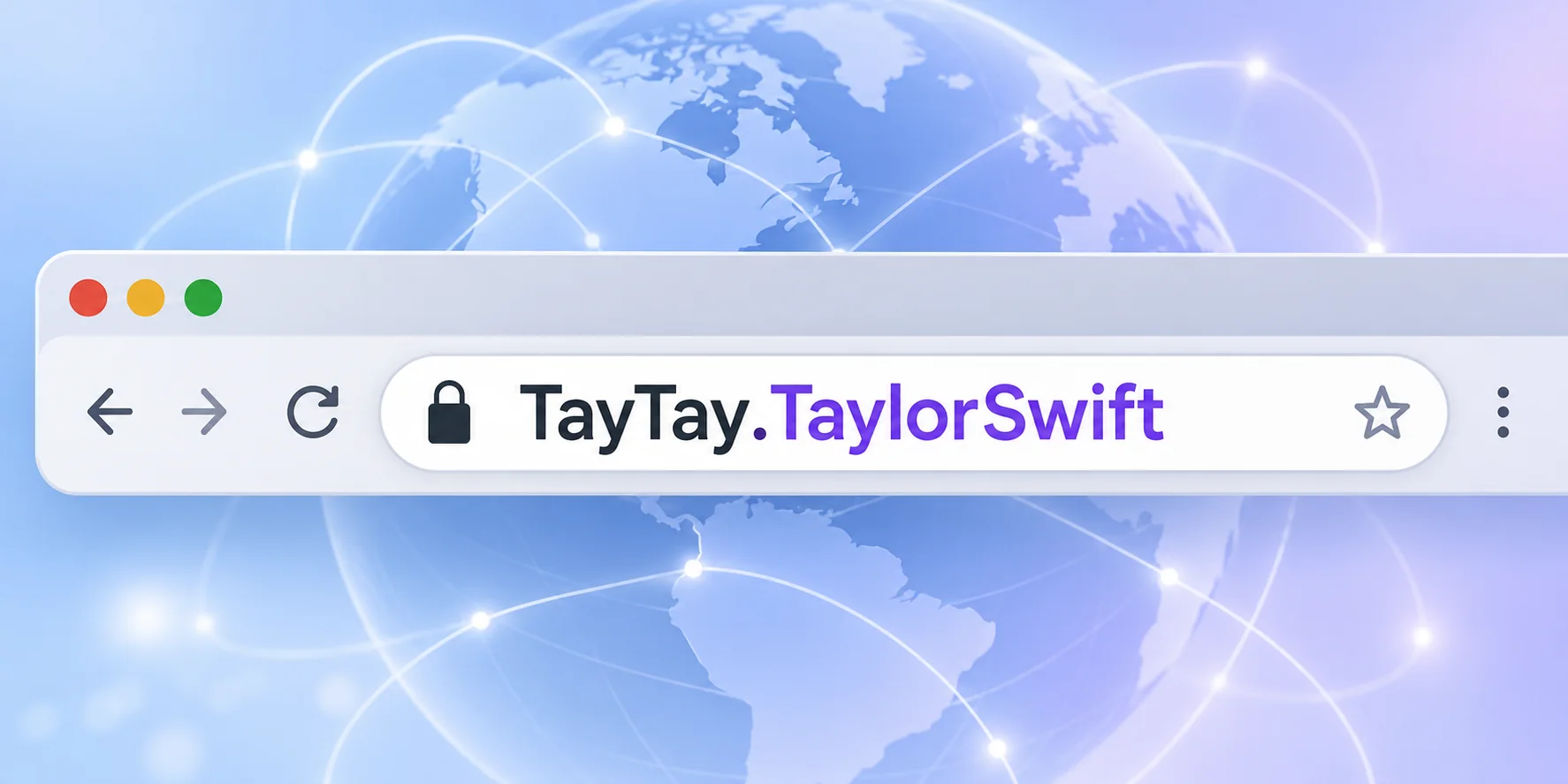
By maintaining a closed ecosystem, Swift can protect her fans from the phishing and spoofing attacks that often plague high-traffic celebrity websites. When a user visits a site ending in .taylorswift, they can be certain that the content is official and authorized. This level of brand "provenance" is becoming increasingly valuable as the internet becomes more saturated with third-party resellers and fraudulent actors.
Potential Use Cases and Digital Integration
While the domain will remain a closed garden, its potential utility for Swift’s empire is vast. The industry anticipates the rollout of intuitive, easy-to-remember addresses that could streamline the user experience for her millions of "Swifties."
We may soon see the activation of domains such as tickets.taylorswift, which would provide a dedicated, secure portal for concert sales—a particularly relevant development given the high-profile challenges associated with recent tour ticketing. Other likely candidates include music.taylorswift for streaming and discography information, shop.taylorswift for merchandise, and fanclub.taylorswift for exclusive community content.
The flexibility of a personal TLD also allows for more creative or ephemeral uses. For example, during a specific album cycle, the artist could launch domains tied to song titles or lyrical themes. This level of control allows for a dynamic digital strategy that can evolve alongside her creative output.
However, Swift’s history with domain names also suggests a defensive component to this move. The artist has a well-documented track record of registering domain names that could potentially be used to tarnish her reputation or host inappropriate content. In years past, she famously registered addresses such as itaughttaylorswifthowtogivehead.com and TaylorSwift.porn to prevent others from using them maliciously. Owning the entire .taylorswift TLD effectively eliminates the need to defensively register thousands of individual .com variations, as she will have total control over every possible combination within her own domain extension.
The ICANN Process and Timeline
Despite the excitement surrounding the application, the transition to a .taylorswift internet will not happen overnight. ICANN, the non-profit organization responsible for coordinating the internet’s systems of unique identifiers, operates on a timeline that is famously deliberate and thorough.
The 2026 expansion round is the first major opportunity for new TLD applications since the landmark 2012 round. The process involves multiple stages, including a rigorous technical review to ensure the applicant has the infrastructure to manage a registry, a financial audit, and a period for public comment and formal objections.
Because of the complexity of these evaluations and the sheer volume of applications expected in the 2026 round, the delegation of new domains is a multi-year endeavor. Industry experts and ICANN observers suggest that it is unlikely any domains from this round will go live before late 2027. For Taylor Swift, this means that while the application is a current priority, the actual implementation and public-facing use of .taylorswift will likely coincide with her projects in late 2027 or early 2028.
The Broader Context of Celebrity Branding
Swift’s move into the TLD space is a bellwether for the future of celebrity branding. As major artists increasingly function as their own media conglomerates, the traditional tools of the web are often found wanting. By moving toward a personal TLD, Swift is treating her name not just as a trademark, but as a piece of internet infrastructure.
In the 2012 ICANN round, few individual celebrities had the foresight or the capital to apply for their own TLDs. Most of the applications came from tech giants, financial institutions, and geographic entities (such as .london or .nyc). Swift’s entry into this space reflects her unique position in the global economy and her desire for total vertical integration. Just as she sought to own her master recordings to control her musical legacy, she is now seeking to own her digital "land" to control her online future.
This move may prompt other high-net-worth individuals and global brands in the entertainment industry to reconsider their own digital strategies. If .taylorswift proves successful in enhancing security and brand prestige, it could set a precedent for other major figures in music, film, and sports to follow suit in future ICANN rounds.
A New Era for the Swiftie Ecosystem
As the internet moves toward more decentralized and brand-specific structures, the .taylorswift domain represents the ultimate "verified" badge. It offers a solution to the ongoing struggle for authenticity in a digital world rife with misinformation and sophisticated scams.
While the wait for music.taylorswift will be several years, the application itself is a testament to the artist’s long-term vision. It reinforces the idea that Taylor Swift is not just a participant in the digital economy, but an architect of it. By the time the domain is delegated in late 2027 or 2028, it will likely serve as the foundation for a more secure, more integrated, and more immersive way for fans to connect with her work.
For now, the application remains a signal of intent—a declaration that the future of the Swift empire will be built on its own terms, under its own name, and within its own digital borders. As the ICANN process moves forward, the industry will be watching closely to see how one of the world’s most successful brands redefines the boundaries of the web.
 Web Hosting & Domain Management
Taylor Swift Secures Digital Frontier with Application for Proprietary .taylorswift Top-Level Domain
The landscape of the internet is poised for a significant transformation as...
 Web Hosting & Domain Management
The Long Road to .web: Chris Ambler Reflects on Decades of Domain History and a New Path Forward with .epic
The landscape of the internet is on the verge of a significant...
 Web Hosting & Domain Management
Verisign Unveils "Verisign Informed" Security Service and Formally Applies for .pki Top-Level Domain
Verisign, the global leader in domain name registry services and internet infrastructure,...







