

While the achievement of producing working AI accelerators is significant, the competitive landscape remains daunting. The latest releases from Rebellions and FuriosaAI, while functional and efficient, are not yet positioned to dethrone Nvidia’s absolute performance leadership. For instance, Rebellions’ Rebel100 accelerator, which gained prominence in late 2025, offers performance metrics that are roughly on par with Nvidia’s H200—a chip that, by the time of the Rebel100’s release, was already several years old.
Similarly, FuriosaAI’s RNGD accelerator has focused more on efficiency than raw, unbridled power. In testing conducted in mid-2025, the RNGD demonstrated approximately 2.25 times the performance per watt of Nvidia’s A100 across various workloads. While impressive from a sustainability and operational cost perspective, the A100 is a six-year-old architecture. However, the history of domestic infrastructure pushes, particularly in China, suggests that chips do not necessarily need to be the fastest in the world to be successful. If a nation can produce them in sufficient volume and integrate them into a cohesive ecosystem, they become a viable and secure alternative to foreign technology.
With their initial designs proven in the field, both Rebellions and FuriosaAI are now aggressively pivoting toward the next generation of AI systems. The focus is shifting from simple inference tasks to more complex, large-scale training and high-performance inference models that can compete on the global stage.
FuriosaAI’s $620 Million Leap Forward
The momentum behind South Korea’s AI ambitions was underscored this week by FuriosaAI’s announcement of a massive $620 million Series D funding round. This capital injection is earmarked for two primary objectives: scaling the production of the current RNGD accelerators and accelerating the development of the company’s third-generation silicon. FuriosaAI has set ambitious targets, expecting to produce approximately 20,000 RNGD units this year, with plans to double that output by 2027.
The company’s domestic support is robust, with South Korean industrial titans Samsung and LG Electronics acting as primary patrons and customers. However, the most intriguing aspect of FuriosaAI’s future roadmap is its deepening collaboration with Broadcom. The partnership with the American semiconductor giant suggests that FuriosaAI’s next-generation chips will move toward a far more sophisticated architecture.
While specific details remain closely guarded, FuriosaAI has confirmed that its third-gen accelerator will be manufactured using a 2nm process node, presumably at TSMC. This move to the bleeding edge of fabrication will be paired with a multi-die chiplet architecture, a design philosophy that allows for greater flexibility and yields compared to traditional monolithic designs. Furthermore, the new chips are expected to incorporate HBM4 or HBM4e memory, depending on the final production timeline.
 Enterprise Tech & Infrastructure
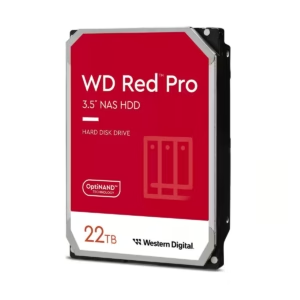
The Pillars of Data Infrastructure: A Comprehensive Evaluation of the Top Enterprise Hard Drives for 2023
In the modern landscape of digital infrastructure, the demand for robust, high-capacity...
 Enterprise Tech & Infrastructure
Navigating the Complexity of Amazon S3 Cost Management: Beyond the Per-Gigabyte Rate
In the world of enterprise cloud infrastructure, Amazon S3 has long been...
 Enterprise Tech & Infrastructure
The Convergence of Storage and Networking: A Deep Dive into Fibre Channel over Ethernet (FCoE) Technology
In the rapidly evolving landscape of enterprise data centers, the demand for...







