
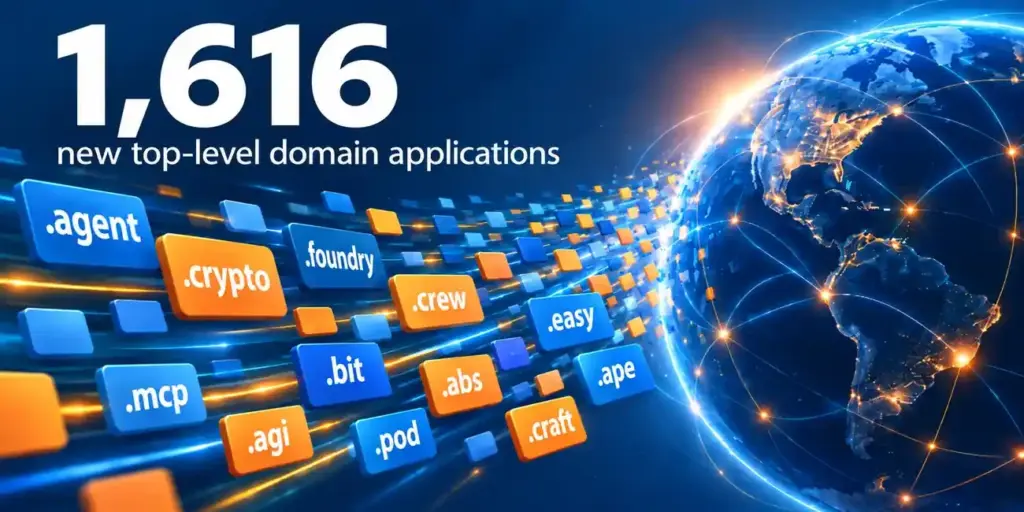
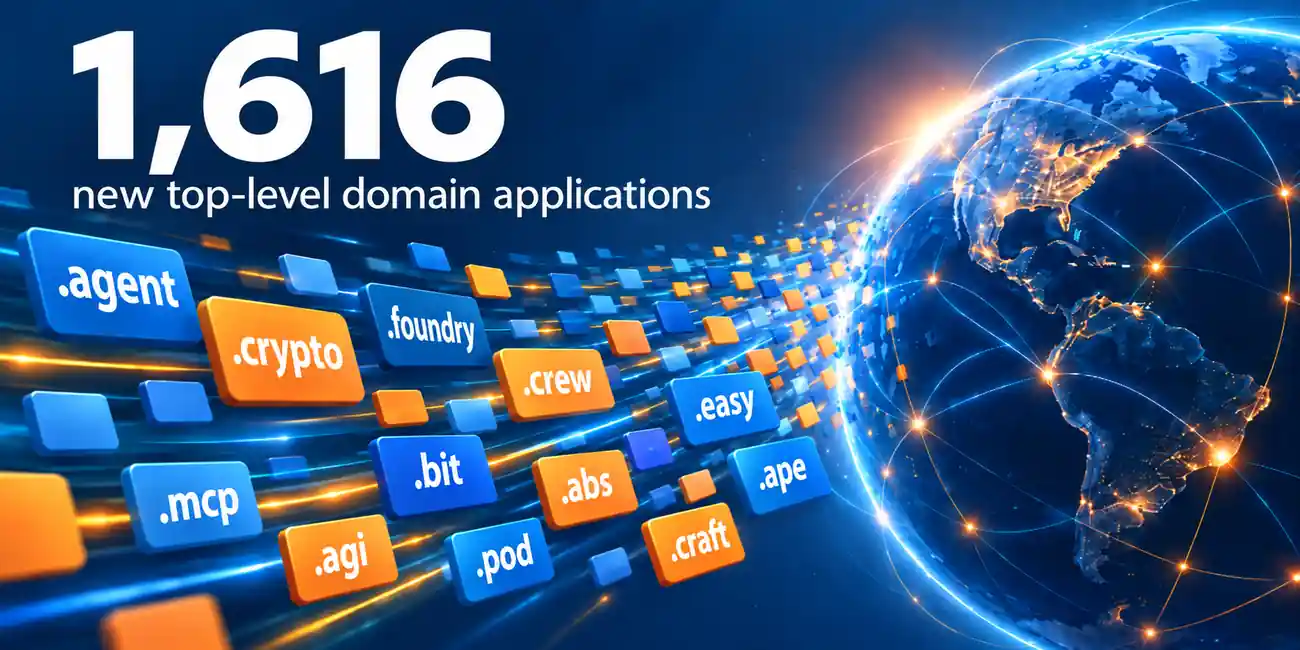
The Internet Corporation for Assigned Names and Numbers (ICANN) has officially confirmed the final numbers for its upcoming expansion of the internet’s naming system, marking a significant milestone in the 2026 round of the New Generic Top-Level Domain (gTLD) Program. According to the latest data released by the organization, a total of 1,616 applications have successfully moved forward into the next phase of processing. This confirmation follows a period of high anticipation within the domain name industry, as corporations, entrepreneurs, and community organizations vied for a spot in what is expected to be the most substantial diversification of the internet’s root zone in over a decade.
The scale of the 2026 round is reflected not only in the volume of applications but also in the staggering amount of capital involved. ICANN reported that it has collected more than $350 million in application fees. While the organization initially received a total of 1,663 applications during the submission window, the final number of proceeding applications was adjusted downward to 1,616 after accounting for those that were not paid for by the final deadline. With a standard application fee set at $227,000 per string, the financial commitment required to participate in this round remains a significant barrier to entry, intended to ensure that applicants possess the necessary resources to manage a critical piece of internet infrastructure.
The total revenue figure of over $350 million accounts for the complexities of the fee structure, including the impact of the Applicant Support Program. This program was specifically designed to provide financial assistance and fee reductions to qualifying applicants, such as non-profit organizations or entities from developing economies, who might otherwise be priced out of the process. Despite these discounts, the sheer volume of full-price applications from major global brands and domain speculators has driven the total collection to record levels. ICANN has noted that this total is not yet static; as the evaluation process begins, some companies may choose to withdraw their applications for various strategic or financial reasons, which would trigger partial refunds according to the program’s established schedule.
The industry is now looking toward October 14, a date ICANN has identified as the latest possible deadline for "Reveal Day." This is the pivotal moment when the public will finally learn which specific strings have been applied for and which entities are behind them. The timing of Reveal Day is particularly strategic, as it falls just before the scheduled ICANN meeting in Bali. By releasing the data in mid-October, ICANN is providing a window for applicants to digest the information and assess their competitive landscape before the global community gathers in Indonesia.
The period between Reveal Day and the Bali meeting is expected to be a time of intense internal strategy for many applicants. Once the strings are revealed, the existence of "contention sets"—instances where multiple parties have applied for the exact same TLD—will become clear. In the previous 2012 round, contention sets for highly desirable strings like .app, .web, and .blog led to protracted legal battles and multi-million dollar private and ICANN-hosted auctions. Industry experts anticipate that many applicants will choose to skip the Bali meeting, opting instead to stay at their headquarters to work through their bidding strategies, negotiate potential settlements with competitors, or prepare for the rigorous evaluation phases that follow the reveal.
Amidst the excitement and strategic maneuvering, ICANN has issued a stern warning regarding the flow of information. In recent weeks, several prospective applicants have moved to publicly disclose the strings they have applied for, seeking to build early momentum or perhaps deter competitors. However, ICANN has urged the public and interested stakeholders to remain extremely cautious regarding any information that does not originate directly from the organization itself. ICANN emphasized that it remains the only authoritative and verified source for the 2026 Round application data. Until the official list is published on Reveal Day, any claims made by individual companies regarding their applications remain unverified and potentially incomplete.
This call for caution is particularly relevant given the emergence of several "fishy" or mysterious entities within the application pool. One such case that has caught the attention of industry veterans is an entity known as "Journey to the West." This particular applicant has raised eyebrows due to several glaring inconsistencies in its public profile. While the organization’s website claims it is backed by a group of domain investors, its official contact information lists the address for the Ministry of Industry and Information Technology of the People’s Republic of China (MIIT).
The confusion surrounding "Journey to the West" deepens when examining the strings it has reportedly targeted. The entity has named several domain extensions that were actually released or dealt with during the previous 2012 round, leading to questions about the legitimacy of its strategy or its understanding of the current regulatory environment. The juxtaposition of a private investment claim with a high-level Chinese government address has led to significant skepticism within the domain community. Whether this is a sophisticated front for a larger strategic play or simply a poorly constructed application remains to be seen, but it highlights the complexities and the potential for misinformation that ICANN is currently trying to manage.
As the 2026 round progresses, the focus will shift from the quantity of applications to the quality and viability of the proposed registries. Each of the 1,616 applications must undergo a series of stringent reviews, including financial stability checks, technical capability assessments, and reviews for potential trademark conflicts. The goal of the New gTLD Program is to foster competition, innovation, and consumer choice, but ICANN must balance these objectives with the overarching need to maintain the security and stability of the Domain Name System (DNS).
The massive influx of capital from this round also raises questions about how ICANN will utilize the surplus funds. After the 2012 round, the organization was left with a significant reserve of auction proceeds and application fees, which sparked years of community debate over their distribution. With over $350 million already in the coffers for the 2026 round, the financial management of the program will undoubtedly be a major topic of discussion at the upcoming Bali meeting and beyond.
For now, the domain industry remains in a state of "wait and see." The confirmation of 1,616 applications proves that interest in the expansion of the internet’s naming space remains robust, despite the high costs and the lengthy timeline of the previous round. The diversity of the applications—ranging from "dot-brand" extensions for major corporations to generic terms intended for public use—will shape the future of digital identity for the next decade.
The upcoming Reveal Day on October 14 will be the first true test of the 2026 round’s impact. It will expose the level of competition for the internet’s most valuable real estate and reveal whether the ambitious goals of the program are being met. Until then, ICANN’s message is clear: the process is moving forward as planned, the stakes are higher than ever, and only the official records will tell the full story of who is vying to control the next generation of the internet. As the countdown to Bali begins, the global internet community is bracing for a transformational shift in how we navigate and categorize the online world.
 Web Hosting & Domain Management
The Rapid Evolution of Web Development: AI Tools Drive Unprecedented Speed in Domain Utilization and Aftermarket Demand
The secondary market for domain names has long been a barometer for...
 Web Hosting & Domain Management
Identity Digital Secures U.S. Government Contract to Manage .us Domain Registry
In a significant shift for the landscape of the American internet infrastructure,...
 Web Hosting & Domain Management
Domain Owners Face Imminent Cost Increases as Verisign Sets November Deadline for .Com Price Hike
The landscape of the internet’s most valuable digital real estate is poised...







