Executive leadership has explicitly connected the expanding research budget to the company’s long-term artificial intelligence strategy. During Apple’s second-quarter earnings call in April, Chief Financial Officer Kevan Parekh provided context on how internal resources were being deployed, stating that investments in AI technology were being treated as additive expenses. Parekh explained that AI spending was structured on top of the capital already budgeted for Apple’s existing long-term product roadmap, rather than requiring funding to be diverted away from ongoing hardware or platform initiatives.
This focus on intelligence technology was corroborated by then-Chief Executive Officer Tim Cook. When asked by financial analysts about Apple’s ongoing capital commitments to AI development during earnings discussions, Cook pointed directly to the company’s accelerating research and development line items. Cook highlighted the elevated R&D figures as concrete evidence of Apple’s financial backing for its artificial intelligence efforts, confirming that foundational software research and localized processing architectures have become central pillars of the company’s overall operational spending.
The real-world outcomes of Apple’s heightened research budget are becoming increasingly clear across its late-2026 hardware pipeline. The extensive development cycle is culminating in a major wave of product releases scheduled to hit store shelves on Friday, November 6, following pre-orders that opened in late October. The upcoming product slate showcases heavy investment in custom processing hardware and next-generation displays, led by a newly redesigned iPad mini featuring an OLED display and an A20 Pro processor, as well as an updated iMac desktop incorporating Apple’s new M6 chip.
In addition to desktop and tablet refreshes, the elevated R&D outlays have supported significant hardware realignments within Apple’s personal computer portfolio. The November 6 launch includes a standard 14-inch MacBook Pro powered by the M6 chip, alongside two groundbreaking high-end laptop designs: a 14-inch MacBook Pro and a 16-inch MacBook Pro, both equipped with OLED touchscreens. The introduction of touch-screen technology to the Mac product family marks a major departure from historical design conventions, representing years of dedicated engineering in display integration, user interface adaptation, and system software support within macOS.
 macOS & Apple IT Support
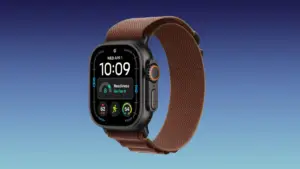
Amazon Drops Apple Watch Ultra 4 to All-Time Low of $699.99 in Rare Post-Launch Discount
Amazon has introduced a significant price reduction on Apple’s latest flagship wearable,...
 macOS & Apple IT Support
Apple Developing Proactive ‘Agentic’ AI to Automate Web Browsing, App Usage, and Coding Across Devices
Apple has quietly begun laying the foundation for a general-purpose, proactive artificial...
 macOS & Apple IT Support
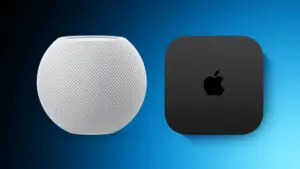
Apple TV and HomePod Mini Face Extended Shipping Delays as Code Leaks and Software Betas Signal Incoming 2026 Models
Customers looking to purchase an Apple TV or a HomePod mini through...